AllAI & MLRoboticsAutonomy3D PrintingElectrificationSafetyWorkforceMaterialsEDITOR'S PICKWEEKLY DISPATCH
Category

AI & Machine Learning

Artificial intelligence, machine learning, BIM, digital twins, predictive analytics, and data platforms in construction.

514 stories found

The construction industry's transition from AI pilot projects to operational deployment has reached an inflection point, driven simultaneously by labor scarcity and demonstrated technical viability. What distinguishes this moment is not the emergence of new AI capabilities—computer vision, predictive analytics, and autonomous decision-making have matured considerably—but rather the industry's willingness to integrate these tools into mission-critical workflows across estimation, scheduling, and jobsite execution. Suffolk's deployment of OpenSpace, Dusty Robotics, Kaya AI, and Alice Technologies on Gilead's California research center exemplifies this operational maturity, as does MasTec's adoption of Gritt's physical AI for solar construction execution. Meanwhile, the competitive consolidation in takeoff and estimation continues, with ConstructConnect's Project Intelligence and advanced mechanical takeoff platforms now competing on accuracy and integration rather than novelty. The real differentiator has shifted decisively toward organizational capability—firms like Mycon, which elevated technology leadership into the C-suite, recognize that AI deployment demands simultaneous competency in data governance, cybersecurity, workforce training, and regulatory compliance. Construction executives can no longer treat AI as a procurement decision; it demands the same strategic rigor and cross-functional alignment as capital investment or labor planning.

The robotics frontier has simultaneously accelerated and clarified, with technical breakthroughs resolving the programming barrier that historically constrained factory floor automation. Siemens and AGIBOT's demonstration of AI agents that design 3D-printed robot grippers from text prompts, combined with UC Berkeley and NVIDIA's open-source tools enabling machines to automatically write industrial robot programs, have obliterated the assumption that robotics requires specialized programming expertise. Humyn Labs' $47 million funding round to systematize real-world operational data collection signals that the industry recognizes embodied AI as the next frontier, one where robots generalize across tasks rather than operating within narrow, pre-programmed constraints. Yet construction remains in early adoption precisely because regulatory uncertainty, data sovereignty concerns, and the need for standardized infrastructure outweigh technical enablement. The manufacturing data gap—inadequate industrial data collection, weak interoperability standards, and poor feedback loops—represents the genuine constraint on physical AI deployment, not algorithm sophistication.

The workforce awareness and capability gap remains construction's most decisive strategic vulnerability. Only 59 percent of young people recognize that construction already operates with AI, undermining recruitment into the technical roles the industry increasingly demands, while most construction firms have not scaled AI adoption beyond isolated pilots due to implementation barriers and skills deficiencies. The path forward requires construction organizations to treat AI integration as organizational transformation: embedding technology leadership in management structures, investing systematically in workforce education about AI tool validation, and maintaining digital visibility across discovery systems. Firms that invest in the organizational discipline, talent development, and regulatory acumen required to deploy AI effectively at scale—rather than those that simply purchase the latest platforms—are establishing competitive advantages that transcend individual technology choices. Construction is no longer deliberating whether to adopt AI; it is determining whether it will invest the structural, cultural, and human capital necessary to deploy these tools with strategic coherence across operations.
How agentic AI can enable general-purpose robotic navigation
Robotics Business Review·May 16, 2026

How agentic AI can enable general-purpose robotic navigation

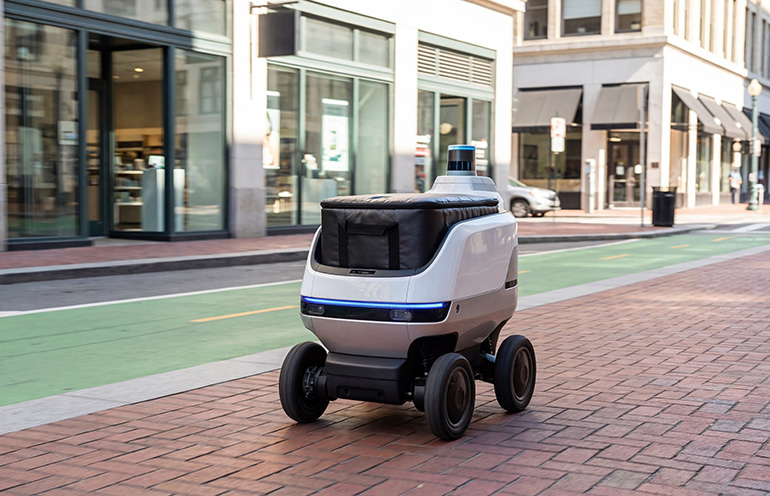
Agentic AI is advancing robotic navigation by integrating perception, mapping, reasoning, and planning capabilities that allow machines to operate effectively in changing job site conditions. This technology enables general-purpose robots to handle the complex spatial awareness and decision-making required for autonomous construction tasks.

AI & MLRobotics
Getting the Most Out of AI Takes Real Work, Say ENR FutureTech Speakers
ENR Construction Technology·May 14, 2026

Getting the Most Out of AI Takes Real Work, Say ENR FutureTech Speakers

ENR's FutureTech conference demonstrated that getting real value from AI requires significant effort and implementation work on construction jobsites. The event featured AI-powered workflows, robotic equipment, and 3D-printed structures that showcase emerging technologies reshaping how projects are built.

AI & MLRobotics
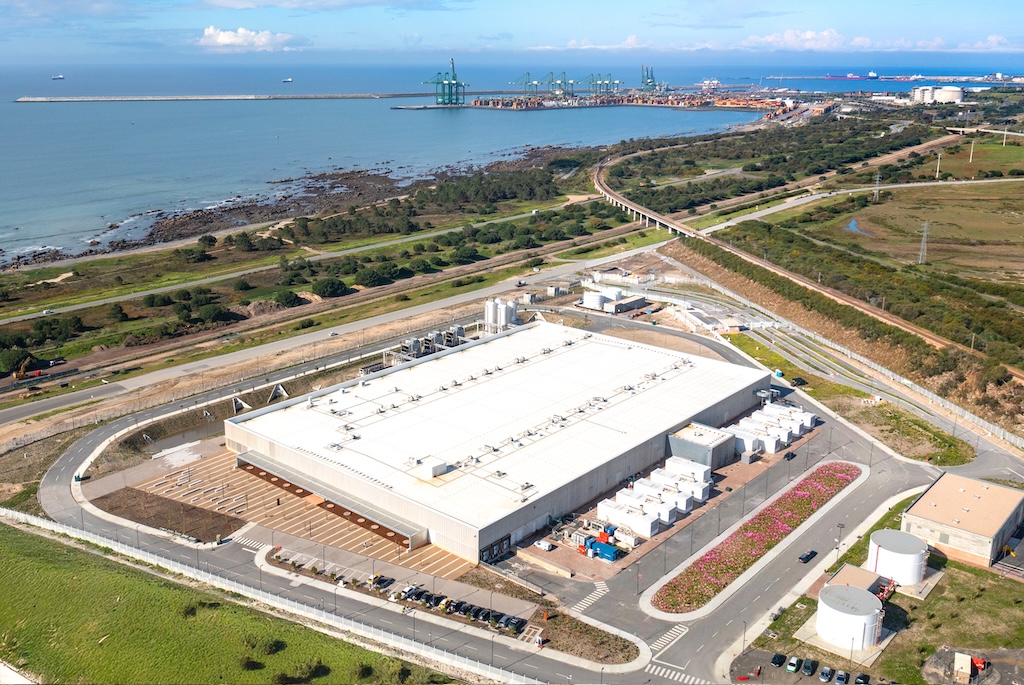
Start Campus partners with Autodesk on Europe’s largest AI data centre campus
Autodesk Construction Cloud Blog·May 13, 2026

Start Campus partners with Autodesk on Europe’s largest AI data centre campus

Start Campus, a Portugal-based data centre developer, is partnering with Autodesk to advance Europe's largest and most sustainable data centre project using Autodesk Forma for planning and design. The collaboration leverages advanced digital tools to streamline the complex planning and design requirements for large-scale data centre infrastructure development.

AI & MLMaterials
Formnext Asia Shenzhen 2026 Spotlights AM’s Role in Cooling AI Hardware
3D Printing Industry·May 13, 2026

Formnext Asia Shenzhen 2026 Spotlights AM’s Role in Cooling AI Hardware

Formnext Asia Shenzhen 2026 will take place August 26-28 at the Shenzhen World Exhibition & Convention Center, highlighting additive manufacturing's applications in producing liquid cooling components for AI hardware. The trade show demonstrates how 3D printing technology is becoming essential for managing thermal challenges in data center and computing equipment.

3D PrintingAI & ML
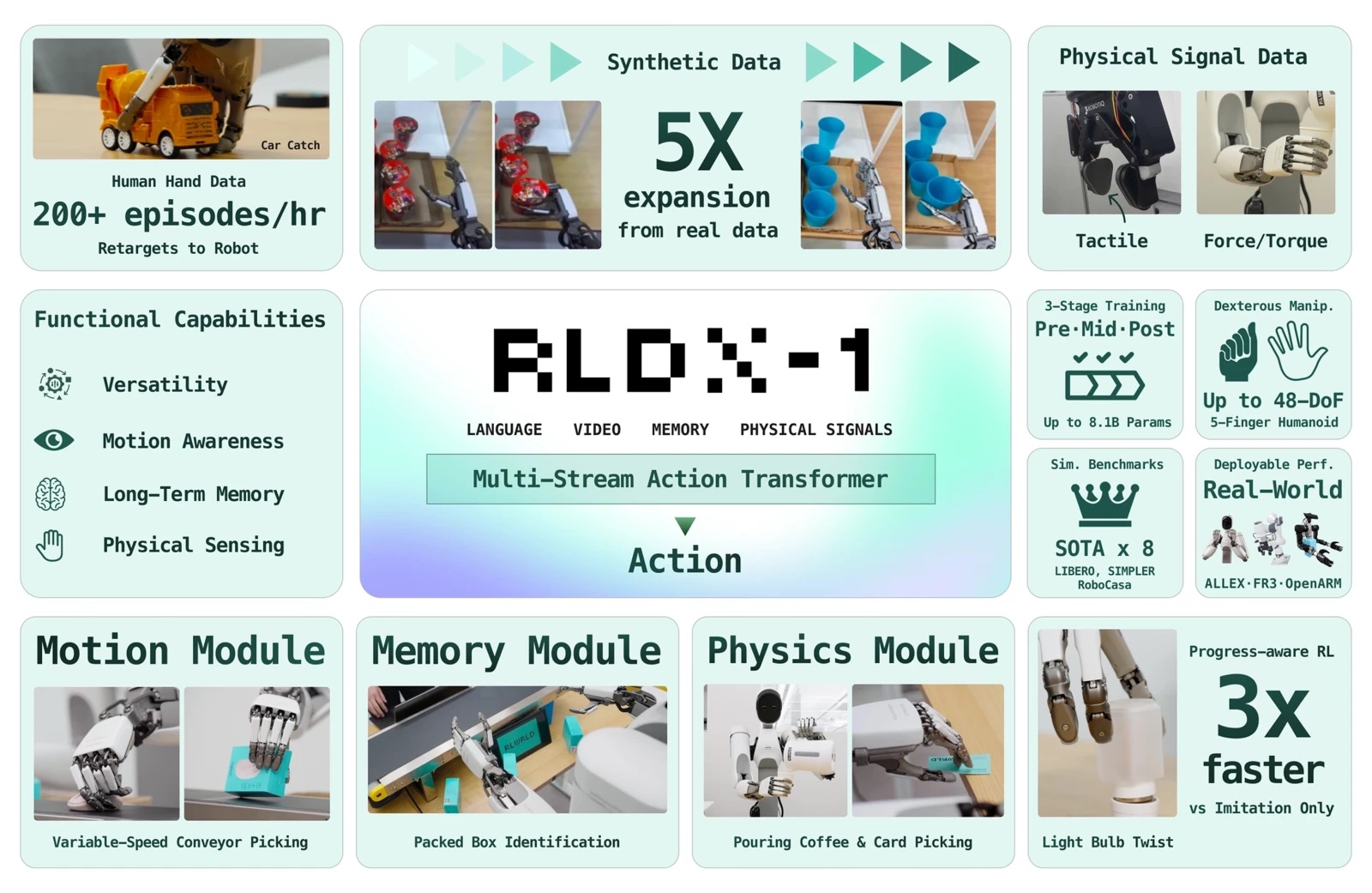
RLWRLD releases RLDX-1, a dexterity-first foundation model for robot hands
Robotics Business Review·May 11, 2026

RLWRLD releases RLDX-1, a dexterity-first foundation model for robot hands

RLWRLD introduced RLDX-1, a foundation model designed specifically for robotic hands that prioritizes dexterity and fine motor control. The model incorporates capabilities like context memorization and force sensing that are typically absent from existing robotics models.

AI & MLRobotics
WEEKLY DISPATCH
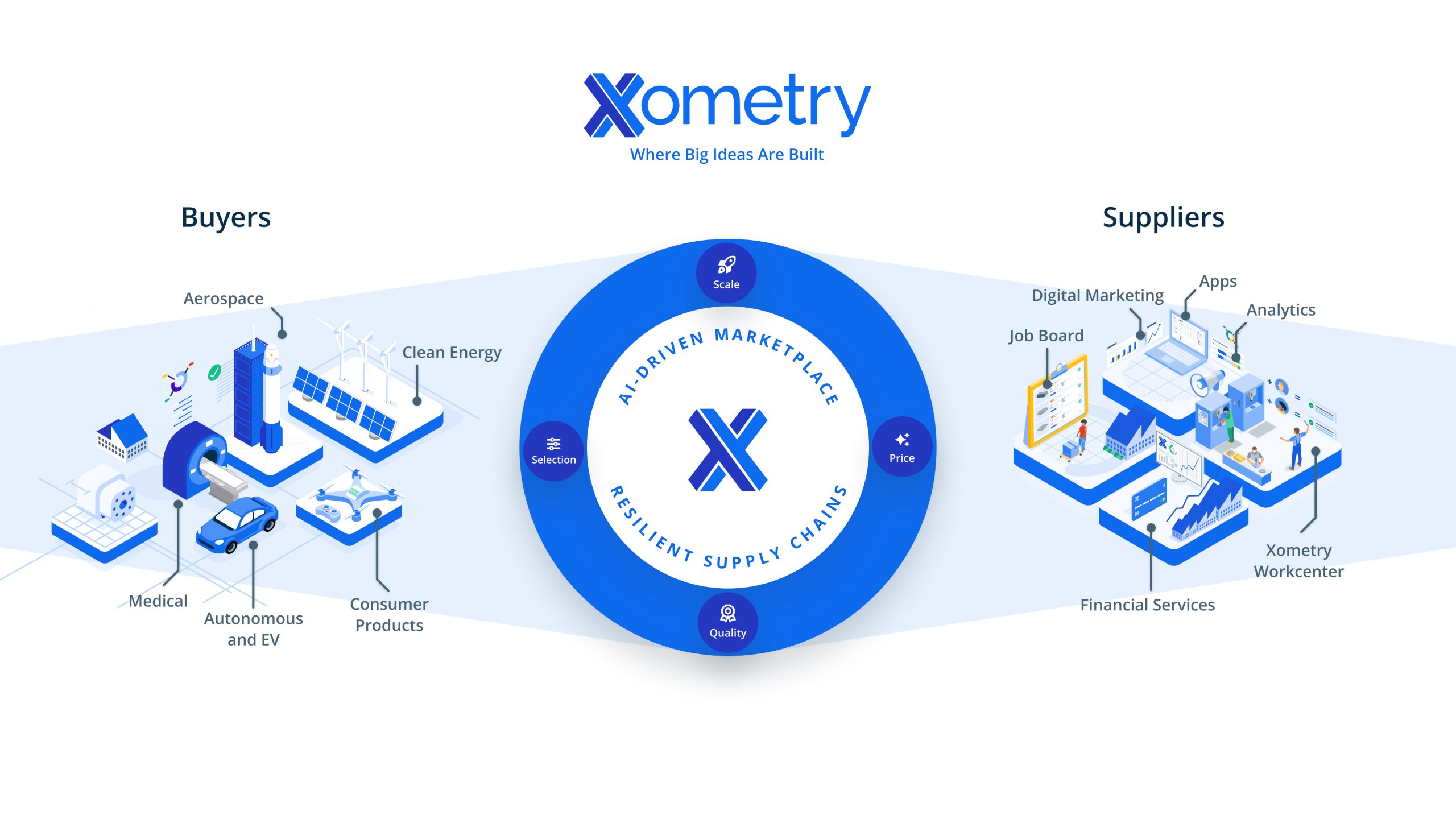
Xometry Reports Record Q1 2026 Revenue as Marketplace Growth Reaches 40%
3D Printing Industry·May 13, 2026

Xometry Reports Record Q1 2026 Revenue as Marketplace Growth Reaches 40%

Xometry's AI-powered manufacturing marketplace hit $205 million in Q1 2026 revenue, growing 36% year-over-year with marketplace revenue jumping 40%. Gross profit climbed 39% to $78.5 million, demonstrating strong momentum in the custom manufacturing space.

AI & ML
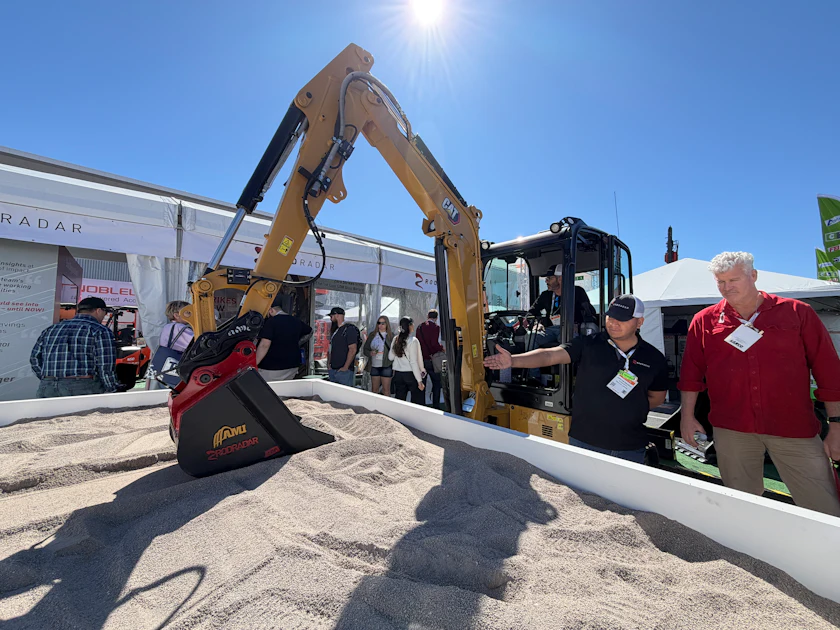
New Hexagon, RodRadar Tech Stops Excavator Bucket Before Striking Utilities
Equipment World·May 11, 2026

New Hexagon, RodRadar Tech Stops Excavator Bucket Before Striking Utilities

Hexagon and RodRadar have developed an AI-powered system that detects buried utilities in real time and automatically halts excavator buckets to prevent strikes. The technology integrates with excavators to add an automated safety layer that protects workers and infrastructure on job sites.

AI & MLAutonomy
The MEP Data That AI Cannot Work Without
AEC Business·May 11, 2026

The MEP Data That AI Cannot Work Without

MEP (mechanical, electrical, plumbing) data represents a significant portion of building construction costs and requires standardization to enable effective procurement and AI integration. Standardized product data is essential for AI systems to function properly in the construction industry.

AI & ML
WEEKLY DISPATCH
Cognex releases fully integrated AI-powered vision system for robotics
Robotics Business Review·May 9, 2026

Cognex releases fully integrated AI-powered vision system for robotics

Cognex has introduced a new vision system that integrates AI, advanced computing, and traditional vision tools specifically designed for robotic applications. The unified platform combines edge AI processing with high-performance embedded compute to deliver real-time visual intelligence for construction robots.

AI & MLRobotics
WEEKLY DISPATCH
Relevance in The AI Age
ENR Construction Technology·May 7, 2026

Relevance in The AI Age

A contractor demonstrated using an AI tool to automate daily report generation during a project review. The article explores how AI adoption is changing workflows and maintaining relevance in construction.

AI & MLWorkforce
WEEKLY DISPATCH
Why traditional robotics data collection is obsolete and what replaces it
Robotics Business Review·May 8, 2026

Why traditional robotics data collection is obsolete and what replaces it

Rhoda AI is replacing traditional robotics data collection methods with an approach that leverages video data to train robots more efficiently and at scale. This shift makes robotic systems cheaper and faster to deploy on job sites by eliminating the need for manual, time-consuming data collection processes.

AI & MLRobotics
How Anthropic’s New Claude Connectors to 3D Design Tools Close the AM Coordination Gap
3D Printing Industry·May 7, 2026

How Anthropic’s New Claude Connectors to 3D Design Tools Close the AM Coordination Gap

Anthropic has released eight Claude AI connectors that allow users to control major 3D design software like Autodesk Fusion, Blender, and SketchUp through natural language commands. This integration enables engineers to create and iterate on 3D models more efficiently, bridging coordination gaps in additive manufacturing workflows.

AI & ML3D Printing
Hugging Face launches agentic toolkit for Reachy Mini
Robotics Business Review·May 7, 2026

Hugging Face launches agentic toolkit for Reachy Mini

Hugging Face has released an agentic toolkit that allows users to program the Reachy Mini robot by describing desired behaviors in plain English rather than writing code manually. The system automatically generates, tests, and deploys code to the robot, simplifying robotic automation for construction and other industries.

AI & MLRobotics
WEEKLY DISPATCH
The Newest Member of Your Facilities Team? Your Building.
Construction Executive·May 6, 2026

The Newest Member of Your Facilities Team? Your Building.

Buildings equipped with AI can now monitor and report their own operational status, effectively functioning as an additional facilities team member. This technology helps facility managers listen to real-time data from their buildings to optimize maintenance and operations.

AI & ML
Podcast: Colin Angle discusses building companion robots with Familiar Machines & Magic
Robotics Business Review·May 7, 2026

Podcast: Colin Angle discusses building companion robots with Familiar Machines & Magic

iRobot co-founder Colin Angle is launching Familiar Machines to develop next-generation social companion robots. The venture aims to create robots that can assist with tasks and interaction in various settings.

RoboticsAI & ML
Which Construction Technology Investments Actually Move the Needle on Profitability?
Construction Executive·May 6, 2026

Which Construction Technology Investments Actually Move the Needle on Profitability?

Not every new construction technology deserves your investment—focus on tools that directly improve your bottom line. The article helps you cut through the noise and identify which tech actually delivers measurable profitability gains.

AI & ML
Genesis AI introduces GENE-26.5 model for more dexterous robot manipulation
Robotics Business Review·May 6, 2026

Genesis AI introduces GENE-26.5 model for more dexterous robot manipulation

Genesis AI has unveiled the GENE-26.5 foundation model, a new AI system designed to enable robots to perform complex manipulation tasks with improved dexterity. The model leverages an advanced data engine and a custom robotic hand to achieve higher precision in handling and assembly work.

AI & MLRobotics
Tutor Intelligence builds Data Factory to train robot AI in the real world
Robotics Business Review·May 5, 2026

Tutor Intelligence builds Data Factory to train robot AI in the real world

Tutor Intelligence is operating 100 Sonny semi-humanoid robots at its headquarters to create a real-world data factory for training AI systems. The company is sharing technology and data across its robot fleet, including Cassie mobile manipulators, to accelerate AI development for robotic construction applications.

AI & MLRobotics