AllAI & MLRoboticsAutonomy3D PrintingElectrificationSafetyWorkforceMaterialsEDITOR'S PICKWEEKLY DISPATCH
Category

AI & Machine Learning

Artificial intelligence, machine learning, BIM, digital twins, predictive analytics, and data platforms in construction.

513 stories found

The commoditization of AI-powered takeoff and estimation tools continues to reshape construction bidding, but the competitive terrain has evolved beyond simple software selection. As labor shortages intensify across the industry, construction firms increasingly deploy AI for workforce planning, project intelligence, and financial forecasting—not merely on the jobsite, but across estimation, scheduling, and business operations. ConstructConnect's Project Intelligence and Mercator.ai now compete directly for pipeline visibility, while platforms like Bluebeam's latest AEC technology offerings and Trimble's new WorksManager drone data platform with agentic AI workflows demonstrate that the industry has moved decisively into an era where AI-driven decision support touches nearly every operational function. Yet Bluebeam's 2027 report confirms what the previous analysis predicted: most construction firms have not scaled AI adoption, with implementation barriers and workforce skills gaps remaining the primary obstacles. The differentiator is no longer access to automation—it's organizational maturity in validating AI recommendations against domain expertise and integrating these tools into cohesive business strategy. Construction executives like Mycon's newly appointed CIO, Michael Shepherd, signal an industry-wide recognition that technology leadership now belongs in the C-suite, requiring simultaneous competency in cybersecurity, data governance, and AI deployment.

Robotics and automation capabilities have advanced measurably, yet regulatory and geopolitical constraints remain the decisive factors shaping deployment patterns. NVIDIA's CEO succession amid China trade scrutiny, coupled with ongoing concerns about data sovereignty and technology transfer, reinforces that construction firms must evaluate robotics partnerships through a regulatory and compliance lens as much as a technical one. Meanwhile, breakthroughs like UC Berkeley and NVIDIA's open-source tools enabling AI agents to automatically write and refine industrial robot programs without pretraining, Runway's Praxis-1 world action model, and Rhoda AI's video-based generalization systems suggest that the technical barrier to robot deployment has fallen dramatically. AGIBOT's successful 1,730-task trial in a Shanghai convenience store and the emergence of standardized infrastructure like Memories.ai's egocentric video pipeline demonstrate that robotics now transitions from experimental to operational—yet the construction industry remains in the early adoption phase precisely because regulatory uncertainty, data residency requirements, and organizational hesitation outweigh technical enablement.

The workforce awareness and capability gap remains construction's most significant strategic liability. While AI adoption accelerates in response to labor scarcity, only 59 percent of young people are even aware that construction already deploys AI operationally, undermining recruitment into the technical roles the industry increasingly demands. Construction organizations that treat AI integration not as a procurement decision but as an organizational transformation—embedding technology leadership in management structures, investing in workforce education about AI tool validation, and maintaining digital visibility to AI-powered discovery systems—are establishing sustainable competitive advantage that transcends individual platform choices. The National Safety Council and American Industrial Hygiene Association's focus on the human side of workplace technology reflects industry recognition that successful AI deployment requires not just technical competency but cultural and educational investment. Construction is no longer deciding whether to adopt AI; it is determining whether it will invest the organizational discipline, talent development, and regulatory acumen required to deploy these tools effectively at scale.


Special Report: Engineering Focus on Motion Control
Robotics Business Review·6h ago

Special Report: Engineering Focus on Motion Control

The Robot Report examines recent breakthroughs in manufacturing automation, including advancements in motion control technology and emerging applications. The analysis covers humanoid robots and AI integration, which are reshaping how construction and manufacturing operations approach automation.

RoboticsAI & ML
ForConstructionPros·2d ago

AI-Powered Drone Monitoring Could Help Contractors Spot Critical Jobsite Changes

AI-powered drone monitoring with automated change detection can help construction teams quickly identify and prioritize critical jobsite issues across repeated missions. This technology streamlines how contractors spot problems, potentially improving project management and decision-making on complex jobs.

AI & MLRobotics
NVIDIA reinstates Jensen Huang after 11-day absence
Robotics Business Review·6h ago

NVIDIA reinstates Jensen Huang after 11-day absence

NVIDIA's board reinstated CEO Jensen Huang after an 11-day suspension, reversing course following pressure from the White House, investors, and technology leaders. The decision came after direct discussions with Huang and senior U.S. government officials regarding his role at the company.

AI & ML
Equipment World·3d ago

Yanmar Upgrades SmartAssist Remote Telematics to Monitor Machines by App

Yanmar has upgraded its SmartAssist remote telematics platform to allow operators to monitor equipment location, operations, and health through a mobile app. The service includes preventive maintenance tracking and machine diagnostics to help construction crews keep their fleets running efficiently.

AI & ML
EDITOR'S PICK
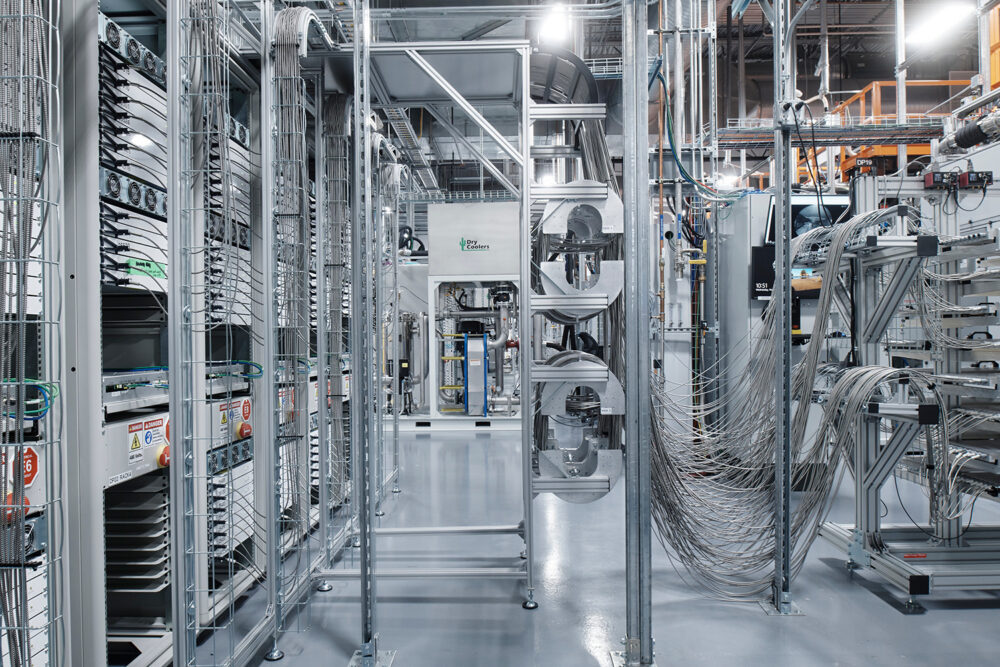
The manufacturing data gap holding back physical AI
Robotics Business Review·yesterday

The manufacturing data gap holding back physical AI

Manufacturers need better industrial data collection, interoperability standards, and quality feedback systems to reliably deploy autonomous robots on job sites. Closing these data gaps is critical for improving production efficiency and enabling robots to make dependable decisions in real-world construction environments.

RoboticsAutonomy
Siemens and AGIBOT Show AI Agent That Designs 3D Printed Humanoid Robot Grippers from a Text Prompt
3D Printing Industry·3d ago

Siemens and AGIBOT Show AI Agent That Designs 3D Printed Humanoid Robot Grippers from a Text Prompt

Siemens and AGIBOT demonstrated an AI agent that can design 3D-printed robot grippers directly from text prompts, automating part of the design process. The system is part of Siemens' Digital Thread for additive manufacturing, which integrates AI-driven design with production requirements across the entire workflow.

AI & ML3D Printing
A Data River Runs Through It: The New Generation of Water Utility Digital Twins
ENR Construction Technology·4d ago

A Data River Runs Through It: The New Generation of Water Utility Digital Twins

Water utilities are adopting digital twin technology to better manage their complex infrastructure and operational challenges. This new generation of tools helps utilities monitor, analyze, and optimize their systems more effectively than traditional methods.

AI & ML
EDITOR'S PICK
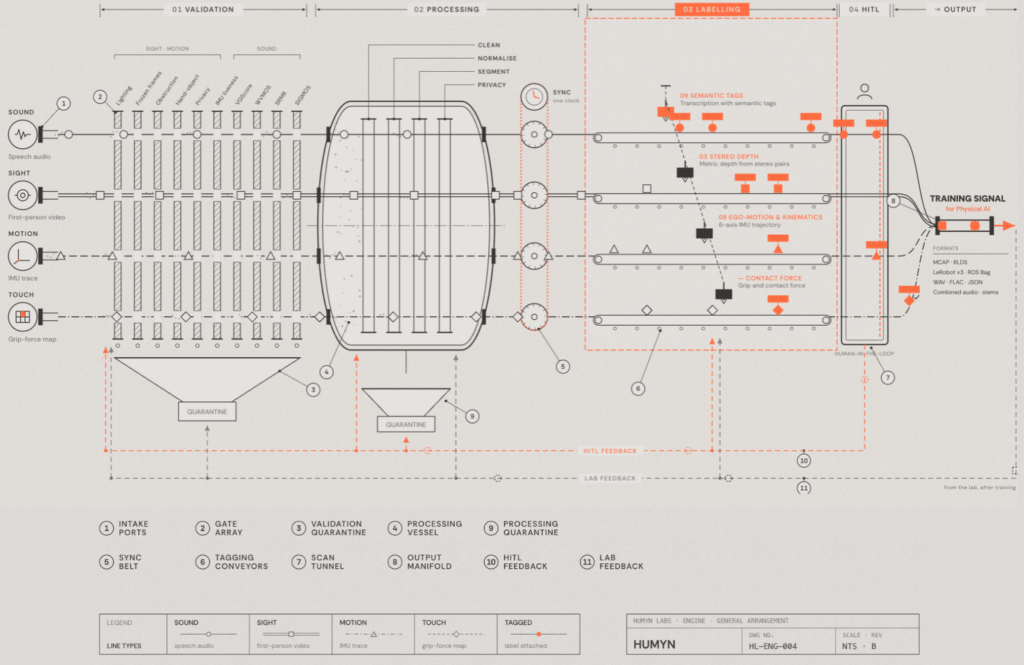
Humyn Labs raises $47M to collect real-world data for robotics
Robotics Business Review·4d ago

Humyn Labs raises $47M to collect real-world data for robotics

Humyn Labs secured $47 million in funding to collect real-world operational data for AI labs and robotics companies. The data platform supports development of robotics and world models that could eventually apply to construction and other industries.

AI & MLRobotics
Construction Dive·5d ago

Suffolk taps array of contech applications on Gilead’s new California research center

Suffolk used multiple contech platforms including OpenSpace, Dusty Robotics, Kaya AI, and Alice Technologies to manage layout, progress tracking, procurement, and sequencing on Gilead's new California research center. The project demonstrates how contractors are integrating specialized software and robotics solutions to streamline construction operations across multiple disciplines.

AI & MLRobotics
From Commercial Scale to Embodied Intelligence: The Next Challenge for Robotics
Robotics Business Review·5d ago

From Commercial Scale to Embodied Intelligence: The Next Challenge for Robotics

Robotics technology is becoming more capable as AI models and hardware improvements enable machines to better perceive and understand their environments. Construction teams should expect robots to handle increasingly complex tasks as embodied intelligence moves from lab demonstrations to real-world job sites.

RoboticsAI & ML
Construction Dive·5d ago

MasTec partners to deploy physical AI on renewables projects

MasTec is deploying physical AI technology from Gritt across its solar construction jobsites to improve project execution. The partnership represents the contractor's adoption of AI solutions designed specifically for on-site construction operations.

AI & MLWorkforce
Take the Pressure Off Mechanical Takeoff – Advanced Auto Takeoff for Mechanical Contractors
ConstructConnect·6d ago

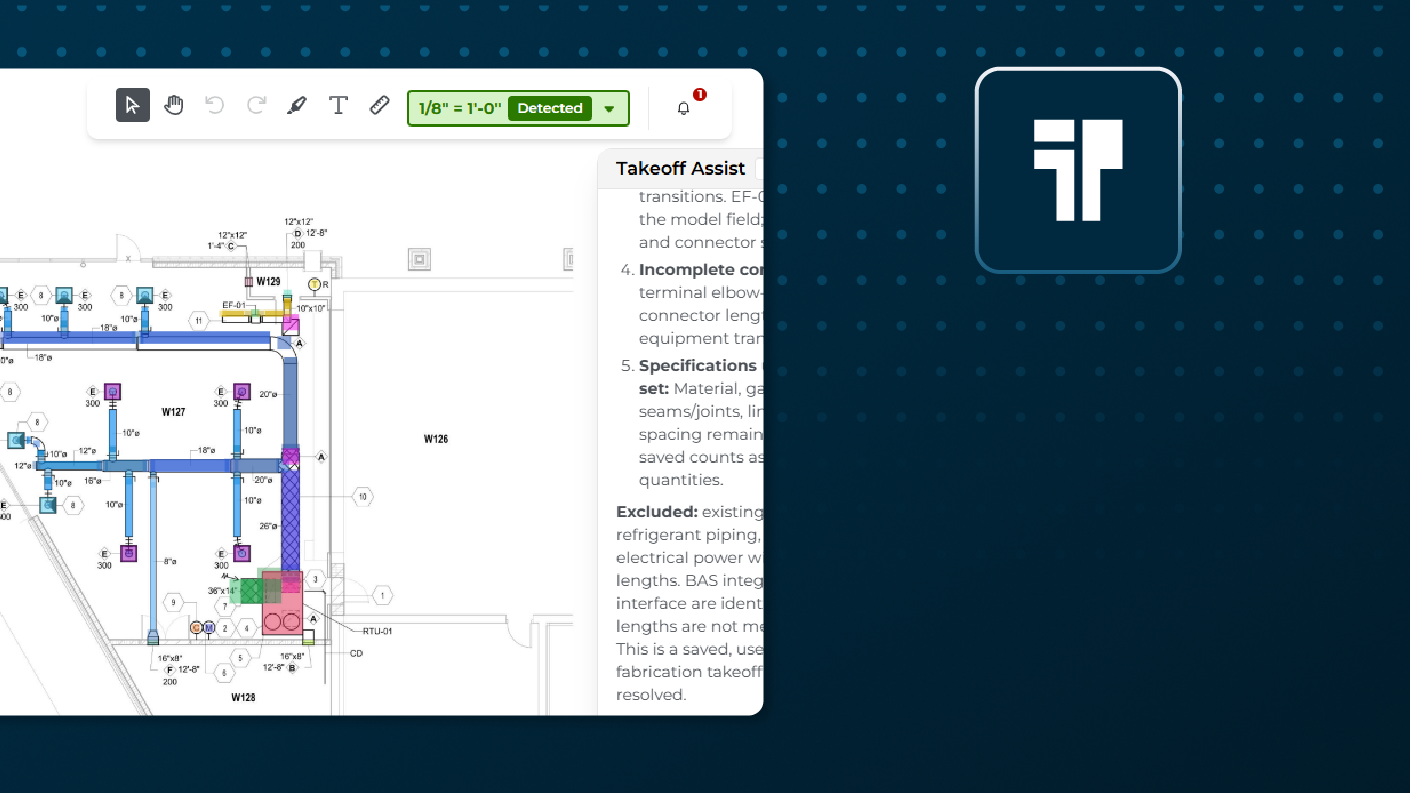
Take the Pressure Off Mechanical Takeoff – Advanced Auto Takeoff for Mechanical Contractors

Advanced auto takeoff software helps mechanical contractors reduce manual estimation work and improve accuracy on projects. The technology streamlines the takeoff process to free up time for field teams and estimators.

AI & MLWorkforce
Learn how AI is changing supply chain robotics
Robotics Business Review·6d ago

Learn how AI is changing supply chain robotics

A live webinar titled "Robots in the Supply Chain" will explore how AI is transforming robotics in supply chain operations on Wednesday, November 18, 2026, at 12 P.M. ET. The session will cover practical applications of AI-powered robots that construction professionals can apply to their own operations.

AI & MLRobotics
REVIEW: Meshy Edit Brings One-Prompt Fixes to AI 3D Models
3D Printing Industry·Nov 16, 2026

REVIEW: Meshy Edit Brings One-Prompt Fixes to AI 3D Models

Meshy Edit is a new AI tool that allows users to modify specific regions of generated 3D models without affecting the rest of the design, streamlining the iterative modeling process. The platform, built by MIT Ph.D. holder Ethan Hu, uses foundation models to convert text prompts into 3D models for construction and design applications.

AI & ML3D Printing
The hidden reason most robots fail on the factory floor
Robotics Business Review·6d ago

The hidden reason most robots fail on the factory floor

Most factory robots fail because they're difficult and time-consuming to program for different tasks, creating a barrier to widespread automation adoption. AI-native robotics could simplify programming and help American manufacturers compete more effectively on the global market.

AI & MLRobotics
6 design trends reshaping campus labs
BD+C Building Design+Construction·Nov 16, 2026

6 design trends reshaping campus labs

Campus laboratory designs are evolving to incorporate modular construction, flexible mechanical systems, and advanced building technologies that reduce construction timelines and operational costs. These trends reflect increasing demand for adaptable research spaces that can accommodate emerging technologies like AI, robotics, and specialized equipment while improving sustainability and worker safety.

MaterialsSafety
Food robotics 2.0: why this time could be different
Robotics Business Review·Nov 14, 2026

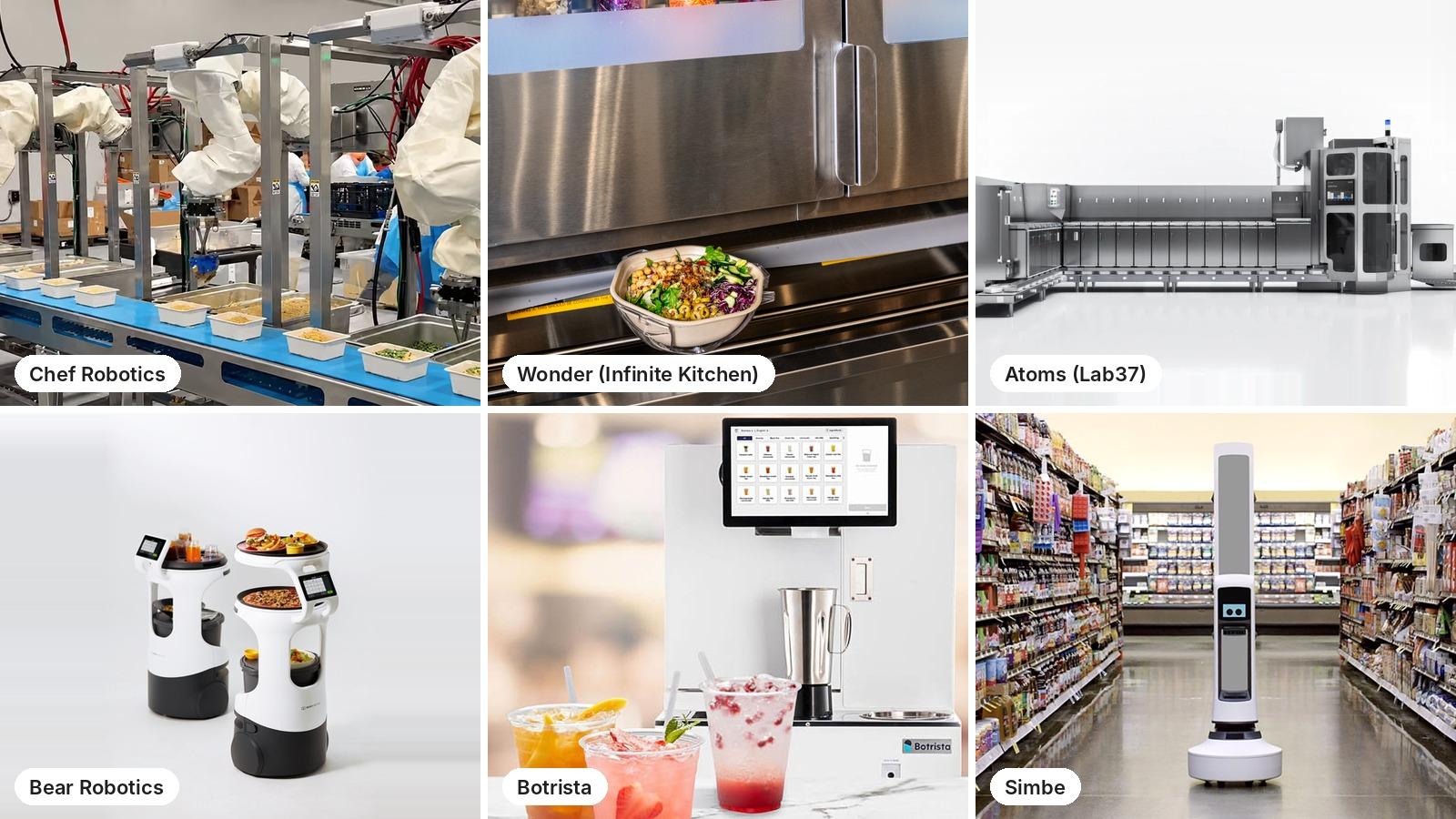
Food robotics 2.0: why this time could be different

Food robotics companies are shifting away from consumer-facing robot restaurants toward B2B automation solutions for manufacturers, restaurants, and retailers. This practical approach focuses on improving productivity, reducing labor costs, and scaling operations in the food service industry.

RoboticsWorkforce
WEEKLY DISPATCH
ForConstructionPros·Nov 13, 2026

Construction Labor Shortages Accelerate AI Adoption

Construction companies are increasingly turning to AI tools to manage operations and secure bids as labor shortages continue to constrain the industry. Bridgit's 2026 workforce planning report shows that AI adoption and strategic bidding practices are becoming key responses to staffing challenges.

AI & MLWorkforce