AllAI & MLRoboticsAutonomy3D PrintingElectrificationSafetyWorkforceMaterialsEDITOR'S PICKWEEKLY DISPATCH
Category

AI & Machine Learning

Artificial intelligence, machine learning, BIM, digital twins, predictive analytics, and data platforms in construction.

514 stories found

The construction industry's transition from AI pilot projects to operational deployment has reached an inflection point, driven simultaneously by labor scarcity and demonstrated technical viability. What distinguishes this moment is not the emergence of new AI capabilities—computer vision, predictive analytics, and autonomous decision-making have matured considerably—but rather the industry's willingness to integrate these tools into mission-critical workflows across estimation, scheduling, and jobsite execution. Suffolk's deployment of OpenSpace, Dusty Robotics, Kaya AI, and Alice Technologies on Gilead's California research center exemplifies this operational maturity, as does MasTec's adoption of Gritt's physical AI for solar construction execution. Meanwhile, the competitive consolidation in takeoff and estimation continues, with ConstructConnect's Project Intelligence and advanced mechanical takeoff platforms now competing on accuracy and integration rather than novelty. The real differentiator has shifted decisively toward organizational capability—firms like Mycon, which elevated technology leadership into the C-suite, recognize that AI deployment demands simultaneous competency in data governance, cybersecurity, workforce training, and regulatory compliance. Construction executives can no longer treat AI as a procurement decision; it demands the same strategic rigor and cross-functional alignment as capital investment or labor planning.

The robotics frontier has simultaneously accelerated and clarified, with technical breakthroughs resolving the programming barrier that historically constrained factory floor automation. Siemens and AGIBOT's demonstration of AI agents that design 3D-printed robot grippers from text prompts, combined with UC Berkeley and NVIDIA's open-source tools enabling machines to automatically write industrial robot programs, have obliterated the assumption that robotics requires specialized programming expertise. Humyn Labs' $47 million funding round to systematize real-world operational data collection signals that the industry recognizes embodied AI as the next frontier, one where robots generalize across tasks rather than operating within narrow, pre-programmed constraints. Yet construction remains in early adoption precisely because regulatory uncertainty, data sovereignty concerns, and the need for standardized infrastructure outweigh technical enablement. The manufacturing data gap—inadequate industrial data collection, weak interoperability standards, and poor feedback loops—represents the genuine constraint on physical AI deployment, not algorithm sophistication.

The workforce awareness and capability gap remains construction's most decisive strategic vulnerability. Only 59 percent of young people recognize that construction already operates with AI, undermining recruitment into the technical roles the industry increasingly demands, while most construction firms have not scaled AI adoption beyond isolated pilots due to implementation barriers and skills deficiencies. The path forward requires construction organizations to treat AI integration as organizational transformation: embedding technology leadership in management structures, investing systematically in workforce education about AI tool validation, and maintaining digital visibility across discovery systems. Firms that invest in the organizational discipline, talent development, and regulatory acumen required to deploy AI effectively at scale—rather than those that simply purchase the latest platforms—are establishing competitive advantages that transcend individual technology choices. Construction is no longer deliberating whether to adopt AI; it is determining whether it will invest the structural, cultural, and human capital necessary to deploy these tools with strategic coherence across operations.


WEEKLY DISPATCH
Walden Robotics launches at $1.1B valuation for general-purpose robots
Robotics Business Review·Jul 15, 2026

Walden Robotics launches at $1.1B valuation for general-purpose robots

Walden Robotics has launched with a $1.1 billion valuation, backed by major technology companies to develop general-purpose robots for physical tasks. The startup is building full-stack physical AI systems designed to automate work across industries.

RoboticsAI & ML
Your Specpoint Products Are Getting 'Match Score': A Smarter Way to Get Discovered
ConstructConnect·Jul 15, 2026

Your Specpoint Products Are Getting 'Match Score': A Smarter Way to Get Discovered

Specpoint is replacing its MasterSpec badge system with Match Score, a new scoring method that rates how well products align with specification sections. Products with existing badges automatically convert to a 100% match score, and improved product data quality can help listings reach a broader audience.

AI & ML
NVIDIA shares how to evaluate general-purpose robot policies for real-world deployment
Robotics Business Review·Jul 14, 2026

NVIDIA shares how to evaluate general-purpose robot policies for real-world deployment

NVIDIA has released Isaac Lab-Arena, an open-source simulation framework designed to test and evaluate robot policies before deploying them on real construction sites. The platform enables large-scale testing of general-purpose robots to ensure they perform reliably in actual job conditions.

RoboticsAI & ML
How Contractors Are Shifting Headcount Budgets to Agent Budgets
Construction Executive·Jul 13, 2026

How Contractors Are Shifting Headcount Budgets to Agent Budgets

Construction contractors are redirecting money from hiring headcount toward AI software that automates back-office operations, with global AI investment reaching $211B in 2025 compared to just $18B for robotics. The industry is prioritizing intelligent software agents over physical automation technology for now, signaling where companies see the fastest return on investment.

AI & MLWorkforce
Tripo AI raises $150M in Series A3  round
3D Printing Industry·Jul 11, 2026

Tripo AI raises $150M in Series A3 round

Tripo AI, a developer of 3D foundation models, has raised $150 million in Series A3 funding from investors across automotive, gaming, internet, and technology sectors. The funding round included backing from Geely Capital and other strategic investors focused on advancing 3D AI technology.

AI & ML
WEEKLY DISPATCH
How Path Robotics uses AI to optimize robotic welding
Robotics Business Review·Jul 10, 2026

How Path Robotics uses AI to optimize robotic welding

Path Robotics applies artificial intelligence to improve the efficiency and quality of robotic welding operations. The company's approach leverages machine learning techniques discussed by UC San Diego professor Michael Yip to enable robots to adapt and optimize their welding performance.

AI & MLRobotics
AEC Business·Jul 9, 2026

From Dark Data to Building Intelligence

Mark Sorsa-Leslie explores how AI can transform underutilized building data into actionable intelligence for real estate operations. The approach focuses on leveraging data analytics to improve predictive maintenance and building performance management.

AI & ML
WEEKLY DISPATCH
Data standardisation for smarter construction
Autodesk Construction Cloud Blog·Jul 8, 2026

Data standardisation for smarter construction

Standardized data across construction projects improves efficiency and decision-making on job sites. Consistent data formats enable better integration between systems, teams, and equipment for smarter project management.

AI & ML
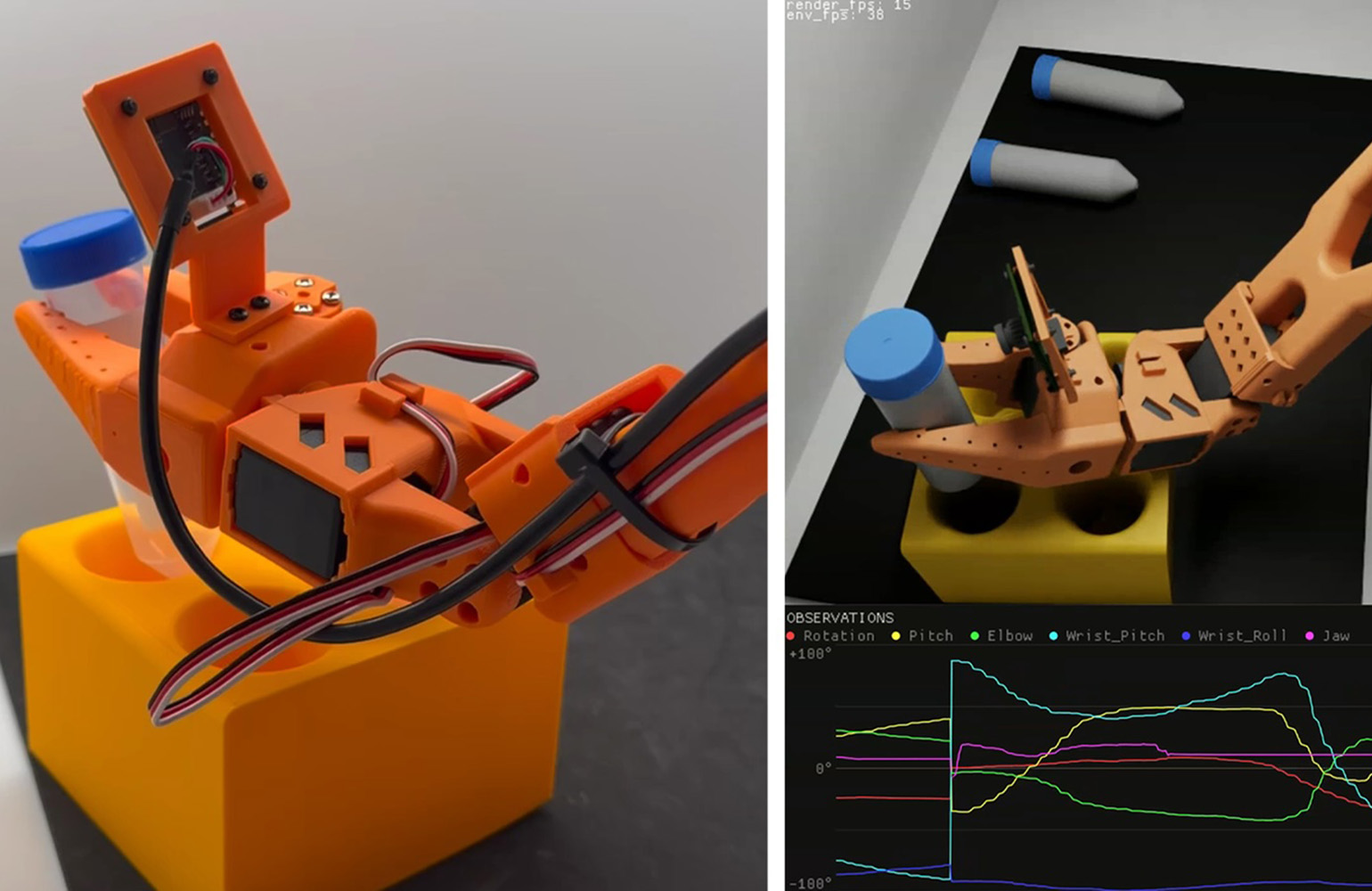
NVIDIA and Hugging Face bring new models and frameworks to LeRobot
Robotics Business Review·Jul 8, 2026

NVIDIA and Hugging Face bring new models and frameworks to LeRobot

NVIDIA and Hugging Face have partnered to expand LeRobot, an open-source library designed to streamline robot training, deployment, and data sharing across projects. The collaboration introduces new models and frameworks that could accelerate robotics adoption in construction and other industries.

RoboticsAI & ML
WEEKLY DISPATCH
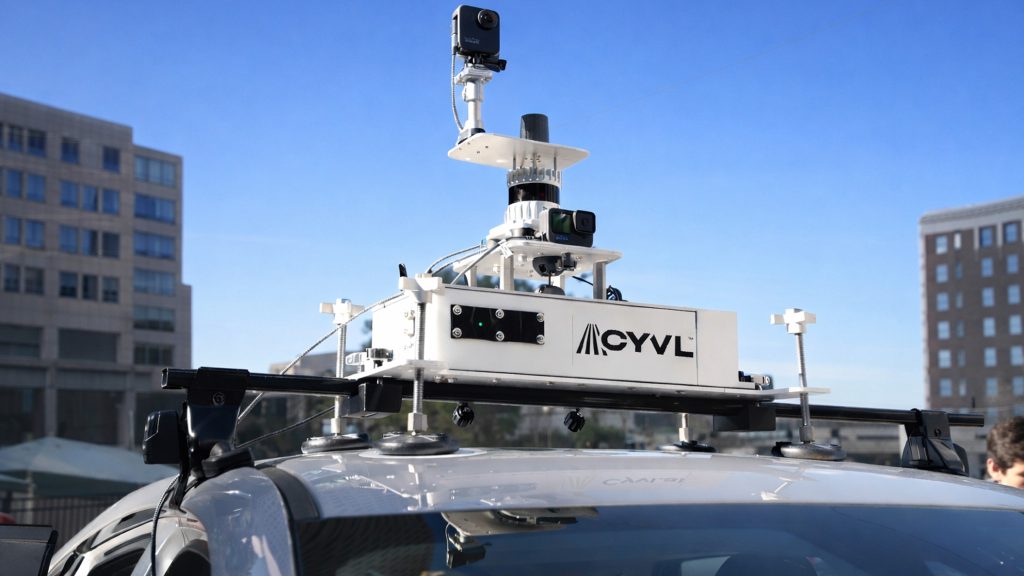
Contech Company Cyvl Uses Vehicle-Mounted AI Sensors to Collect Fresh Data for Some of America’s Biggest Cities
Construction Executive·Jul 8, 2026

Contech Company Cyvl Uses Vehicle-Mounted AI Sensors to Collect Fresh Data for Some of America’s Biggest Cities

Cyvl uses AI-powered vehicle-mounted sensors to collect infrastructure data for major U.S. cities including Atlanta and Nashville. The company, founded by an 18-year-old engineering student, has become a leading provider of civil infrastructure analytics to support city development and planning.

AI & ML
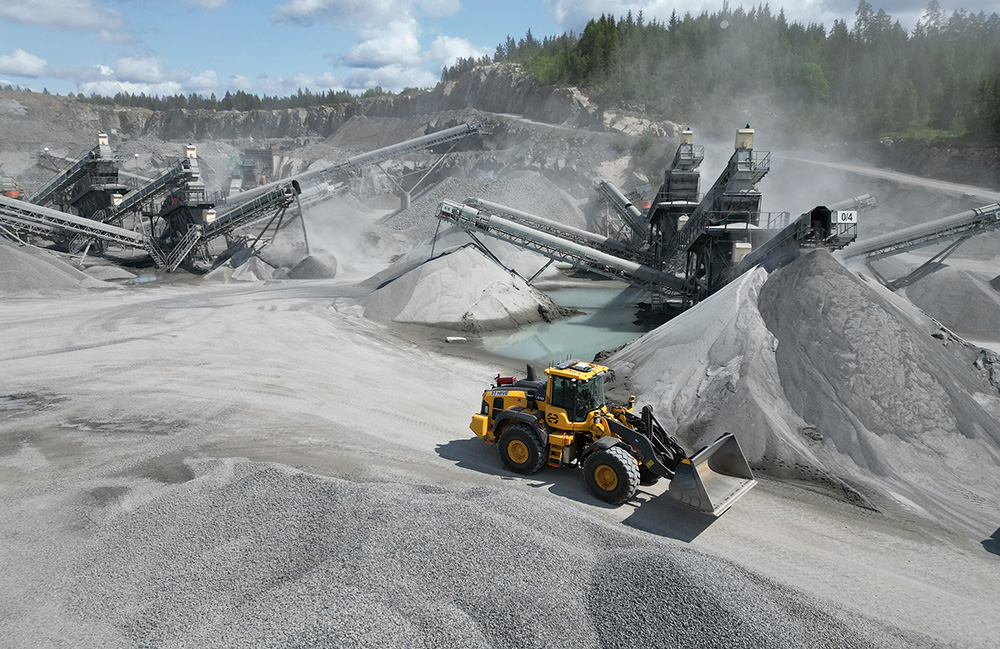
HIVE brings in $15M to build physical AI for industrial machines
Robotics Business Review·Jul 7, 2026

HIVE brings in $15M to build physical AI for industrial machines

HIVE has secured $15M in funding to develop physical AI systems for industrial machines. The company has already deployed its autonomous technology across multiple sites in Scandinavia, where it operates independently across different machine types.

AI & MLRobotics
Suffolk Technologies, DPR Invest in AI-based Hiring Platform Skillit
ENR Construction Technology·Jul 2, 2026

Suffolk Technologies, DPR Invest in AI-based Hiring Platform Skillit

Suffolk Technologies and DPR Invest have backed Skillit, an AI-powered platform designed to connect skilled trades workers with job opportunities. The platform aims to improve hiring efficiency in the construction trades by leveraging artificial intelligence.

AI & MLWorkforce
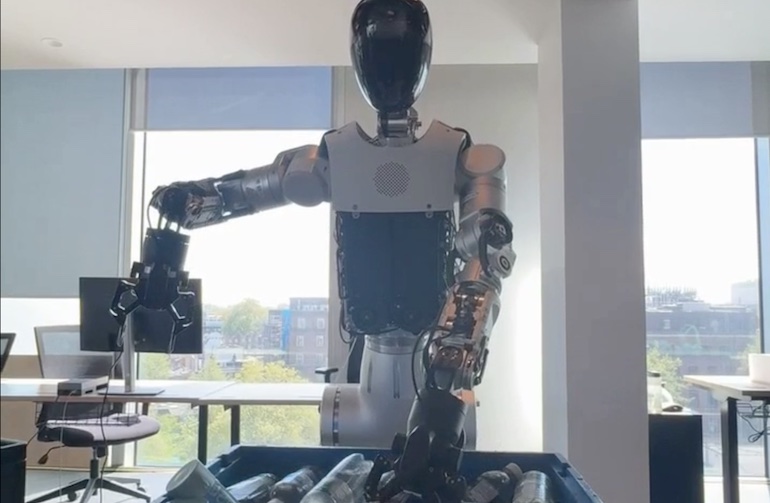
Humanoid says KinetIQ Ascend reinforcement learning approaches human-level dexterity
Robotics Business Review·Jul 5, 2026

Humanoid says KinetIQ Ascend reinforcement learning approaches human-level dexterity

Humanoid's KinetIQ Ascend reinforcement learning system achieves 99.9% manipulation reliability at human speed for industrial tasks. The technology demonstrates that AI-powered robots can now perform complex handling work with human-level dexterity for construction and manufacturing applications.

AI & MLRobotics
AEC Business·Jul 2, 2026

Endra Rethinks MEP Design with AI

Endra, a Stockholm-based startup, has secured $50 million in Series A funding to advance AI-powered MEP (mechanical, electrical, and plumbing) design optimization. The company's technology rethinks how MEP systems are designed and coordinated on construction projects.

AI & ML
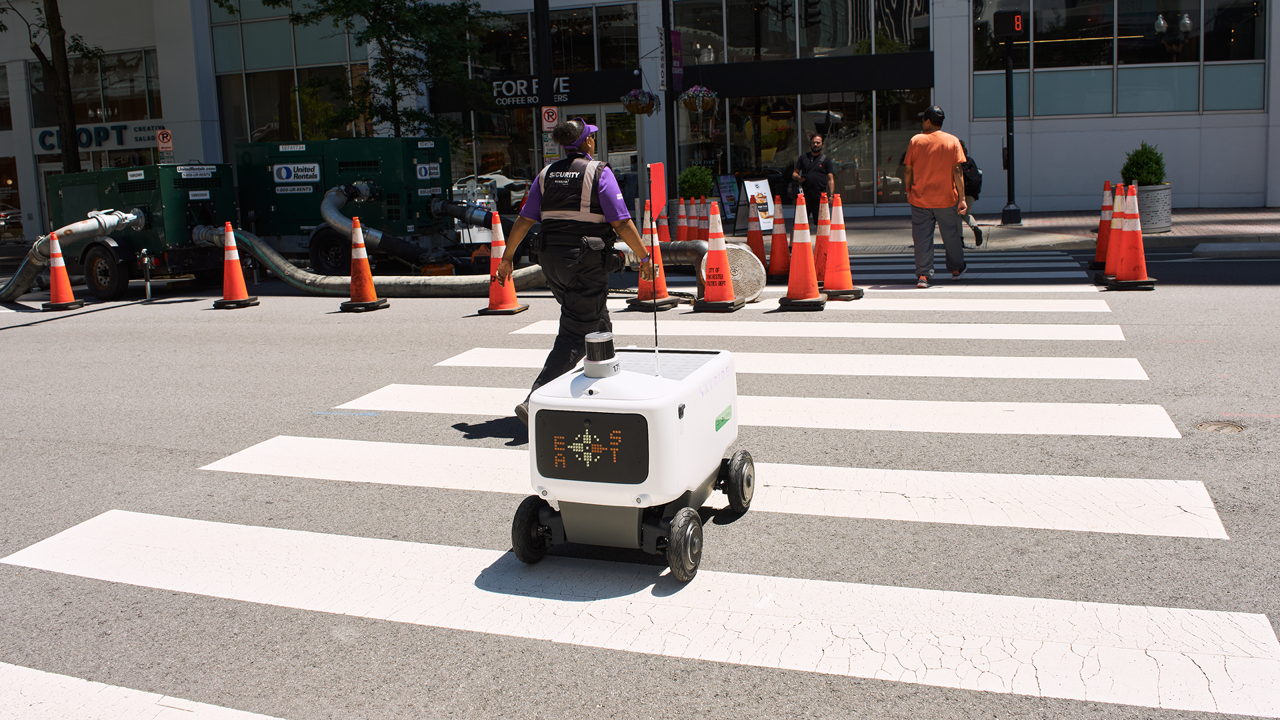
Context is king: How Avride uses cloud VLMs as a safety net for delivery robots
Robotics Business Review·Jul 4, 2026

Context is king: How Avride uses cloud VLMs as a safety net for delivery robots

Avride improves its delivery robots' ability to understand and navigate their surroundings by using cloud-based vision-language models as a safety layer. This approach enhances environmental awareness and helps the robots operate more safely in real-world conditions.

AI & MLRobotics
Quarterhill discusses transport modernization as U.S. marks 70 years of federal highways
Robotics Business Review·Jul 3, 2026

Quarterhill discusses transport modernization as U.S. marks 70 years of federal highways

Quarterhill examines the future of autonomous transport as the U.S. marks 70 years of its federal highway system and 250 years of independence. The company's expert analysis focuses on how autonomous vehicles will modernize transportation infrastructure.

AutonomyAI & ML
Automate 2026 show recap
Robotics Business Review·Jul 2, 2026

Automate 2026 show recap

Editors from The Robot Report reviewed Automate 2026 and identified key trends shaping the construction tech landscape, including advances in physical AI, humanoid robots, and software orchestration. These developments are positioning automation to tackle increasing labor challenges and improve jobsite efficiency across the industry.

AI & MLRobotics
Luxonis closes Series A round to scale physical AI perception layer
Robotics Business Review·Jul 2, 2026

Luxonis closes Series A round to scale physical AI perception layer

Luxonis secured Series A funding to ramp up production of its OAK camera systems designed for construction robotics and industrial automation. The company plans to enhance its AI perception platform to better serve the growing demand for automated job site applications.

AI & MLRobotics