AllAI & MLRoboticsAutonomy3D PrintingElectrificationSafetyWorkforceMaterialsEDITOR'S PICKWEEKLY DISPATCH
Category

AI & Machine Learning

Artificial intelligence, machine learning, BIM, digital twins, predictive analytics, and data platforms in construction.

514 stories found

The construction industry's transition from AI pilot projects to operational deployment has reached an inflection point, driven simultaneously by labor scarcity and demonstrated technical viability. What distinguishes this moment is not the emergence of new AI capabilities—computer vision, predictive analytics, and autonomous decision-making have matured considerably—but rather the industry's willingness to integrate these tools into mission-critical workflows across estimation, scheduling, and jobsite execution. Suffolk's deployment of OpenSpace, Dusty Robotics, Kaya AI, and Alice Technologies on Gilead's California research center exemplifies this operational maturity, as does MasTec's adoption of Gritt's physical AI for solar construction execution. Meanwhile, the competitive consolidation in takeoff and estimation continues, with ConstructConnect's Project Intelligence and advanced mechanical takeoff platforms now competing on accuracy and integration rather than novelty. The real differentiator has shifted decisively toward organizational capability—firms like Mycon, which elevated technology leadership into the C-suite, recognize that AI deployment demands simultaneous competency in data governance, cybersecurity, workforce training, and regulatory compliance. Construction executives can no longer treat AI as a procurement decision; it demands the same strategic rigor and cross-functional alignment as capital investment or labor planning.

The robotics frontier has simultaneously accelerated and clarified, with technical breakthroughs resolving the programming barrier that historically constrained factory floor automation. Siemens and AGIBOT's demonstration of AI agents that design 3D-printed robot grippers from text prompts, combined with UC Berkeley and NVIDIA's open-source tools enabling machines to automatically write industrial robot programs, have obliterated the assumption that robotics requires specialized programming expertise. Humyn Labs' $47 million funding round to systematize real-world operational data collection signals that the industry recognizes embodied AI as the next frontier, one where robots generalize across tasks rather than operating within narrow, pre-programmed constraints. Yet construction remains in early adoption precisely because regulatory uncertainty, data sovereignty concerns, and the need for standardized infrastructure outweigh technical enablement. The manufacturing data gap—inadequate industrial data collection, weak interoperability standards, and poor feedback loops—represents the genuine constraint on physical AI deployment, not algorithm sophistication.

The workforce awareness and capability gap remains construction's most decisive strategic vulnerability. Only 59 percent of young people recognize that construction already operates with AI, undermining recruitment into the technical roles the industry increasingly demands, while most construction firms have not scaled AI adoption beyond isolated pilots due to implementation barriers and skills deficiencies. The path forward requires construction organizations to treat AI integration as organizational transformation: embedding technology leadership in management structures, investing systematically in workforce education about AI tool validation, and maintaining digital visibility across discovery systems. Firms that invest in the organizational discipline, talent development, and regulatory acumen required to deploy AI effectively at scale—rather than those that simply purchase the latest platforms—are establishing competitive advantages that transcend individual technology choices. Construction is no longer deliberating whether to adopt AI; it is determining whether it will invest the structural, cultural, and human capital necessary to deploy these tools with strategic coherence across operations.
WEEKLY DISPATCH
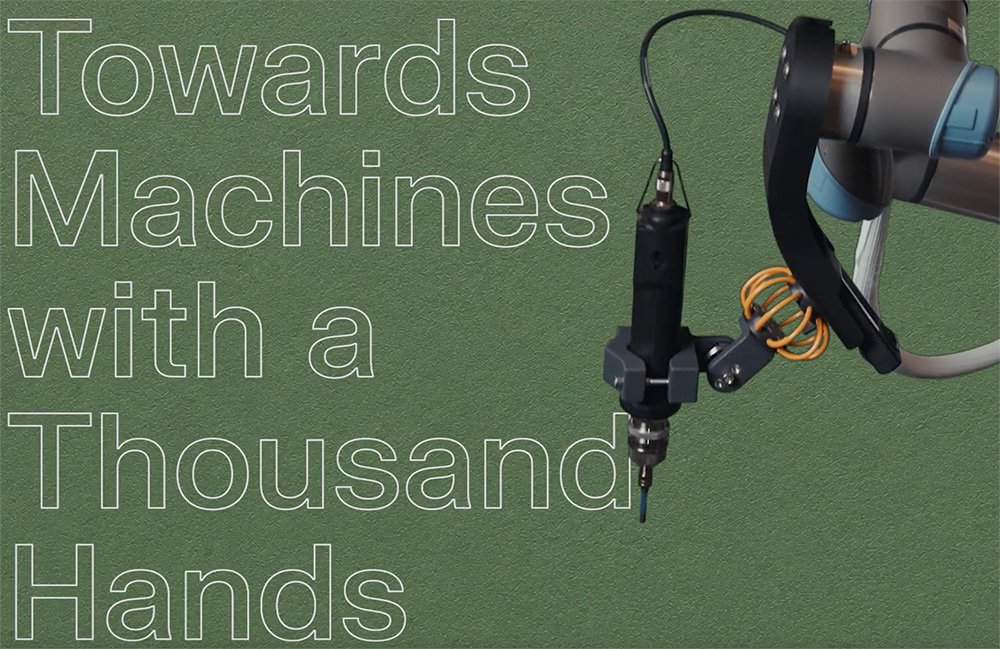
Generalist’s GEN-1 foundation model now supports a range of robot end effectors
Robotics Business Review·Jul 24, 2026

Generalist’s GEN-1 foundation model now supports a range of robot end effectors

Generalist's GEN-1 foundation model can now be trained to work with different robot hands and end effectors, allowing a single base model to control multiple robots. This advancement means construction crews could deploy the same AI system across various robotic equipment without retraining from scratch.

AI & MLRobotics
WEEKLY DISPATCH
Suffolk CEO John Fish on AI and the Jobsite of the Future
ENR Construction Technology·Jul 23, 2026

Suffolk CEO John Fish on AI and the Jobsite of the Future

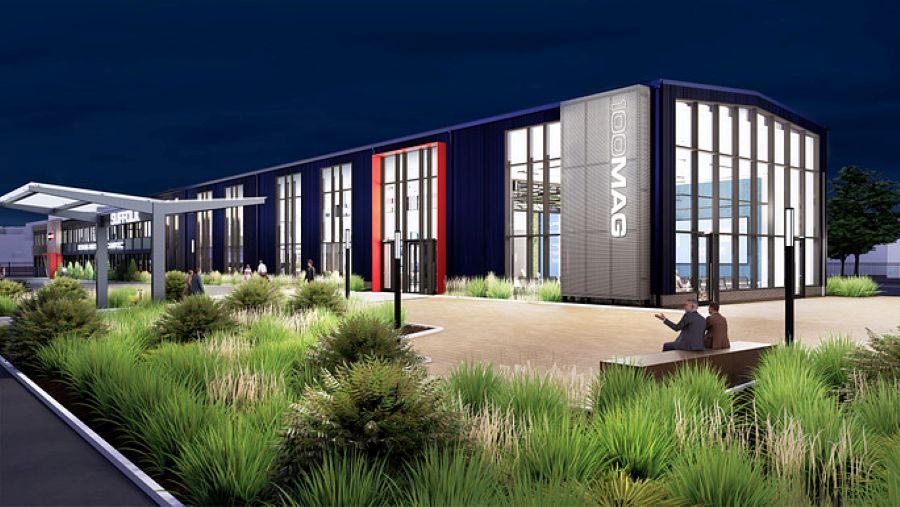
Suffolk is launching a new initiative to use artificial intelligence to improve design, scheduling, and construction processes on jobsites. The effort aims to modernize how construction projects are planned and executed through AI-assisted tools.

AI & MLWorkforce
How time series databases unlock real-time data for robotics
Robotics Business Review·Jul 24, 2026

How time series databases unlock real-time data for robotics

Time series databases enable robotic systems to efficiently process massive volumes of sensor data in real time, which is essential for managing complex construction equipment at scale. These specialized databases support AI-driven insights that help robotics teams optimize performance and maintain reliable system operations on job sites.

RoboticsAI & ML
2026 Construction Tech Award Winners Announced
BuiltWorlds·Jul 23, 2026

2026 Construction Tech Award Winners Announced

The 2026 Construction Tech Awards, merging the Contractor's Choice and Tech Excellence Awards, recognize innovative solutions across four categories that advance technology in the global construction industry. The awards highlight the best applications of new technology throughout preconstruction and other phases of the built environment.

AI & ML
NEURA Robotics establishes NEURA Gym RWTH Aachen to train physical AI
Robotics Business Review·Jul 24, 2026

NEURA Robotics establishes NEURA Gym RWTH Aachen to train physical AI

NEURA Robotics opened NEURA Gym RWTH Aachen in partnership with a German university to develop and train physical AI systems for real-world applications. The facility is one of 10 training centers NEURA is establishing to advance robotics capable of performing physical tasks.

AI & MLRobotics
2026 Construction Tech Award Winners Announced
BuiltWorlds·Jul 23, 2026

2026 Construction Tech Award Winners Announced

The 2026 Construction Tech Awards, combining the Contractor's Choice and Tech Excellence Awards, recognize innovation across the global construction industry in four categories including preconstruction and other key areas. The awards celebrate companies advancing technology application throughout the built environment.

AI & ML
AMD unveils Kria module for real-time control, unified memory for robots
Robotics Business Review·Jul 23, 2026

AMD unveils Kria module for real-time control, unified memory for robots

AMD has launched new embedded processors and AI modules designed to bring real-time control and unified memory capabilities to robotic systems in construction and industrial applications. These new offerings position AMD to compete directly with NVIDIA in the robotics market by enabling faster processing and smarter autonomous equipment on job sites.

AI & MLRobotics
AEC Business·Jul 20, 2026

How AEC Firms Move AI Beyond the Pilot

AEC firms often struggle to move AI projects from initial testing phases into company-wide operations due to implementation challenges and resource constraints. The article outlines practical strategies and proven approaches that help construction companies successfully scale AI solutions across their business.

AI & ML
Ropedia raises $22M to scale data collection for training robots
Robotics Business Review·Jul 23, 2026

Ropedia raises $22M to scale data collection for training robots

Ropedia secured $22 million in funding to expand its data collection platform for robot training, which uses a head-mounted device called HOMIE equipped with 360-degree cameras to capture first-person perspectives. The technology aims to improve how robots learn and perform tasks by collecting real-world training data at scale.

RoboticsAI & ML
WEEKLY DISPATCH
Department of War Issues Strict Guidance Against the Use of Anthropic
AGC of America News·Jul 16, 2026

Department of War Issues Strict Guidance Against the Use of Anthropic

The Department of War has issued strict guidance prohibiting the use of Anthropic's AI tools and services across military operations and defense contracting. Construction firms working on defense projects should review their technology compliance requirements to ensure they don't violate these new restrictions.

AI & ML
Report shares the state of physical AI and robotics
Robotics Business Review·Jul 22, 2026

Report shares the state of physical AI and robotics

Physical AI is advancing autonomous systems that can perceive job sites, make real-time decisions, and perform tasks without constant human direction. These capabilities are reshaping how robots and equipment operate in construction environments.

AI & MLRobotics
Medtronic to launch AI compute platform for the operating room
Robotics Business Review·Jul 22, 2026

Medtronic to launch AI compute platform for the operating room

Medtronic is launching an AI compute platform called Touch Surgery designed for operating rooms that supports pre-operative planning, intra-operative guidance, and post-operative analysis. The platform enables remote tele-mentoring and tele-proctoring to enhance surgical procedures and training.

AI & MLRobotics
WEEKLY DISPATCH
U.K.-based Humanoid secures $152M in Series A funding
Robotics Business Review·Jul 21, 2026

U.K.-based Humanoid secures $152M in Series A funding

U.K.-based Humanoid has secured $152 million in Series A funding at a $1.35 billion valuation to scale its AI-driven industrial robots. The company is expanding commercial deployments of its robotic systems for industrial applications.

AI & MLRobotics
Friction is key to making better robot world models
Robotics Business Review·Jul 21, 2026

Friction is key to making better robot world models

Robot world models require proper conditioning to work effectively in real-world construction applications, a crucial step often overlooked in development. Friction and other physical factors must be accurately incorporated into these models for robots to operate reliably on job sites.

AI & MLRobotics
AGIBOT unveils four embodied AI products for real-world operations at WAIC
Robotics Business Review·Jul 20, 2026

AGIBOT unveils four embodied AI products for real-world operations at WAIC

AGIBOT has introduced four embodied AI products designed for real-world construction and industrial operations. The company demonstrated that its AI-powered robots can execute repeatable workflows at scale, moving beyond prototype testing into practical job site deployment.

AI & MLRobotics
WEEKLY DISPATCH
How to avoid the teleoperation trap in robotics development
Robotics Business Review·Jul 19, 2026

How to avoid the teleoperation trap in robotics development

Teleoperation alone is insufficient for developing capable humanoid robots on job sites. Companies must combine remote operation with reinforcement learning and simulation to create robots that can work independently without constant human control.

RoboticsAI & ML
Palm Garden AI develops Coherence Guard relational decision layer for human-facing robots
Robotics Business Review·Jul 18, 2026

Palm Garden AI develops Coherence Guard relational decision layer for human-facing robots

Palm Garden AI is developing Coherence Guard, a hardware-agnostic software layer designed to improve how robots interact with and respond to humans on job sites. This relational decision layer aims to make human-facing robots safer and more effective for construction environments.

RoboticsAI & ML
WEEKLY DISPATCH
TerraFirma raises $115M to build robotic infrastructure for construction
Robotics Business Review·Jul 16, 2026

TerraFirma raises $115M to build robotic infrastructure for construction

TerraFirma raised $115M to deploy AI-powered software and remote control systems that retrofit existing heavy machinery for construction sites. The platform combines artificial intelligence with a command-and-control center to automate equipment operation and improve jobsite efficiency.

AI & MLRobotics