AllAI & MLRoboticsAutonomy3D PrintingElectrificationSafetyWorkforceMaterialsEDITOR'S PICKWEEKLY DISPATCH
Category

AI & Machine Learning

Artificial intelligence, machine learning, BIM, digital twins, predictive analytics, and data platforms in construction.

514 stories found

The construction industry's transition from AI pilot projects to operational deployment has reached an inflection point, driven simultaneously by labor scarcity and demonstrated technical viability. What distinguishes this moment is not the emergence of new AI capabilities—computer vision, predictive analytics, and autonomous decision-making have matured considerably—but rather the industry's willingness to integrate these tools into mission-critical workflows across estimation, scheduling, and jobsite execution. Suffolk's deployment of OpenSpace, Dusty Robotics, Kaya AI, and Alice Technologies on Gilead's California research center exemplifies this operational maturity, as does MasTec's adoption of Gritt's physical AI for solar construction execution. Meanwhile, the competitive consolidation in takeoff and estimation continues, with ConstructConnect's Project Intelligence and advanced mechanical takeoff platforms now competing on accuracy and integration rather than novelty. The real differentiator has shifted decisively toward organizational capability—firms like Mycon, which elevated technology leadership into the C-suite, recognize that AI deployment demands simultaneous competency in data governance, cybersecurity, workforce training, and regulatory compliance. Construction executives can no longer treat AI as a procurement decision; it demands the same strategic rigor and cross-functional alignment as capital investment or labor planning.

The robotics frontier has simultaneously accelerated and clarified, with technical breakthroughs resolving the programming barrier that historically constrained factory floor automation. Siemens and AGIBOT's demonstration of AI agents that design 3D-printed robot grippers from text prompts, combined with UC Berkeley and NVIDIA's open-source tools enabling machines to automatically write industrial robot programs, have obliterated the assumption that robotics requires specialized programming expertise. Humyn Labs' $47 million funding round to systematize real-world operational data collection signals that the industry recognizes embodied AI as the next frontier, one where robots generalize across tasks rather than operating within narrow, pre-programmed constraints. Yet construction remains in early adoption precisely because regulatory uncertainty, data sovereignty concerns, and the need for standardized infrastructure outweigh technical enablement. The manufacturing data gap—inadequate industrial data collection, weak interoperability standards, and poor feedback loops—represents the genuine constraint on physical AI deployment, not algorithm sophistication.

The workforce awareness and capability gap remains construction's most decisive strategic vulnerability. Only 59 percent of young people recognize that construction already operates with AI, undermining recruitment into the technical roles the industry increasingly demands, while most construction firms have not scaled AI adoption beyond isolated pilots due to implementation barriers and skills deficiencies. The path forward requires construction organizations to treat AI integration as organizational transformation: embedding technology leadership in management structures, investing systematically in workforce education about AI tool validation, and maintaining digital visibility across discovery systems. Firms that invest in the organizational discipline, talent development, and regulatory acumen required to deploy AI effectively at scale—rather than those that simply purchase the latest platforms—are establishing competitive advantages that transcend individual technology choices. Construction is no longer deliberating whether to adopt AI; it is determining whether it will invest the structural, cultural, and human capital necessary to deploy these tools with strategic coherence across operations.

Why Construction Management Can’t Trust Manually Collected Data
AEC Business·Jul 2, 2026

Why Construction Management Can’t Trust Manually Collected Data

Most construction sites rely on manual data collection methods that produce unreliable performance metrics, according to a new Aalto University study. Inaccurate data undermines construction management's ability to make informed decisions and optimize site operations.

AI & ML
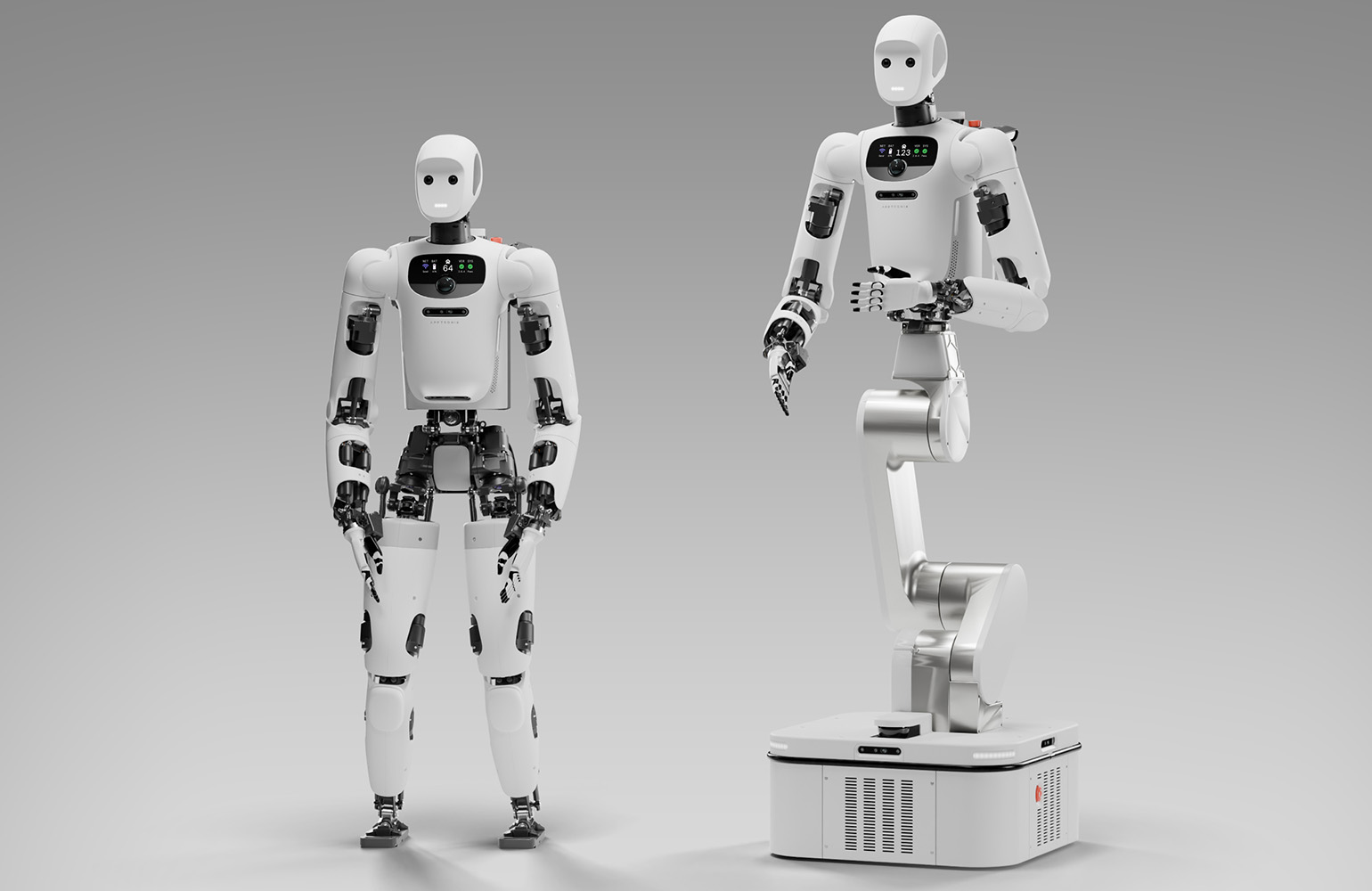
Apptronik unveils Apollo 2 and a flagship data collection and training facility
Robotics Business Review·Jul 1, 2026

Apptronik unveils Apollo 2 and a flagship data collection and training facility

Apptronik has unveiled Apollo 2, a humanoid robot designed as a data collection and training platform that improves through real-world deployment. The company also launched a dedicated facility to support continuous learning and development of the robot's capabilities.

RoboticsAI & ML
Digital Builder Ep 146: Why the Best AI Initiatives Start With Problems, Not Technology
Autodesk Construction Cloud Blog·Jun 30, 2026

Digital Builder Ep 146: Why the Best AI Initiatives Start With Problems, Not Technology

Construction firms have abundant new technology options but struggle to apply them effectively on actual projects. The key to successful AI initiatives is starting with real problems that need solving rather than adopting technology for its own sake.

AI & ML
X Square Robot brings its valuation to $2.8B with four consecutive funding rounds
Robotics Business Review·Jun 30, 2026

X Square Robot brings its valuation to $2.8B with four consecutive funding rounds

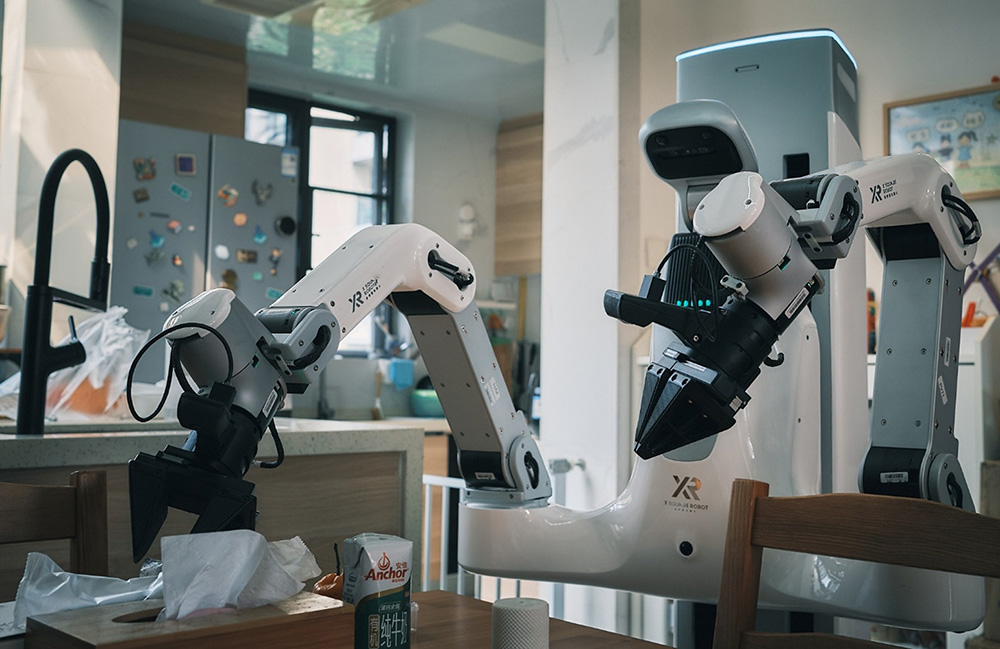
X Square Robots has reached a $2.8 billion valuation through four consecutive funding rounds, combining foundation models with robotics hardware and real-world job site deployments. The company's integrated system includes a data pipeline designed to improve robotic performance in construction and industrial applications.

RoboticsAI & ML
New Trimble AI Takeoff Capabilities Cut MEP Estimating Time and Increase Accuracy
Trimble Constructible·Jun 30, 2026

New Trimble AI Takeoff Capabilities Cut MEP Estimating Time and Increase Accuracy

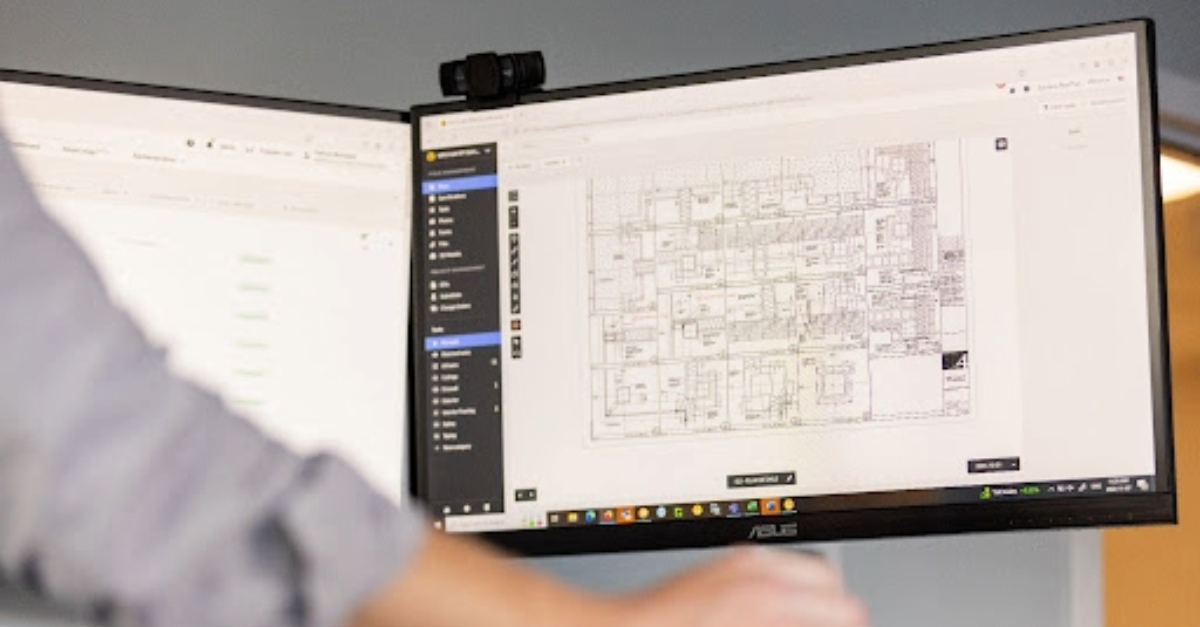
Trimble has released new AI-powered takeoff capabilities that reduce the time required for MEP (mechanical, electrical, plumbing) estimating while improving accuracy. The technology helps estimators work faster and more reliably when preparing project bids and cost proposals.

AI & ML
Soft, robotic cells from morph embed physical AI into hardware
Robotics Business Review·Jun 30, 2026

Soft, robotic cells from morph embed physical AI into hardware

Morph has developed a soft robotics platform that manufactures programmable soft robotic cells designed to embed artificial intelligence directly into physical hardware. This approach could enable construction equipment and tools to perform complex tasks with greater flexibility and adaptive capabilities.

RoboticsAI & ML
Thinking of AI Agents as Members of a Construction Crew
Construction Executive·Jun 30, 2026

Thinking of AI Agents as Members of a Construction Crew

Having access to AI technology means nothing without a strategic plan to actually use it on job sites. Construction firms need to think about AI agents as specialized crew members with specific roles and responsibilities to maximize their value.

AI & MLWorkforce
Insights behind Kinisi’s acquisition by Bear Robotics
Robotics Business Review·Jun 29, 2026

Insights behind Kinisi’s acquisition by Bear Robotics

Kinisi Robotics, which specializes in physical AI technology, has been acquired by Bear Robotics. Founder and CEO Brennand Pierce shares insights into the company's approach to robotics and what the acquisition means for the industry.

AI & MLRobotics
AI, Robotics, and Scaling: Takeaways From the 2026 Paris Global Summit
BuiltWorlds·Jun 29, 2026

AI, Robotics, and Scaling: Takeaways From the 2026 Paris Global Summit

The 2026 Paris Global Summit brought together contractors, investors, and other stakeholders to explore how AI, robotics, and related technologies are transforming the construction industry. The event provided practical insights into scaling these technologies across the built environment sector from multiple perspectives.

AI & MLRobotics
MBody AI expands service robotics operations to eleven states and Canada
Robotics Business Review·Jun 29, 2026

MBody AI expands service robotics operations to eleven states and Canada

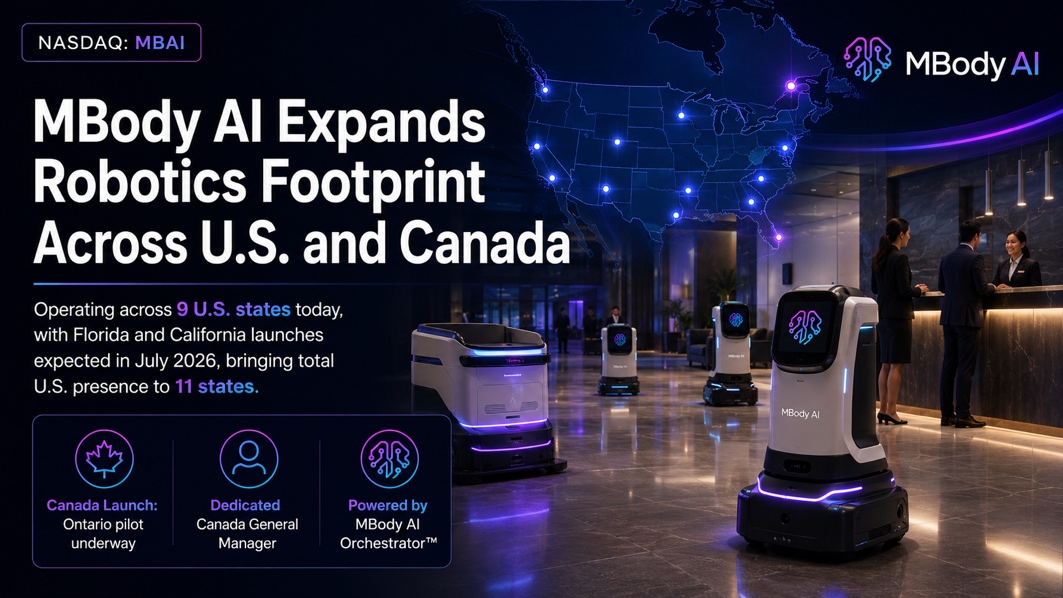
MBody AI is expanding its Orchestrator platform for service robotics across eleven states and into Canada, with recent deployments in Florida and California plus a pilot in Ontario. The hardware-agnostic platform enables construction and service companies to deploy robots more flexibly across different equipment and job sites.

RoboticsAI & ML
Buildots Launches Intelligence Lab, an AI-Powered Project Data Research Hub
ENR Construction Technology·Jun 26, 2026

Buildots Launches Intelligence Lab, an AI-Powered Project Data Research Hub

Buildots has launched an Intelligence Lab that lets contractors pool anonymized project data to generate industry insights powered by AI. The platform enables construction teams to benchmark performance and make data-driven decisions based on aggregated insights from the broader industry.

AI & ML
AGIBOT produces 15,000th robot, marking a milestone in embodied AI deployment
Robotics Business Review·Jun 28, 2026

AGIBOT produces 15,000th robot, marking a milestone in embodied AI deployment

AGIBOT has produced 15,000 wheeled semi-humanoid robots, demonstrating significant progress in bringing embodied AI technology from the lab to real-world deployment. The milestone reflects growing maturity in robotics manufacturing and the transition toward practical job-site applications.

RoboticsAI & ML
AEC Business·Jun 26, 2026

Beyond the Pilot: How AEC Firms Scale AI Adoption

AEC firms can move beyond initial AI pilots by building internal template libraries and establishing risk management frameworks to scale adoption across their operations. These practical approaches help construction and design organizations implement AI tools systematically rather than as isolated experiments.

AI & ML
We know how to build smarter robots. Now, we need to learn smarter ways to test them
Robotics Business Review·Jun 27, 2026

We know how to build smarter robots. Now, we need to learn smarter ways to test them

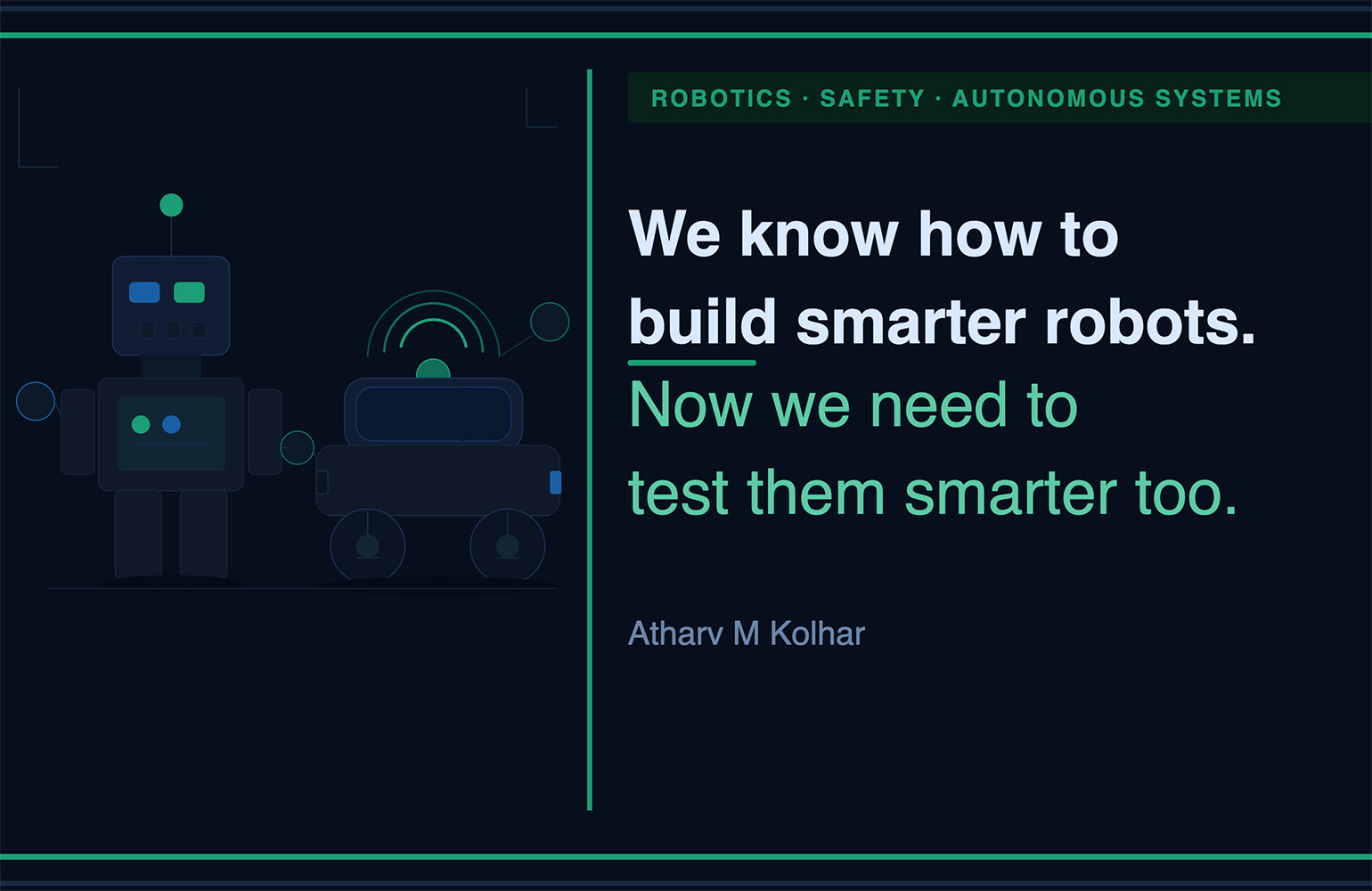
As robots become more autonomous on job sites, the industry needs testing methods that keep pace with their advancing capabilities. Figure AI's testing experts argue that construction companies must develop new quality assurance approaches specifically designed for intelligent autonomous equipment.

RoboticsAutonomy
The key AI features in construction management software that help field crews most
Fieldwire Blog·Jun 26, 2026

The key AI features in construction management software that help field crews most

Modern construction management software uses AI to streamline field operations through real-time project tracking, automated reporting, and predictive analytics that help crews stay on schedule and budget. Key features like image recognition for progress monitoring, intelligent resource allocation, and safety hazard detection directly reduce manual work and improve decision-making on job sites.

AI & MLWorkforce
General Intuition raises $320M to use video game data to train robots
Robotics Business Review·Jun 26, 2026

General Intuition raises $320M to use video game data to train robots

General Intuition secured $320M in funding to develop a novel approach for training construction robots using video game data with labeled actions. This method aims to accelerate AI training for robotics by leveraging the vast libraries of annotated video game footage.

AI & MLRobotics
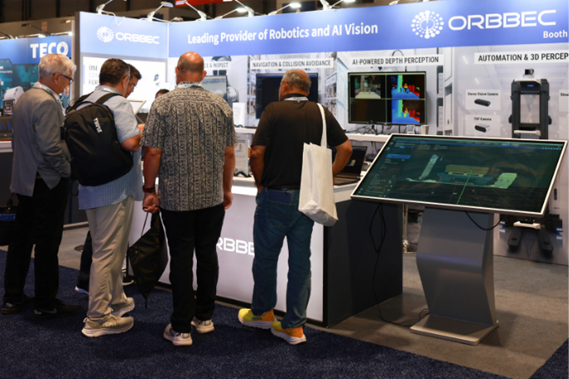
Orbbec shows AI-powered vision systems at Automate 2026
Robotics Business Review·Jun 26, 2026

Orbbec shows AI-powered vision systems at Automate 2026

Orbbec unveiled industrial-grade 3D camera systems designed to handle tough automation environments on job sites. The cameras integrate AI technology to improve how robots perceive and interact with their surroundings.

AI & MLRobotics
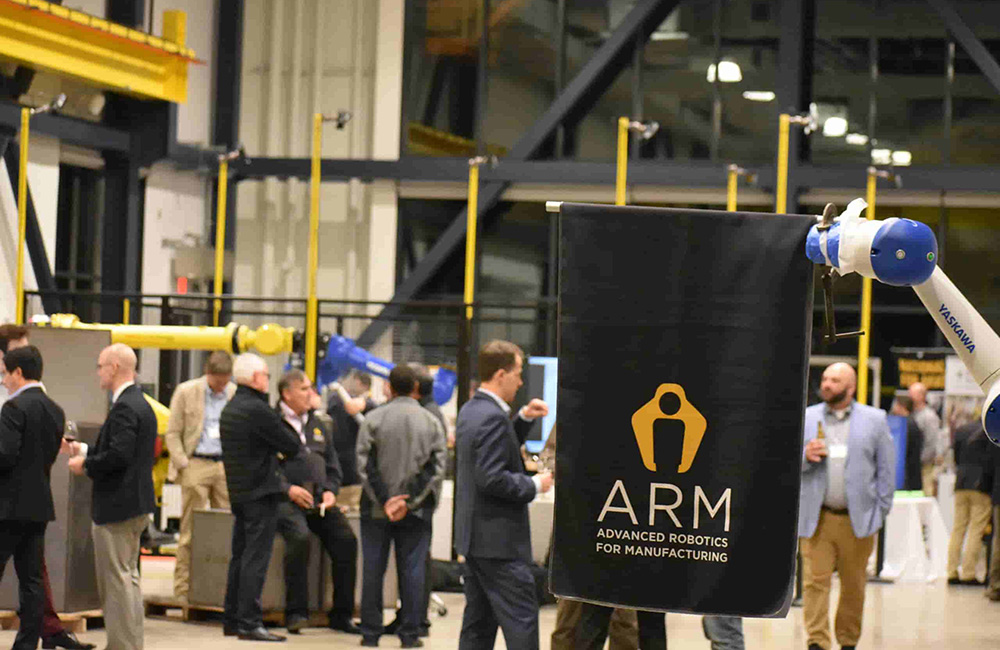
ARM Institute expands RoboticsCareer.org into physical AI
Robotics Business Review·Jun 25, 2026

ARM Institute expands RoboticsCareer.org into physical AI

The ARM Institute has expanded RoboticsCareer.org to showcase job opportunities in physical AI and robotics. The platform now connects employers seeking qualified talent with workers interested in these growing construction and industrial sectors.

RoboticsAI & ML