AllAI & MLRoboticsAutonomy3D PrintingElectrificationSafetyWorkforceMaterialsEDITOR'S PICKWEEKLY DISPATCH
Category

Safety & Wearables

OSHA regulations, jobsite safety technology, smart PPE, wearables, incident prevention, and compliance tools.

382 stories found

The implementation discipline gap that defined 2026 continues to crystallize into measurable operational consequences. Construction organizations now possess unprecedented technical capacity for hazard detection—from drone-based monitoring systems exemplified by Axon's expanded first-responder capabilities through Skydio to real-time wearable sensors and environmental exposure tracking—yet this capability remains systematically underdeployed where it matters most. Recent industry reports documenting how technology is improving construction worker safety and health reveal that successful implementations cluster within organizations already operating mature safety cultures, while struck-by incidents, scaffolding collapses, and adjacent-work hazards continue claiming lives across the broader industry. The technical pathways to remove personnel from hazardous exposures now exist. The distinguishing factor separating organizations with demonstrable safety outcomes from those experiencing preventable fatalities is not equipment availability but organizational discipline: the commitment to respond consistently to alerts generated, the financial commitment to ensure properly fitted PPE reaches and remains functional on worksites, and the psychological safety cultures that enable workers across all employment categories—permanent crews, contracted specialists, and maintenance personnel—to disclose health limitations and hazards without schedule-driven retaliation.

Data security and privacy requirements for connected PPE have emerged as a critical implementation barrier that construction companies continue to underestimate. Smart wearables transmitting health data, respiratory protection metrics, or environmental exposure information create significant liability exposure when medical information remains inadequately protected across cloud-based systems. This security dimension operates simultaneously as a regulatory compliance requirement and an organizational accountability framework—companies deploying connected PPE without robust data protection protocols face exposure not only to occupational health violations but to data breach liability affecting workers' protected health information. The paradox remains structural: the same cloud connectivity enabling real-time hazard alerts and longitudinal health monitoring creates attack surfaces and privacy vulnerabilities that organizations must actively defend.

Recent regulatory developments reinforce that standards organizations have moved decisively beyond prescriptive requirements into implementation efficacy. OSHA's expanded Type II safety helmet guidance, the National Safety Council's updated ROI calculators for safety technology investments, and revised ANSI/ISEA standards for high-visibility apparel now addressing fit issues that compromise protective function establish that properly equipped and trained personnel represent documented baseline requirements rather than debatable operational considerations. Simultaneously, emerging legislative action—including Ohio's work zone safety act and MSHA's proposed updates to silica dust exposure rules for mining—demonstrates regulatory bodies recognizing that hazard detection and exposure documentation alone insufficient without enforcement mechanisms ensuring organizational response. Construction executives in 2027 must recognize that competitive differentiation and legal defensibility depend less on acquiring additional detection systems and more on establishing the organizational infrastructure to translate safety information into consistent operational discipline, ensuring all worker populations receive appropriate protection, and creating accountability frameworks where hazard disclosure generates protective action rather than schedule pressure.

EPA seeks feedback on draft risk evaluation for ethylene dibromide
Safety+Health Magazine·Sep 8, 2026

EPA seeks feedback on draft risk evaluation for ethylene dibromide

The EPA is reviewing draft risk evaluation findings that ethylene dibromide poses unreasonable risks to workers under certain conditions of use. The agency is now accepting public comment on this chemical substance, also known as 1,2-dibromoethane, which is a colorless compound used in construction and industrial applications.

Safety
Why vision AI is the safety backbone of the automated job site
Robotics Business Review·Sep 8, 2026

Why vision AI is the safety backbone of the automated job site

Vision AI enables robots and human workers to operate safely together on job sites by providing continuous perception rather than replacing either. The technology acts as a safety system that enhances automated equipment and human judgment in shared work environments.

AI & MLRobotics
Are weight-loss drugs why needlestick injuries are up among NYC sanitation workers?
Safety+Health Magazine·Sep 8, 2026

Are weight-loss drugs why needlestick injuries are up among NYC sanitation workers?

Needlestick injuries among NYC sanitation workers have increased to 49 cases, with officials pointing to GLP-1 weight-loss drug use as a likely factor due to improperly disposed needles in waste. The rise highlights workplace safety risks for sanitation crews handling residential and commercial trash.

WorkforceSafety
Eric Sivertson discusses FPGAs and robot security
Robotics Business Review·Sep 6, 2026

Eric Sivertson discusses FPGAs and robot security

Lattice Semiconductor's Eric Sivertson explains how FPGAs (field-programmable gate arrays) can enhance the safety and security of robotic systems used in construction and other industries. FPGAs offer flexible, real-time processing capabilities that help robots operate more reliably and protect against cybersecurity threats.

RoboticsSafety
WEEKLY DISPATCH
Washington state begins rulemaking on indoor heat exposure
Safety+Health Magazine·Sep 4, 2026

Washington state begins rulemaking on indoor heat exposure

Washington State Department of Labor & Industries has initiated rulemaking to establish indoor heat exposure standards across all industries following a petition received in October 2025. The new rules aim to prevent heat-related illness and injuries in workplaces including construction.

WorkforceSafety
WEEKLY DISPATCH
How FPGAs become the gatekeepers of physical AI security
Robotics Business Review·Sep 4, 2026

How FPGAs become the gatekeepers of physical AI security

FPGAs (Field-Programmable Gate Arrays) can provide reliable safety controls for robotic systems by creating predictable guardrails that prevent AI-driven equipment from making unsafe decisions on job sites. Lattice Semiconductor's security approach uses this hardware-level technology to ensure construction robots operate within predetermined safety parameters.

RoboticsSafety
FMCSA revamps resources for onboard safety tech program
Safety+Health Magazine·Sep 4, 2026

FMCSA revamps resources for onboard safety tech program

The Federal Motor Carrier Safety Administration has updated its TechCelerate Now program with new resources to help trucking companies understand the financial benefits of adopting onboard safety technologies. The revamped program includes an ROI calculation tool and updated materials designed to demonstrate how safety tech investments pay off for motor carriers.

Safety
WEEKLY DISPATCH
The Race to Reengineer Cybersecurity
ENR Construction Technology·Sep 3, 2026

The Race to Reengineer Cybersecurity

Cyberattacks on construction systems are becoming more sophisticated as mission-critical infrastructure grows smarter and more connected. New cybersecurity engineering standards are being developed to better protect these essential systems from disruption.

Safety
NexCOBOT discusses physical AI market hurdles and acceleration
Robotics Business Review·Sep 2, 2026

NexCOBOT discusses physical AI market hurdles and acceleration

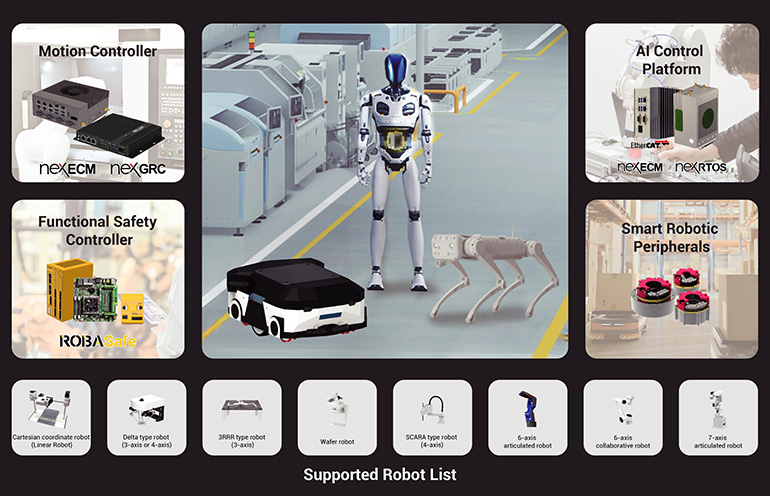
NexCOBOT, a provider of safety and motion control systems, analyzes the current challenges and growth opportunities in the physical AI market for robotics and automation. The company highlights how major technology firms are advancing physical AI adoption and identifies where the sector is positioned to expand in industrial applications.

AI & MLRobotics
Worker heat protections front and center during House subcommittee hearing
Safety+Health Magazine·Sep 2, 2026

Worker heat protections front and center during House subcommittee hearing

OSHA's proposed heat illness and injury prevention rule was debated before the House Workforce Protections Subcommittee on September 2, with testimony from industry representatives like Elizabeth Milito examining the role of federal regulation. The hearing highlighted ongoing discussion about protecting construction workers from heat-related hazards in the workplace.

SafetyWorkforce
The Missing Layer in Robot Safety Assurance
Robotics Business Review·Sep 1, 2026

The Missing Layer in Robot Safety Assurance

Robot safety programs need to address cybersecurity vulnerabilities that could compromise how machines perceive their environment, make decisions, and execute tasks on job sites. Current safety assurance methods are missing this critical layer of protection against attacks that could alter robot behavior.

RoboticsAutonomy
Workers over age 50 may be facing a ‘sleep crisis’
Safety+Health Magazine·Sep 2, 2026

Workers over age 50 may be facing a ‘sleep crisis’

University of Edinburgh researchers studying 45 British workers aged 50-66 discovered that nighttime sleep disturbances occur more frequently than previously documented, revealing a hidden sleep crisis among older workers. Construction companies should consider this finding when managing aging workforces, as sleep quality directly impacts worker safety and productivity on job sites.

WorkforceSafety
Safety board investigation of hydrogen sulfide-related deaths focuses on hazard recognition
Safety+Health Magazine·Sep 1, 2026

Safety board investigation of hydrogen sulfide-related deaths focuses on hazard recognition

The Chemical Safety Board is investigating a fatal April incident involving hydrogen sulfide and emphasizes that workers must understand chemical hazards, incompatibilities, and proper disposal procedures to prevent similar accidents. Proper hazard recognition and training are critical safety practices for construction and industrial operations handling dangerous chemicals.

Safety
Take the survey: workplace policies on traffic safety
Safety+Health Magazine·Sep 1, 2026

Take the survey: workplace policies on traffic safety

UNC Highway Safety Research Center is developing a practical handbook to help employers create effective workplace traffic safety programs. The researchers are surveying organizations and government agencies to gather input for the initiative.

Safety
Working near overhead power lines: New toolbox talk available
Safety+Health Magazine·Aug 31, 2026

Working near overhead power lines: New toolbox talk available

Washington — Workers who use cranes, lifts or ladders should keep tall machinery and loads at least 20 feet away from overhead power lines, NIOSH emphasizes in a new toolbox talk. “Contact with overhead power lines can result in serious injury and even death,” the agency says in the resource,…

Safety
Respiratory Protection Day is Sept. 1
Safety+Health Magazine·Aug 31, 2026

Respiratory Protection Day is Sept. 1

NIOSH is promoting Respiratory Protection Day on September 1 to emphasize proper respirator use and workplace safety for millions of workers. Employers are encouraged to share resources and information about respiratory protection protocols on the job.

Safety
EPA finalizes compliance deadline extensions on use of two cancer-linked chemicals
Safety+Health Magazine·Aug 28, 2026

EPA finalizes compliance deadline extensions on use of two cancer-linked chemicals

The EPA has extended compliance deadlines for rules restricting perchloroethylene (PCE) and carbon tetrachloride, two chemicals linked to cancer and other health risks. Construction firms using these substances in cleaning and degreasing applications will have additional time to transition to compliant alternatives.

MaterialsSafety
OSHA’s Birmingham Region renewing series of emphasis programs
Safety+Health Magazine·Aug 28, 2026

OSHA’s Birmingham Region renewing series of emphasis programs

OSHA's Birmingham region is extending five Regional Emphasis Programs for five years starting October 1, including focus areas on landscaping, horticultural services, noise hazards, and powered industrial equipment. These renewed programs will increase regulatory attention and enforcement activities in these specific safety areas for construction and related industries.

Safety