AllAI & MLRoboticsAutonomy3D PrintingElectrificationSafetyWorkforceMaterialsEDITOR'S PICKWEEKLY DISPATCH
Category

Safety & Wearables

OSHA regulations, jobsite safety technology, smart PPE, wearables, incident prevention, and compliance tools.

382 stories found

The implementation discipline gap that defined 2026 has now crystallized into a specific operational vulnerability: construction organizations possess unprecedented technical capacity for hazard detection and worker protection, yet this capability remains systematically underdeployed where it matters most. OSHA's expanded guidance on Type II safety helmets, the National Safety Council's expanded ROI calculators for safety technology investments, and revised ANSI/ISEA standards for high-visibility apparel (now addressing fit issues that compromise protective function) collectively demonstrate that regulatory bodies and standards organizations have moved beyond prescriptive requirements into the domain of implementation efficacy. The emerging clarity is unambiguous—properly fitted PPE, appropriate helmet selection for specific hazard environments, and demonstrated return on safety technology investments are no longer debatable operational considerations but documented baseline requirements. Organizations like Axon, through its $1.2 billion investment in Skydio and expansion of drone-based first responder capabilities, exemplify how automation and remote monitoring systems continue expanding the technical pathways to remove personnel from hazardous exposures while maintaining real-time hazard visibility—yet adoption remains concentrated among organizations already operating within mature safety cultures rather than extending systematically across the industry.

Data security and privacy requirements for connected PPE have emerged as a critical implementation barrier that construction companies have underestimated. Smart wearables that transmit health data, respiratory protection metrics, or environmental exposure information create significant liability exposure when medical information remains inadequately protected across cloud-based systems. This security dimension operates as both a regulatory compliance requirement and an organizational accountability framework—companies deploying connected PPE without robust data protection protocols now face exposure not only to occupational health violations but to data breach liability affecting workers' protected health information. The paradox is structural: the same cloud connectivity that enables real-time hazard alerts and longitudinal health monitoring also creates attack surfaces and privacy vulnerabilities that organizations must actively defend rather than treat as background infrastructure.

The persistent gap between capability and implementation discipline extends into occupational categories that remain systematically underserved. While struck-by prevention methodologies, temporary fire detection systems during permanent protection offline periods, and compact equipment reducing physical strain all represent demonstrable safety advances, adoption rates remain uneven across worker populations and employment models. Construction executives confronting this landscape must recognize that safety outcomes in 2027 depend less on acquiring additional detection systems and more on establishing the organizational discipline to respond consistently to alerts generated, the financial commitment to ensure PPE reaches and remains functional on worksites, and the psychological safety cultures that enable workers across all employment categories—permanent crews, contracted specialists, and maintenance personnel—to disclose health limitations and hazards without schedule-driven retaliation. The technical infrastructure now exists. The distinguishing competitive and legal factor remains whether organizations treat safety information as actionable operational data or as documentation for compliance files.

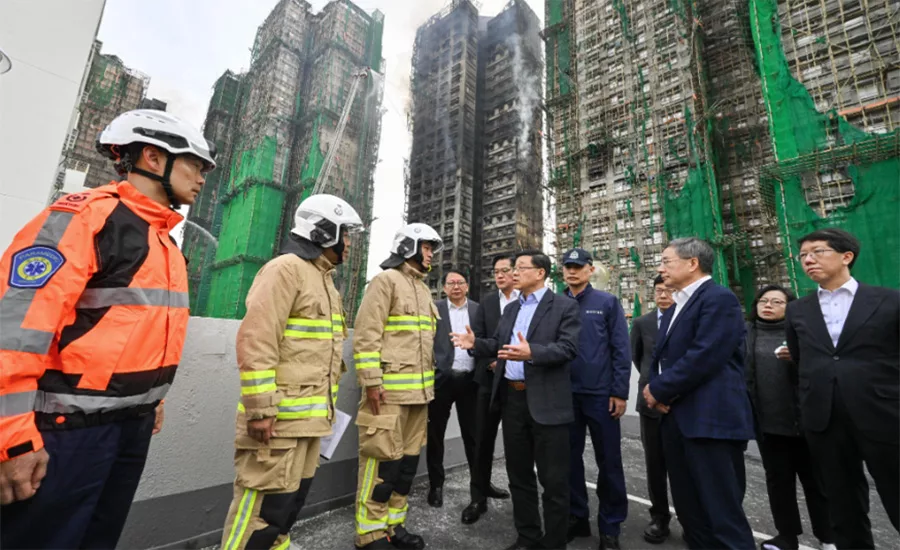
Hong Kong Probes Building Materials After Apartment Tower Blaze Killed at Least 128
ENR Construction Technology·Nov 28, 2025

Hong Kong Probes Building Materials After Apartment Tower Blaze Killed at Least 128

A deadly apartment tower fire in Hong Kong that killed at least 128 people is under investigation for potential links to builders' use of construction materials, scaffolding, and fire-safety practices. About 200 residents remain unaccounted for as officials examine whether building materials and safety procedures contributed to the rapid spread of the blaze.


MaterialsSafety
How to Address PFAS Cleanup in Semiconductor Fabrication Facilities
Arcadis Insights·Nov 13, 2025

How to Address PFAS Cleanup in Semiconductor Fabrication Facilities

Semiconductor fabrication facilities face significant challenges in cleaning up PFAS (per- and polyfluoroalkyl substances), which contaminate soil and groundwater during manufacturing operations. Effective remediation requires specialized treatment technologies, regulatory compliance strategies, and site-specific approaches to manage these persistent chemicals safely.

MaterialsSafety
MIT announces 2024 Bose Grants
MIT News – Construction/Architecture·Apr 24, 2024

MIT announces 2024 Bose Grants

MIT's 2024 Bose Grants are funding research into clean hydrogen production and basalt architecture—both relevant to construction's push toward sustainable building materials and energy solutions. The grants also support fetal health-sensing fabric and shark-based ocean monitoring, expanding potential applications for wearable technology and environmental monitoring.

MaterialsSafety
MIT announces 2023 Bose Grants for daring new research
MIT News – Construction/Architecture·Sep 29, 2023

MIT announces 2023 Bose Grants for daring new research

MIT's 2023 Bose Grants are funding research into honeybee tracking systems, innovative glass building materials, and biomechanics of human movement. The projects span construction-relevant areas including materials science and potential applications in worker safety and performance.

MaterialsSafety