AllAI & MLRoboticsAutonomy3D PrintingElectrificationSafetyWorkforceMaterialsEDITOR'S PICKWEEKLY DISPATCH
Category

Safety & Wearables

OSHA regulations, jobsite safety technology, smart PPE, wearables, incident prevention, and compliance tools.

382 stories found

The implementation discipline gap that defined 2026 has now crystallized into a specific operational vulnerability: construction organizations possess unprecedented technical capacity for hazard detection and worker protection, yet this capability remains systematically underdeployed where it matters most. OSHA's expanded guidance on Type II safety helmets, the National Safety Council's expanded ROI calculators for safety technology investments, and revised ANSI/ISEA standards for high-visibility apparel (now addressing fit issues that compromise protective function) collectively demonstrate that regulatory bodies and standards organizations have moved beyond prescriptive requirements into the domain of implementation efficacy. The emerging clarity is unambiguous—properly fitted PPE, appropriate helmet selection for specific hazard environments, and demonstrated return on safety technology investments are no longer debatable operational considerations but documented baseline requirements. Organizations like Axon, through its $1.2 billion investment in Skydio and expansion of drone-based first responder capabilities, exemplify how automation and remote monitoring systems continue expanding the technical pathways to remove personnel from hazardous exposures while maintaining real-time hazard visibility—yet adoption remains concentrated among organizations already operating within mature safety cultures rather than extending systematically across the industry.

Data security and privacy requirements for connected PPE have emerged as a critical implementation barrier that construction companies have underestimated. Smart wearables that transmit health data, respiratory protection metrics, or environmental exposure information create significant liability exposure when medical information remains inadequately protected across cloud-based systems. This security dimension operates as both a regulatory compliance requirement and an organizational accountability framework—companies deploying connected PPE without robust data protection protocols now face exposure not only to occupational health violations but to data breach liability affecting workers' protected health information. The paradox is structural: the same cloud connectivity that enables real-time hazard alerts and longitudinal health monitoring also creates attack surfaces and privacy vulnerabilities that organizations must actively defend rather than treat as background infrastructure.

The persistent gap between capability and implementation discipline extends into occupational categories that remain systematically underserved. While struck-by prevention methodologies, temporary fire detection systems during permanent protection offline periods, and compact equipment reducing physical strain all represent demonstrable safety advances, adoption rates remain uneven across worker populations and employment models. Construction executives confronting this landscape must recognize that safety outcomes in 2027 depend less on acquiring additional detection systems and more on establishing the organizational discipline to respond consistently to alerts generated, the financial commitment to ensure PPE reaches and remains functional on worksites, and the psychological safety cultures that enable workers across all employment categories—permanent crews, contracted specialists, and maintenance personnel—to disclose health limitations and hazards without schedule-driven retaliation. The technical infrastructure now exists. The distinguishing competitive and legal factor remains whether organizations treat safety information as actionable operational data or as documentation for compliance files.

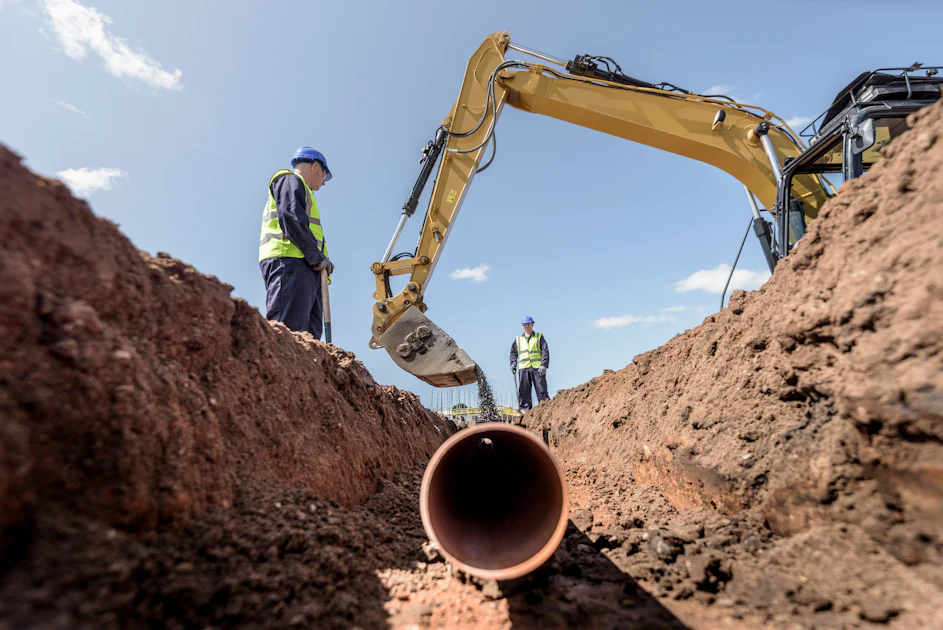
Contractor with Long History of Trench Violations Faces $4.7M Fine After Fatality
Equipment World·Apr 2, 2026

Contractor with Long History of Trench Violations Faces $4.7M Fine After Fatality

A worker died and another was seriously injured in a cave-in on a sewer project by Revoli Construction, which has OSHA violations...
Safety
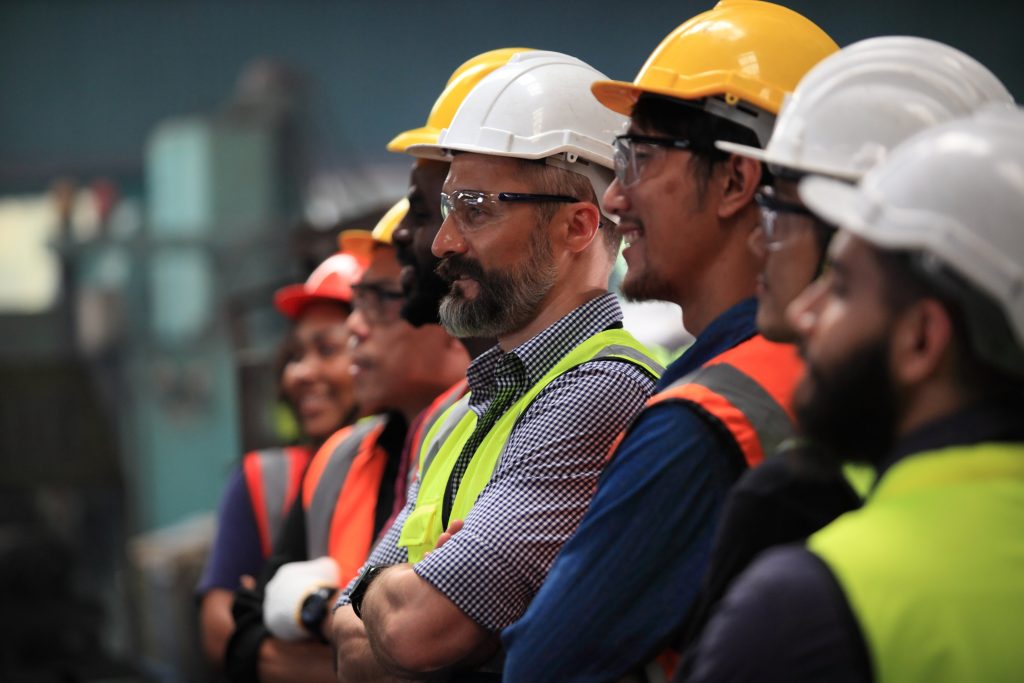
One Industry, One Goal: Construction Safety Week 2026
Construction Executive·Apr 2, 2026

One Industry, One Goal: Construction Safety Week 2026

Steven Carter from Gilbane discusses efforts to unite the construction industry around safety priorities, focusing on risk management, respect, and creating safer job sites during Construction Safety Week 2026. The initiative emphasizes a unified industry approach to reducing workplace hazards and improving safety culture across construction projects.
Safety
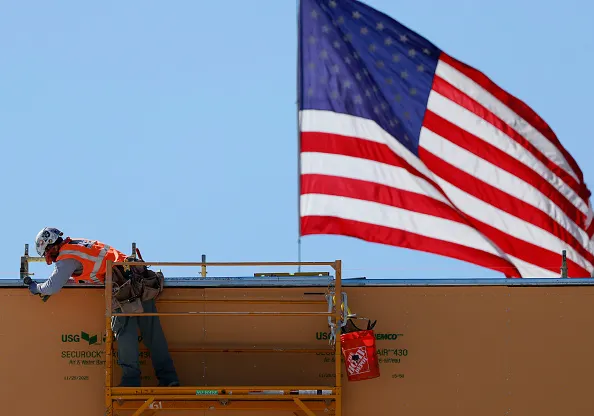
Construction at an ‘inflection point’: new ASCE CEO
Construction Dive·Mar 31, 2026

Construction at an ‘inflection point’: new ASCE CEO

Peter O'Neill has become the new CEO of the American Society of Civil Engineers, bringing experience from leadership roles in global security and environmental health and safety organizations. The ASCE describes the construction industry as being at an inflection point, suggesting significant change ahead in how the sector operates.

Safety
AML3D Lands US Navy Contract for Obsolete Submarine Components
3D Printing Industry·Mar 31, 2026

AML3D Lands US Navy Contract for Obsolete Submarine Components

Australian metal additive manufacturing company AML3D Limited has secured an order to produce five high-demand, non-safety critical replacement components for use in active US Navy submarines. Valued at approximately AU$2.61 million (US$1.84 million), the agreement was signed with BlueForge…

3D PrintingSafety
Construction Dive·Mar 25, 2026

Suffolk to use video coaching platform for jobsite safety

Suffolk is adopting Arrowsight, a video coaching platform that helps improve jobsite safety by having human reviewers analyze worker behavior. The platform identifies both safe and unsafe practices on site, using human judgment rather than AI to provide targeted safety coaching.

AI & MLSafety
The Robot Report·Mar 24, 2026

TI partners with NVIDIA to accelerate robot deployments

TI connects NVIDIA physical AI compute to real-world applications with deterministic control, sensing, power, and safety at every joint. The post TI partners with NVIDIA to accelerate robot deployments appeared first on The Robot Report .

RoboticsSafety
Construction Dive·Mar 24, 2026

AI doesn’t know what your safety experts know: data application specialist

AI tools work best for safety analysis when given specific, focused questions and reliable data rather than open-ended tasks. Safety experts should guide AI by providing clear parameters and quality information to help identify meaningful safety trends in construction projects.
Safety
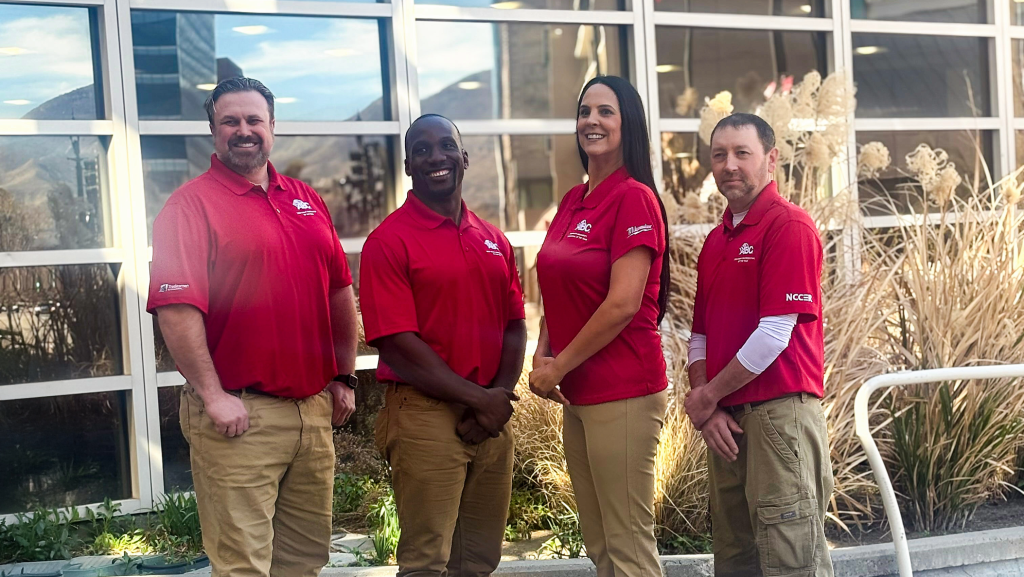
ABC Names 2026’s Top Craft Instructor, Craft Pro, Young Pro and Safety Pro
Construction Executive·Mar 23, 2026

ABC Names 2026’s Top Craft Instructor, Craft Pro, Young Pro and Safety Pro

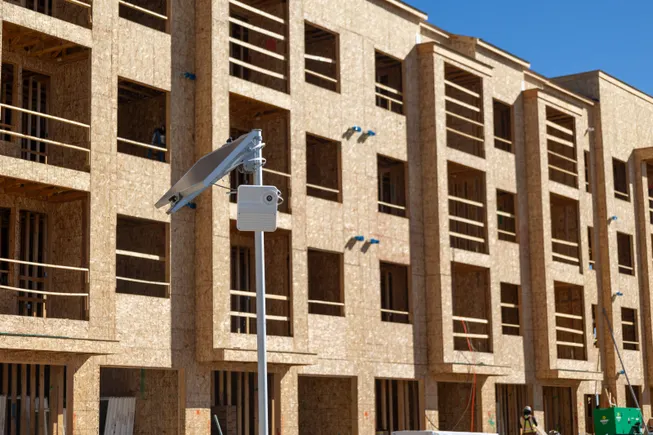
ABC has announced its 2026 Construction Workforce Award winners across four categories: Craft Instructor, Craft Pro, Young Pro, and Safety Pro. These awards recognize outstanding individuals who excel in their roles and contribute to the construction industry's workforce development.
SafetyWorkforce
6 contech firms raise a combined $126M
Construction Dive·Mar 11, 2026

6 contech firms raise a combined $126M

Six construction technology startups secured $126 million in combined funding to develop AI tools, reality capture systems, safety monitoring software, and estimation platforms. The investment signals strong investor confidence in digital solutions that can improve job site safety, efficiency, and project accuracy.

AI & MLSafety
The Role of Ergonomics in Preventing Soft Tissue Injuries Caused by Heavy Equipment Handling
Construction Executive·Mar 17, 2026

The Role of Ergonomics in Preventing Soft Tissue Injuries Caused by Heavy Equipment Handling

Contractors can protect their workers from soft tissue injuries by applying ergonomic principles when handling heavy equipment. Proper ergonomics reduces strain and injury risk on job sites, making it a key safety practice for construction crews.

SafetyWorkforce
Building Safeguards: A Deeper Look at Cybersecurity in the Construction Industry
ENR Construction Technology·Mar 10, 2026

Building Safeguards: A Deeper Look at Cybersecurity in the Construction Industry

The construction industry faces growing cybersecurity threats that can disrupt operations and compromise project data. Implementing robust digital safeguards is essential to protect job sites, equipment, and business continuity in an increasingly connected construction environment.

Safety
How Mobile Tools Are Capturing Safety Data on Jobsites
Construction Executive·Mar 17, 2026

How Mobile Tools Are Capturing Safety Data on Jobsites

Companies are using mobile tools to collect safety data on job sites, allowing them to spot hazards and prevent accidents before they occur. This proactive approach relies on leading indicators rather than waiting for incidents to happen.

Safety
Kaneko Optical Launches UROKO, a New 3D Printed Eyewear Collection for ISSEY MIYAKE MEN SS26
3D Printing Industry·Mar 9, 2026

Kaneko Optical Launches UROKO, a New 3D Printed Eyewear Collection for ISSEY MIYAKE MEN SS26

Kaneko Optical, a Japanese eyewear brand, has used 3D printing to translate the surface language of Japanese ceramics into wearable form, releasing UROKO, a new limited eyewear model for Japanese designer ISSEY MIYAKE MEN’s Spring Summer 2026 “DANCING TEXTURE” collection, where…

3D PrintingSafety
Frontline Leadership Under Pressure: Strengthening Supervisor Support to Improve Safety and Performance
Construction Executive·Mar 17, 2026

Frontline Leadership Under Pressure: Strengthening Supervisor Support to Improve Safety and Performance

Construction supervisors face mounting responsibility and pressure as project demands increase while safety and performance standards become stricter. Strengthening support systems for frontline leaders is essential to help them manage these challenges and maintain safety and performance standards on job sites.

Safety
Construction Dive·Mar 9, 2026

Shaping the future of the construction industry with hazard recognition, response and respect

Construction Safety Week is working to create change through a unified hazard recognition approach.

Safety
The Robot Report·Mar 6, 2026

Simbe Tally shelf-scanning robot achieves UL 3300 certification

As part of the UL 3300 evaluation, Tally passed more than 40 safety tests, demonstrating its ability to operate safely in retail settings. The post Simbe Tally shelf-scanning robot achieves UL 3300 certification appeared first on The Robot Report .
RoboticsSafety
The Hierarchy of Energy Control: The Cornerstone of Direct Controls in Construction
Construction Executive·Mar 4, 2026

The Hierarchy of Energy Control: The Cornerstone of Direct Controls in Construction

The hierarchy of energy control is a practical framework applicable to construction jobsites, not just laboratory settings. It serves as a foundational approach for implementing direct controls to manage hazards and improve safety on projects.
Safety
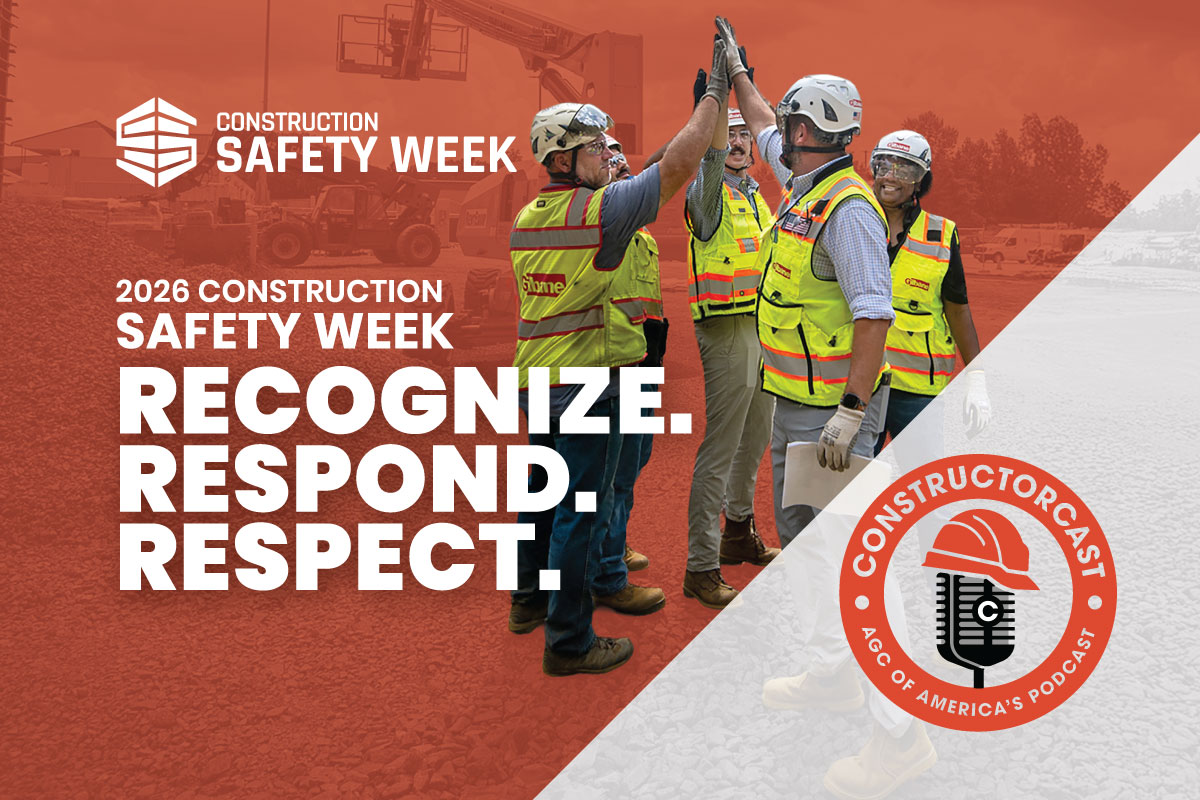
ConstructorCast Explores Construction Safety Week 2026 and the Power of “Recognize, Respond, Respect”
AGC of America News·Feb 13, 2026

ConstructorCast Explores Construction Safety Week 2026 and the Power of “Recognize, Respond, Respect”

ConstructorCast examines Construction Safety Week 2026 and promotes the "Recognize, Respond, Respect" framework for improving jobsite safety practices. The initiative focuses on helping construction workers identify hazards, take appropriate action, and foster a culture of mutual respect on projects.

SafetyWorkforce