AllAI & MLRoboticsAutonomy3D PrintingElectrificationSafetyWorkforceMaterialsEDITOR'S PICKWEEKLY DISPATCH
Category

AI & Machine Learning

Artificial intelligence, machine learning, BIM, digital twins, predictive analytics, and data platforms in construction.

514 stories found

The construction industry's transition from AI pilot projects to operational deployment has reached an inflection point, driven simultaneously by labor scarcity and demonstrated technical viability. What distinguishes this moment is not the emergence of new AI capabilities—computer vision, predictive analytics, and autonomous decision-making have matured considerably—but rather the industry's willingness to integrate these tools into mission-critical workflows across estimation, scheduling, and jobsite execution. Suffolk's deployment of OpenSpace, Dusty Robotics, Kaya AI, and Alice Technologies on Gilead's California research center exemplifies this operational maturity, as does MasTec's adoption of Gritt's physical AI for solar construction execution. Meanwhile, the competitive consolidation in takeoff and estimation continues, with ConstructConnect's Project Intelligence and advanced mechanical takeoff platforms now competing on accuracy and integration rather than novelty. The real differentiator has shifted decisively toward organizational capability—firms like Mycon, which elevated technology leadership into the C-suite, recognize that AI deployment demands simultaneous competency in data governance, cybersecurity, workforce training, and regulatory compliance. Construction executives can no longer treat AI as a procurement decision; it demands the same strategic rigor and cross-functional alignment as capital investment or labor planning.

The robotics frontier has simultaneously accelerated and clarified, with technical breakthroughs resolving the programming barrier that historically constrained factory floor automation. Siemens and AGIBOT's demonstration of AI agents that design 3D-printed robot grippers from text prompts, combined with UC Berkeley and NVIDIA's open-source tools enabling machines to automatically write industrial robot programs, have obliterated the assumption that robotics requires specialized programming expertise. Humyn Labs' $47 million funding round to systematize real-world operational data collection signals that the industry recognizes embodied AI as the next frontier, one where robots generalize across tasks rather than operating within narrow, pre-programmed constraints. Yet construction remains in early adoption precisely because regulatory uncertainty, data sovereignty concerns, and the need for standardized infrastructure outweigh technical enablement. The manufacturing data gap—inadequate industrial data collection, weak interoperability standards, and poor feedback loops—represents the genuine constraint on physical AI deployment, not algorithm sophistication.

The workforce awareness and capability gap remains construction's most decisive strategic vulnerability. Only 59 percent of young people recognize that construction already operates with AI, undermining recruitment into the technical roles the industry increasingly demands, while most construction firms have not scaled AI adoption beyond isolated pilots due to implementation barriers and skills deficiencies. The path forward requires construction organizations to treat AI integration as organizational transformation: embedding technology leadership in management structures, investing systematically in workforce education about AI tool validation, and maintaining digital visibility across discovery systems. Firms that invest in the organizational discipline, talent development, and regulatory acumen required to deploy AI effectively at scale—rather than those that simply purchase the latest platforms—are establishing competitive advantages that transcend individual technology choices. Construction is no longer deliberating whether to adopt AI; it is determining whether it will invest the structural, cultural, and human capital necessary to deploy these tools with strategic coherence across operations.

MISUMI Group invests $1B in Americas, global AI and digital manufacturing
Robotics Business Review·May 30, 2026

MISUMI Group invests $1B in Americas, global AI and digital manufacturing

MISUMI Group is investing $1 billion to expand operations in the Americas and advance global AI and digital manufacturing capabilities. The company is combining its precision components with Fictiv's digital manufacturing platform to streamline bill of materials sourcing for construction and industrial projects.

AI & ML3D Printing
7 Everyday Construction Tasks Made Faster with Autodesk Assistant
Autodesk Construction Cloud Blog·May 29, 2026

7 Everyday Construction Tasks Made Faster with Autodesk Assistant

Autodesk Assistant streamlines seven common construction tasks by consolidating RFIs, schedules, meetings, costs, safety issues, and project risks across disconnected tools and workflows. The tool helps construction teams save time and improve coordination as projects grow in size and complexity.

AI & ML
Software becoming the biggest bottleneck to physical AI innovation, finds QNX research
Robotics Business Review·May 29, 2026

Software becoming the biggest bottleneck to physical AI innovation, finds QNX research

Software development and security are increasingly becoming the main limiting factors for deploying robots in unstructured construction environments, according to QNX research. As physical AI systems move beyond controlled settings, the industry must prioritize robust software solutions to unlock the full potential of robotic innovation.

RoboticsAI & ML
Five Reasons Why Total Reliance on Video-Based AI for Construction Jobsite Safety Isn’t the Answer
Construction Executive·May 29, 2026

Five Reasons Why Total Reliance on Video-Based AI for Construction Jobsite Safety Isn’t the Answer

Video-based AI systems have significant limitations and gaps that can actually compromise jobsite safety rather than improve it. Construction leaders should view AI as one tool among many safety measures, not as a complete replacement for human oversight and traditional safety protocols.

AI & MLSafety
Digital Builder Ep 143: Why AI, MCPs, and the Design and Make Marketplace Took Center Stage at DevCon 2026
Autodesk Construction Cloud Blog·May 27, 2026

Digital Builder Ep 143: Why AI, MCPs, and the Design and Make Marketplace Took Center Stage at DevCon 2026

AI is moving from theoretical discussion to practical daily use in construction project workflows, fundamentally changing how teams operate on jobsites and in offices. At Autodesk DevCon 2026, AI integration, Model Context Protocols (MCPs), and new design-to-build marketplaces emerged as the key technologies shaping the future of construction.

AI & ML
Predictive Analytics and Forecasting in Construction Projects
Construction Executive·May 28, 2026

Predictive Analytics and Forecasting in Construction Projects

Construction projects continuously produce data on costs, schedules, labor, safety, and risk that can be analyzed to catch problems early. Predictive analytics converts this raw data into actionable insights, preventing small issues from becoming expensive problems down the line.

AI & ML
Why robots still struggle to see the real world
Robotics Business Review·May 27, 2026

Why robots still struggle to see the real world

Robots struggle with reliable visual perception in real-world construction environments because good AI alone isn't enough. Properly calibrated sensors are essential for deploying machine vision systems that actually work on job sites.

RoboticsAI & ML
NSF Backs UNF Research to Stamp Out Defects in Metal 3D Printing
3D Printing Industry·May 27, 2026

NSF Backs UNF Research to Stamp Out Defects in Metal 3D Printing

University of North Florida researchers are developing an automated monitoring system funded by the National Science Foundation that detects and corrects defects in metal 3D printing as each layer is produced. The real-time correction technology aims to improve the quality and reliability of metal parts manufactured through additive processes.

3D PrintingAI & ML
How humanoids learn to read the room
Robotics Business Review·May 26, 2026

How humanoids learn to read the room

Humanoid robots require sophisticated integration of movement, balance, vision and sensor data processing to function effectively on job sites. As these systems become more complex, engineers must design them to perceive and respond to their physical environment in real time.

RoboticsAutonomy
Sustainability Consultant ERM Teams with AI Firm to Speed Complex Project Permitting
ENR Construction Technology·May 26, 2026

Sustainability Consultant ERM Teams with AI Firm to Speed Complex Project Permitting

ERM, a London-based sustainability consultant, has partnered with Blumen Systems to use AI technology for streamlining the complex permitting processes that construction projects face. The partnership focuses particularly on accelerating data center project permitting by automating and simplifying regulatory workflows.

AI & MLMaterials
GMSL and the growing ecosystem around robotic vision systems
Robotics Business Review·May 26, 2026

GMSL and the growing ecosystem around robotic vision systems

Modern construction robots now require advanced vision systems to navigate complex job sites faster and handle dynamic obstacles, moving beyond basic point-to-point movement. GMSL technology and its growing ecosystem are enabling the sophisticated robotic vision capabilities that today's autonomous equipment needs to operate effectively in real-world construction environments.

RoboticsAutonomy
Arcadis Insights·May 22, 2026

Future-proofing bioprocess development with facility digital twins

Digital twins are being applied to bioprocess manufacturing facilities to simulate operations, optimize workflows, and reduce costly real-world testing before construction and startup. This technology helps facility planners identify design issues early and adapt facilities to changing production needs without major physical modifications.

AI & ML
IntBot and Certis Group partner to scale physical AI for enterprises across Singapore
Robotics Business Review·May 26, 2026

IntBot and Certis Group partner to scale physical AI for enterprises across Singapore

IntBot and Certis Group are partnering to deploy humanoid robots across Singapore, expanding Certis's existing service robot portfolio for enterprise clients. The collaboration brings physical AI capabilities to the market as both companies scale their robotics operations in the region.

RoboticsAI & ML
Procore Launches AI Agents Following Datagrid Integration
ENR Construction Technology·May 21, 2026

Procore Launches AI Agents Following Datagrid Integration

Procore has integrated AI agents from its Datagrid acquisition into its construction management platform to automatically review RFIs, submittals, and contracts. The new AI review functions aim to streamline document processing and reduce manual administrative work for construction teams.

AI & MLWorkforce
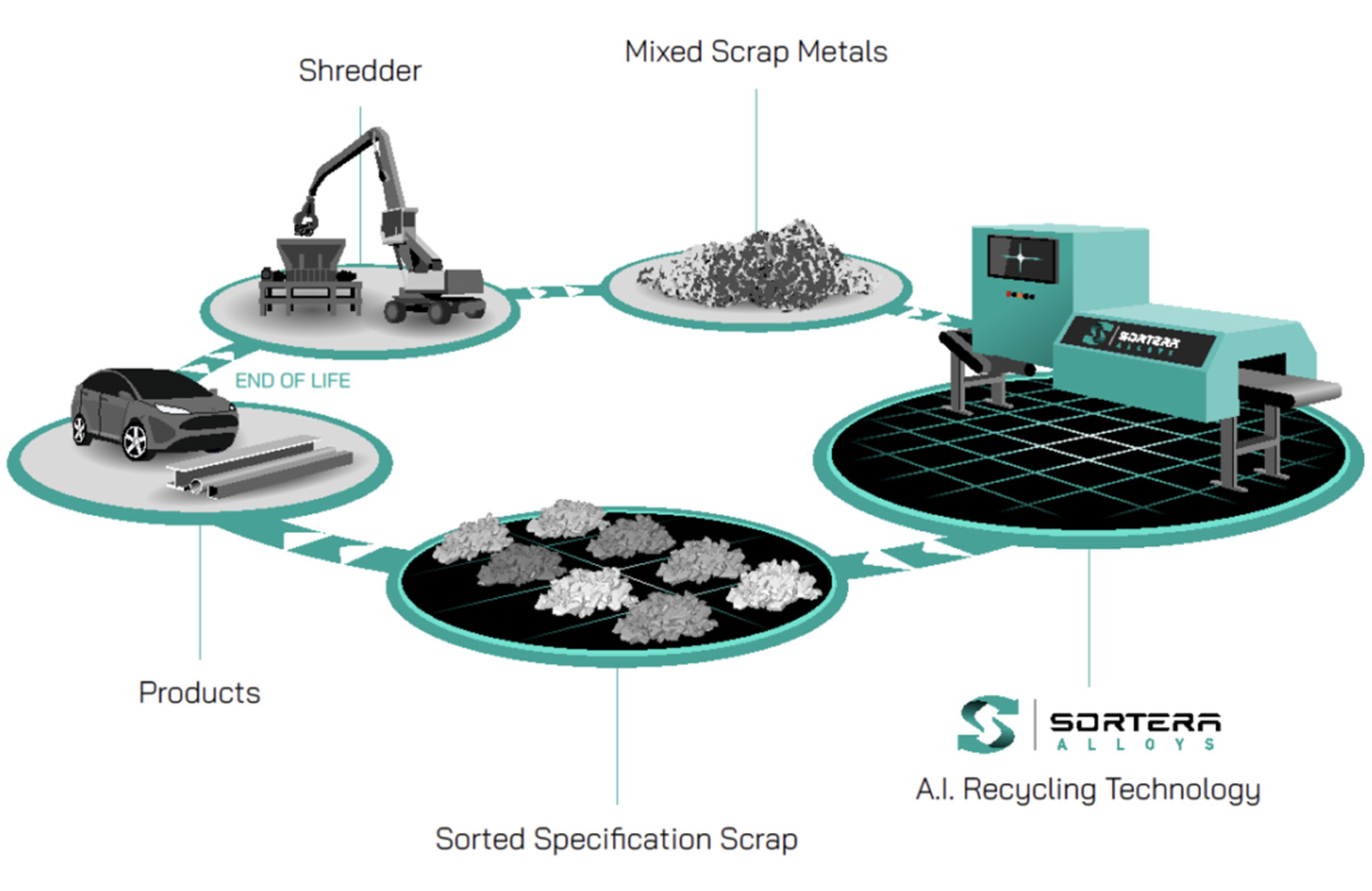
Sortera uses physical AI to double capacity in a Tennessee sorting facility
Robotics Business Review·May 24, 2026

Sortera uses physical AI to double capacity in a Tennessee sorting facility

Sortera has doubled its annual processing capacity to 240 million pounds at a Tennessee sorting facility by deploying physical AI technology. The facility upgrade demonstrates how robotics and AI are scaling material handling operations in the waste and recycling sector.

AI & MLRobotics
The future of physical AI isn’t humanoid; it’s task-specific and cost-efficient
Robotics Business Review·May 23, 2026

The future of physical AI isn’t humanoid; it’s task-specific and cost-efficient

Specialized AI-powered machines designed for specific construction tasks will be more practical and cost-effective than humanoid robots for job sites. These task-specific systems will run AI locally on-device, enabling faster, more efficient real-world performance without relying on cloud connectivity.

AI & MLRobotics
Exploring PLC and robot integration with YRG Robotics’ Chris Elston
Robotics Business Review·May 23, 2026

Exploring PLC and robot integration with YRG Robotics’ Chris Elston

Chris Elston from YRG Robotics explains how to integrate PLCs with robotic systems and discusses Yamaha Robotics' automation solutions for construction and manufacturing. AI is playing an increasing role in making automation more accessible and driving innovation across the industry.

RoboticsAI & ML
Robotics Summit keynote to present open foundation for AI-powered robots
Robotics Business Review·May 22, 2026

Robotics Summit keynote to present open foundation for AI-powered robots

Brian Gerkey from Open Robotics will keynote the Robotics Summit to discuss how open-source foundations are enabling the next generation of AI-powered robots. The presentation highlights the role of collaborative development in advancing robotics technology for practical applications.

RoboticsAI & ML