AllAI & MLRoboticsAutonomy3D PrintingElectrificationSafetyWorkforceMaterialsEDITOR'S PICKWEEKLY DISPATCH
Category

AI & Machine Learning

Artificial intelligence, machine learning, BIM, digital twins, predictive analytics, and data platforms in construction.

514 stories found

The construction industry's transition from AI pilot projects to operational deployment has reached an inflection point, driven simultaneously by labor scarcity and demonstrated technical viability. What distinguishes this moment is not the emergence of new AI capabilities—computer vision, predictive analytics, and autonomous decision-making have matured considerably—but rather the industry's willingness to integrate these tools into mission-critical workflows across estimation, scheduling, and jobsite execution. Suffolk's deployment of OpenSpace, Dusty Robotics, Kaya AI, and Alice Technologies on Gilead's California research center exemplifies this operational maturity, as does MasTec's adoption of Gritt's physical AI for solar construction execution. Meanwhile, the competitive consolidation in takeoff and estimation continues, with ConstructConnect's Project Intelligence and advanced mechanical takeoff platforms now competing on accuracy and integration rather than novelty. The real differentiator has shifted decisively toward organizational capability—firms like Mycon, which elevated technology leadership into the C-suite, recognize that AI deployment demands simultaneous competency in data governance, cybersecurity, workforce training, and regulatory compliance. Construction executives can no longer treat AI as a procurement decision; it demands the same strategic rigor and cross-functional alignment as capital investment or labor planning.

The robotics frontier has simultaneously accelerated and clarified, with technical breakthroughs resolving the programming barrier that historically constrained factory floor automation. Siemens and AGIBOT's demonstration of AI agents that design 3D-printed robot grippers from text prompts, combined with UC Berkeley and NVIDIA's open-source tools enabling machines to automatically write industrial robot programs, have obliterated the assumption that robotics requires specialized programming expertise. Humyn Labs' $47 million funding round to systematize real-world operational data collection signals that the industry recognizes embodied AI as the next frontier, one where robots generalize across tasks rather than operating within narrow, pre-programmed constraints. Yet construction remains in early adoption precisely because regulatory uncertainty, data sovereignty concerns, and the need for standardized infrastructure outweigh technical enablement. The manufacturing data gap—inadequate industrial data collection, weak interoperability standards, and poor feedback loops—represents the genuine constraint on physical AI deployment, not algorithm sophistication.

The workforce awareness and capability gap remains construction's most decisive strategic vulnerability. Only 59 percent of young people recognize that construction already operates with AI, undermining recruitment into the technical roles the industry increasingly demands, while most construction firms have not scaled AI adoption beyond isolated pilots due to implementation barriers and skills deficiencies. The path forward requires construction organizations to treat AI integration as organizational transformation: embedding technology leadership in management structures, investing systematically in workforce education about AI tool validation, and maintaining digital visibility across discovery systems. Firms that invest in the organizational discipline, talent development, and regulatory acumen required to deploy AI effectively at scale—rather than those that simply purchase the latest platforms—are establishing competitive advantages that transcend individual technology choices. Construction is no longer deliberating whether to adopt AI; it is determining whether it will invest the structural, cultural, and human capital necessary to deploy these tools with strategic coherence across operations.
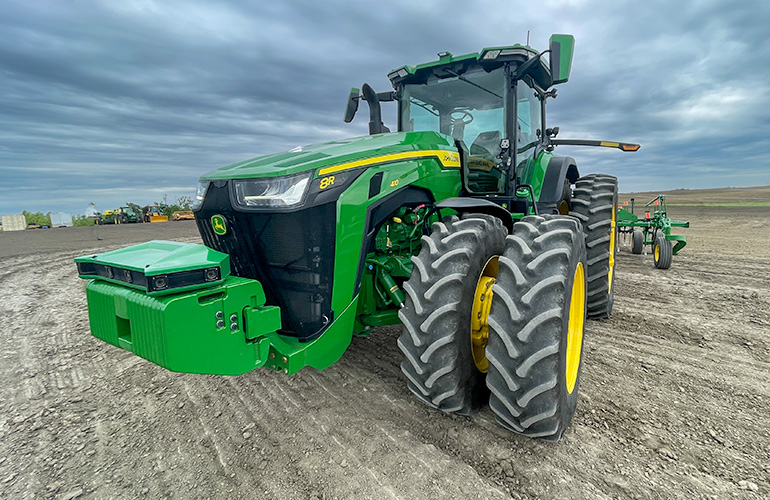

From spreadsheets to AI: Deere gives farmers new features in Operations Center, JD
Robotics Business Review·Sep 1, 2026

From spreadsheets to AI: Deere gives farmers new features in Operations Center, JD

John Deere has launched JD, an AI-powered tool that analyzes historical farm data to provide actionable insights for improving profitability. The new feature integrates into Deere's Operations Center platform, helping farmers move beyond manual spreadsheet management.

AI & ML
Construction Project Management in 2027
ConstructConnect·Aug 31, 2026

Construction Project Management in 2027

Construction project management in 2027 will be shaped by advances in digital technology, automation, and data analytics that streamline planning, scheduling, and resource allocation. These innovations will enable project managers to make faster decisions, reduce delays, and improve overall project delivery compared to today's standards.

AI & MLAutonomy
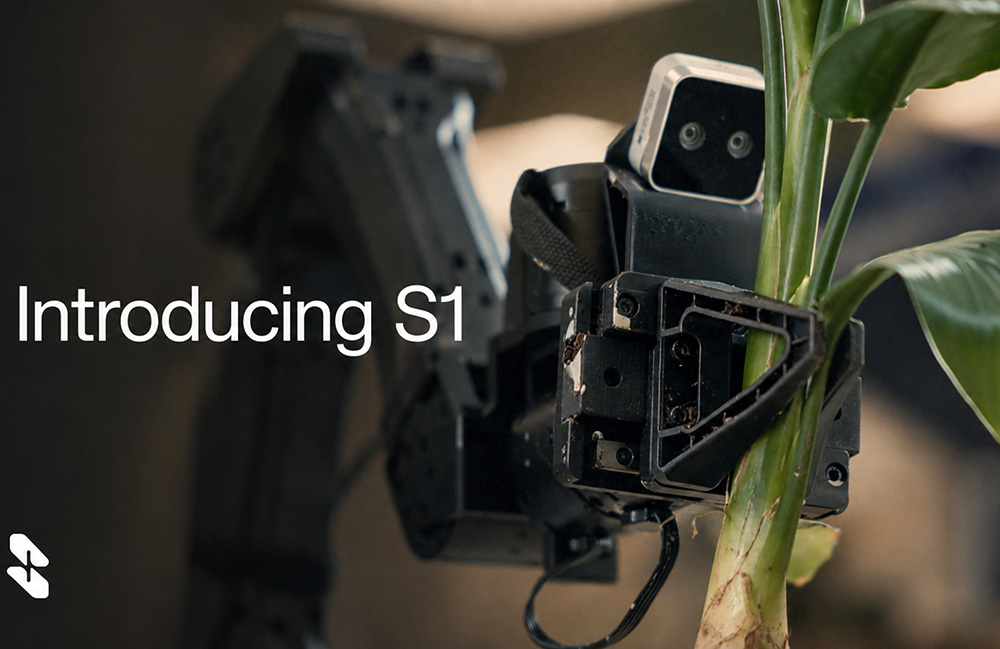
Skild AI unveils S1 flagship robot foundation model
Robotics Business Review·Aug 31, 2026

Skild AI unveils S1 flagship robot foundation model

Skild AI introduced S1, a foundation model that allows robots to learn new tasks by watching video demonstrations. This technology could streamline how construction robots adapt to different job site requirements without extensive reprogramming.

AI & MLRobotics
WEEKLY DISPATCH
What AI Still Gets Wrong About Preconstruction
ConstructConnect·Aug 31, 2026

What AI Still Gets Wrong About Preconstruction

AI implementation in preconstruction requires proper foundational setup rather than pursuing speed as the primary goal. Gaurav Singal argues that getting the fundamentals right matters more than rushing to deploy AI solutions.

AI & ML
WEEKLY DISPATCH
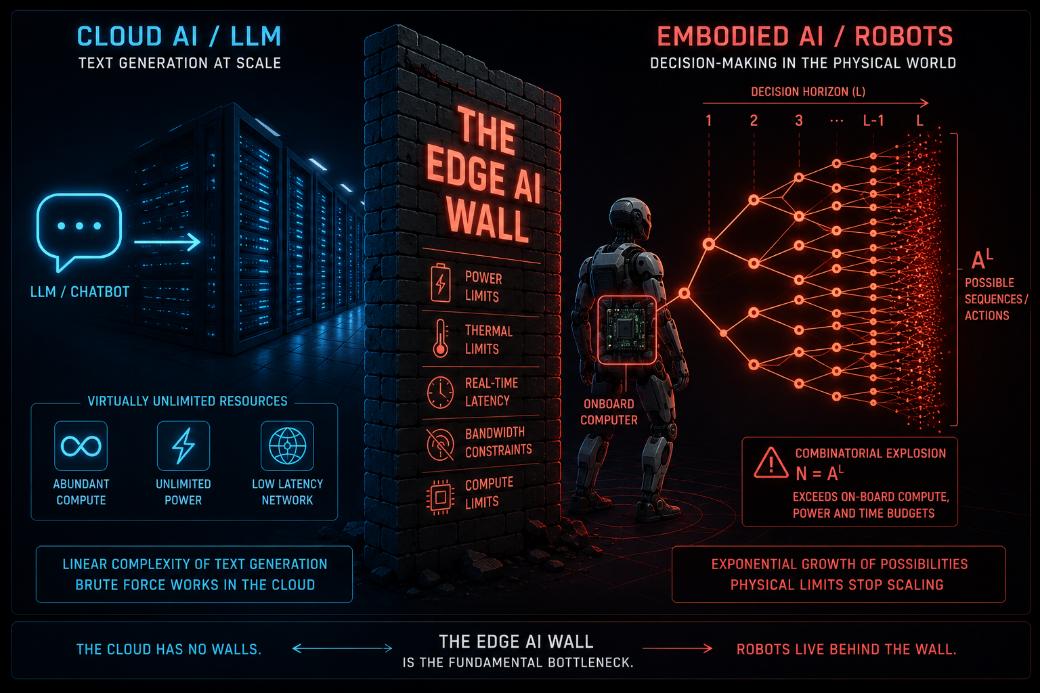
The edge AI wall: Why embodied AI requires new mathematics
Robotics Business Review·Aug 30, 2026

The edge AI wall: Why embodied AI requires new mathematics

Embodied AI systems face a fundamental computational bottleneck when deployed on job sites, limiting their ability to process complex planning tasks in real time. New mathematical approaches are needed to overcome this edge AI wall and make physical robots practical for construction work.

AI & MLRobotics
WEEKLY DISPATCH
Safety Gets Smarter: Predictive Construction Safety Programs Gain Momentum
Construction Executive·Aug 28, 2026

Safety Gets Smarter: Predictive Construction Safety Programs Gain Momentum

Despite ongoing efforts, jobsite fatalities remain unacceptably high across the construction industry. Predictive AI tools are emerging as a way to improve safety culture by empowering workers to make better decisions rather than replacing them entirely.

AI & MLWorkforce
From teach and repeat to SelfPath AI: The next robotics leap
Robotics Business Review·Aug 28, 2026

From teach and repeat to SelfPath AI: The next robotics leap

Brian Corp's CTO John Black discusses how the robotics industry is moving beyond traditional teach-and-repeat programming to more advanced AI systems like SelfPath. Building trust in robotic fleets requires addressing reliability and safety concerns that construction teams depend on for job site deployment.

RoboticsAI & ML
Hi3D Launches AI 3D Model With 2048³ Voxel Resolution
3D Printing Industry·Aug 27, 2026

Hi3D Launches AI 3D Model With 2048³ Voxel Resolution

Hi3D has released V3.0, an AI 3D model generation platform claiming the first commercially available tool to achieve 2048³ voxel resolution for detailed model creation. The browser-based platform uses Hi3D's proprietary Sparc3D engine to generate high-resolution 3D models for construction and design applications.

AI & ML
Deere faces headwinds in Q3 update and announces Reservoir R&D partnership
Robotics Business Review·Aug 28, 2026

Deere faces headwinds in Q3 update and announces Reservoir R&D partnership

Deere exceeded third-quarter expectations and raised its financial guidance despite facing industry headwinds. The equipment manufacturer is investing $10 million with Reservoir to develop artificial intelligence solutions for agriculture technology.

AI & ML
Risk Reset: Concerns Top of Mind for Top Construction Law Firms
Construction Executive·Aug 25, 2026

Risk Reset: Concerns Top of Mind for Top Construction Law Firms

Top construction law firms identify evolving legal risks reshaping the industry, with cost volatility and artificial intelligence emerging as critical concerns contractors must address. Legal professionals recommend contractors prepare for new operational and regulatory challenges driven by technology adoption and market uncertainty.

AI & MLWorkforce
WEEKLY DISPATCH
EXL acquires physical AI model developer iMerit
Robotics Business Review·Aug 28, 2026

EXL acquires physical AI model developer iMerit

EXL has acquired iMerit, a developer of physical AI models used to train autonomous systems and robots. The combined company will offer construction and other industries improved tools for developing reliable AI-powered equipment and automation.

AI & MLRobotics
AI Is Reaching the Jobsite—Is Your Workforce Ready?
Construction Executive·Aug 24, 2026

AI Is Reaching the Jobsite—Is Your Workforce Ready?

AI technology is increasingly being deployed on construction jobsites, requiring contractors to prepare their workforce for this shift. Companies that prioritize their employees while implementing AI will be better equipped to address ongoing industry challenges.

AI & MLWorkforce
Carbon Robotics partners with iMerit to power instant in-field AI customization
Robotics Business Review·Aug 27, 2026

Carbon Robotics partners with iMerit to power instant in-field AI customization

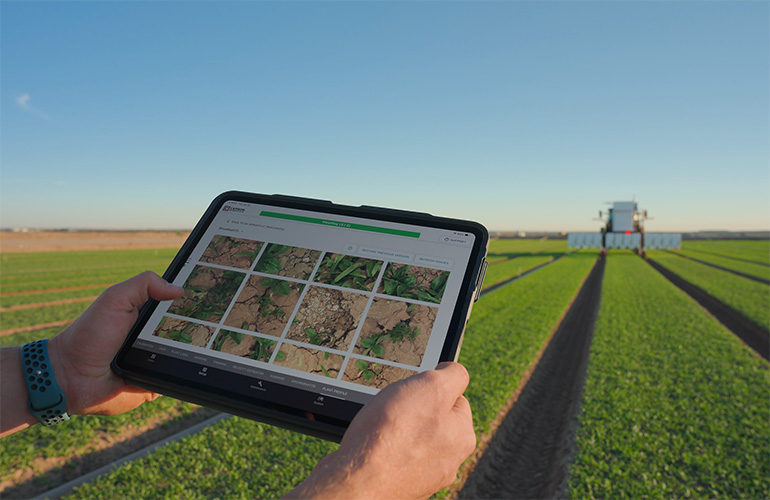
Carbon Robotics launched a plant foundation AI model and tractor kit that allows farmers to customize laser weeding systems directly in the field. The company partnered with iMerit to enable instant AI customization without requiring manual reprogramming or off-site adjustments.

AI & MLRobotics
AEC Business·Aug 24, 2026

We’re Burning Tokens to Clean Up Bad PDFs

AI tools are being used to process and clean up poor-quality PDF documents, a common challenge in construction where Bill of Materials and project data are often trapped in hard-to-read formats. Better data extraction from these PDFs can improve project outcomes and material planning accuracy.

AI & ML
Humans in the loop are still needed for robotaxi fleet safety, says Guident
Robotics Business Review·Aug 25, 2026

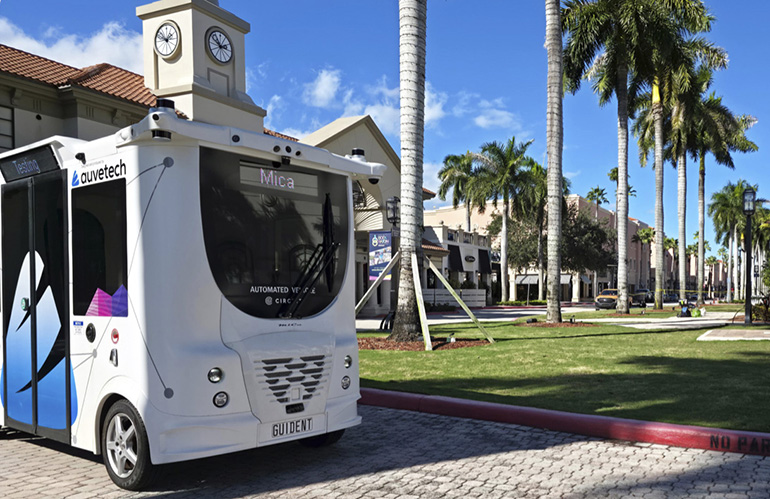
Humans in the loop are still needed for robotaxi fleet safety, says Guident

Autonomous vehicle fleets require human oversight alongside AI systems to maintain safety as operations scale up. Guident's leadership emphasizes that combining automated technology with human decision-making remains essential for robotaxi fleet management.

AutonomyRobotics
Jetson Orin Nano 2 doubles inference performance for robotics on the edge, says NVIDIA
Robotics Business Review·Aug 25, 2026

Jetson Orin Nano 2 doubles inference performance for robotics on the edge, says NVIDIA

NVIDIA's new Jetson Orin Nano 2 chip doubles inference performance, enabling advanced AI capabilities to run directly on edge devices like construction robots in real time. This advancement allows robotics and autonomous systems to process complex tasks on-site without relying on cloud connectivity or external computing power.

AI & MLRobotics
The next big AI play isn’t apps or humanoids; it’s machines with brains and brawn
Robotics Business Review·Aug 24, 2026

The next big AI play isn’t apps or humanoids; it’s machines with brains and brawn

Agricultural and construction equipment makers must integrate AI into their machinery to remain competitive as labor shortages intensify. Adding artificial intelligence capabilities to equipment is becoming essential for the industry to maintain productivity and relevance.

AI & MLRobotics
The technology that could bring robot mowers to one in two American lawns
Robotics Business Review·Aug 22, 2026

The technology that could bring robot mowers to one in two American lawns

Advances in AI, satellite navigation, and machine vision are making robotic lawn mowers increasingly viable for widespread American adoption. The technology could potentially reach one in two U.S. lawns as these systems become more reliable and accessible.

AI & MLRobotics