AllAI & MLRoboticsAutonomy3D PrintingElectrificationSafetyWorkforceMaterialsEDITOR'S PICKWEEKLY DISPATCH
Category

3D Printing & Prefab

3D printed buildings, concrete printing, prefabrication, modular construction, and offsite manufacturing.

278 stories found

The transition from experimental validation to production-scale manufacturing operations continues accelerating across construction additive manufacturing, with the critical inflection now extending into design automation and process velocity improvements that compress the traditional lead time between intent and fabrication. Siemens and AGIBOT's demonstration of AI agents that generate 3D-printed component designs directly from text prompts signals a qualitative shift in how design-to-production workflows operate: the iterative modeling cycles that previously created scheduling friction between architects and manufacturers are now being collapsed by generative systems that interpret functional requirements and translate them directly into printable geometries. This design-layer automation compounds the efficiency gains already established through ML-accelerated optimization in wire arc additive manufacturing and positions organizations that integrate these AI-driven design tools into their procurement workflows to outpace competitors still managing additive manufacturing as exception-based capability. Combined with 3T-AM's proven transition toward repeat manufacturing representing 70% of revenue, the market architecture now confirms that construction-relevant additive manufacturing has matured beyond isolated applications into embedded production infrastructure.

Simultaneously, process-level velocity improvements are fundamentally reshaping production economics across material categories. Lithoz's introduction of the CeraFab S65 Performance Pack, which doubles light intensity through advanced 4K projection systems, directly accelerates ceramic component production—a material category with high relevance for specialized industrial applications—while ongoing research at the University of Freiburg on volumetric 3D printing of commercial plastics, supported by a €10M European Research Council grant through the CHiC2PRINT project, signals that speed-to-production improvements are now competing priorities alongside material performance. These advances in process velocity matter operationally because they increase manufacturing capacity utilization per installed system, improving the capital efficiency calculation that mid-market contractors and manufacturers use to justify equipment deployment. When combined with modular production architectures like AltForm's ZENIT system—which scales from 2 x 2 meters to 4 x 4 meters with expandable capability—organizations can now plan incremental capacity growth tied directly to validated demand rather than absorb fixed-asset constraints that previously discouraged adoption among smaller operations.

For construction professionals evaluating manufacturing partnerships and equipment strategies, the operational imperative has crystallized entirely around embedding additive manufacturing into standard production capacity rather than treating it as specialized exception handling. Organizations that now establish material specifications aligned with available production capability, deploy AI-accelerated design tools that streamline the design-to-fabrication pipeline, and partner with manufacturers operating additive manufacturing as continuous production infrastructure will continue capturing competitive returns. The technical feasibility constraints that dominated earlier adoption discussions have now been decisively resolved; the remaining variable is organizational capacity to treat additive manufacturing as standard manufacturing asset, integrated fully into procurement protocols and design workflows.

Titan America Launches xForm3D, a 3D Printable Concrete Technology
3D Printing Industry·Jun 26, 2026

Titan America Launches xForm3D, a 3D Printable Concrete Technology

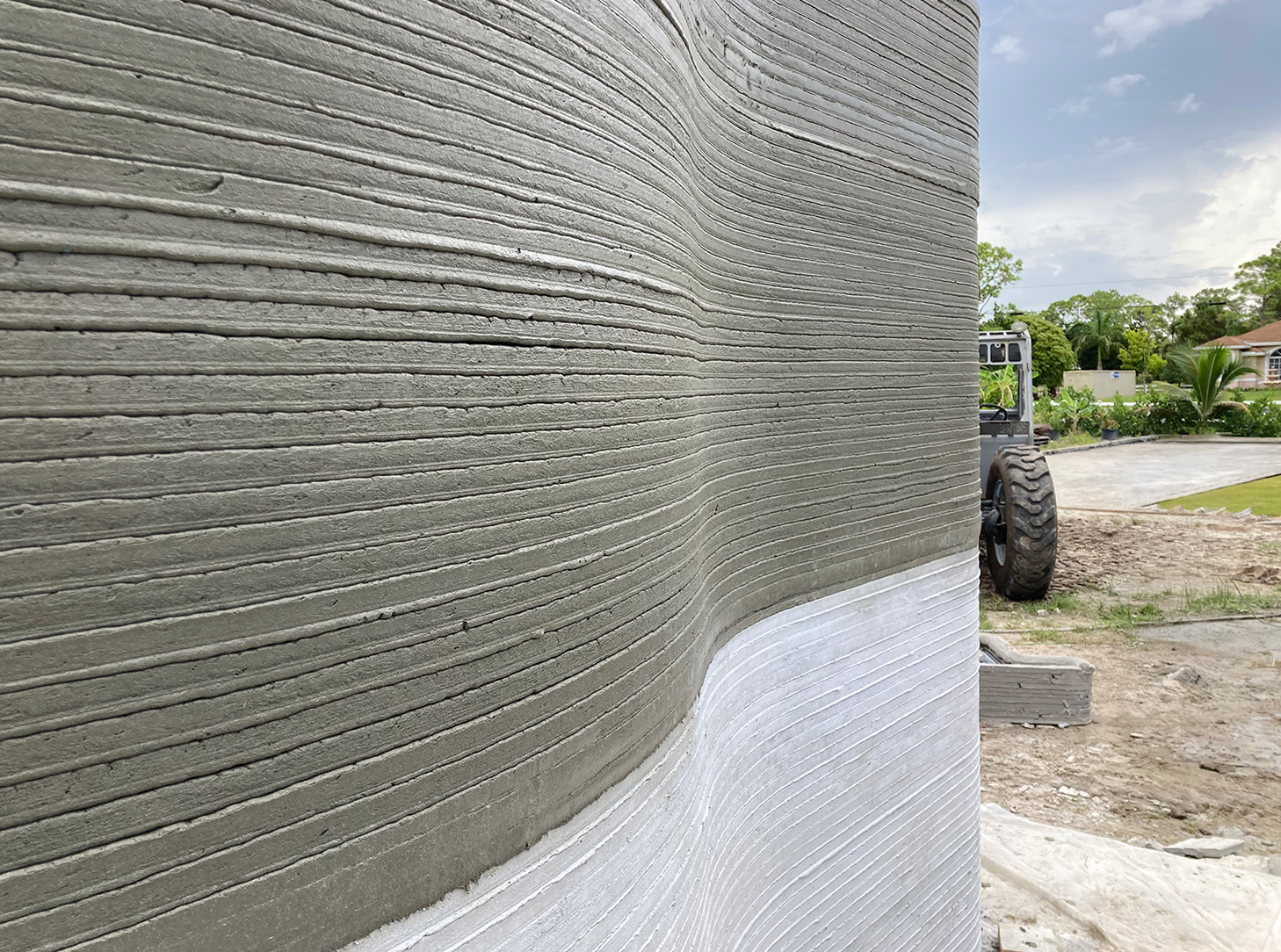
Titan America has launched xForm3D, a patented 3D printable concrete technology for automated construction in residential, commercial, infrastructure, and coastal projects. The product addresses labor shortages by enabling automated concrete construction processes.
3D PrintingWorkforce
CreateMe partners with Avalo and Laguna Fabrics to bring resilience to apparel supply chains
Robotics Business Review·Jun 23, 2026

CreateMe partners with Avalo and Laguna Fabrics to bring resilience to apparel supply chains

CreateMe has partnered with Avalo and Laguna Fabrics to develop faster and more localized apparel production methods that strengthen supply chain resilience. The collaboration demonstrates how manufacturing can be brought closer to end markets while reducing dependencies on distant suppliers.

Materials3D Printing
Aalto University and Stanford Test a New Architecture for 6G Surfaces
3D Printing Industry·Jun 26, 2026

Aalto University and Stanford Test a New Architecture for 6G Surfaces

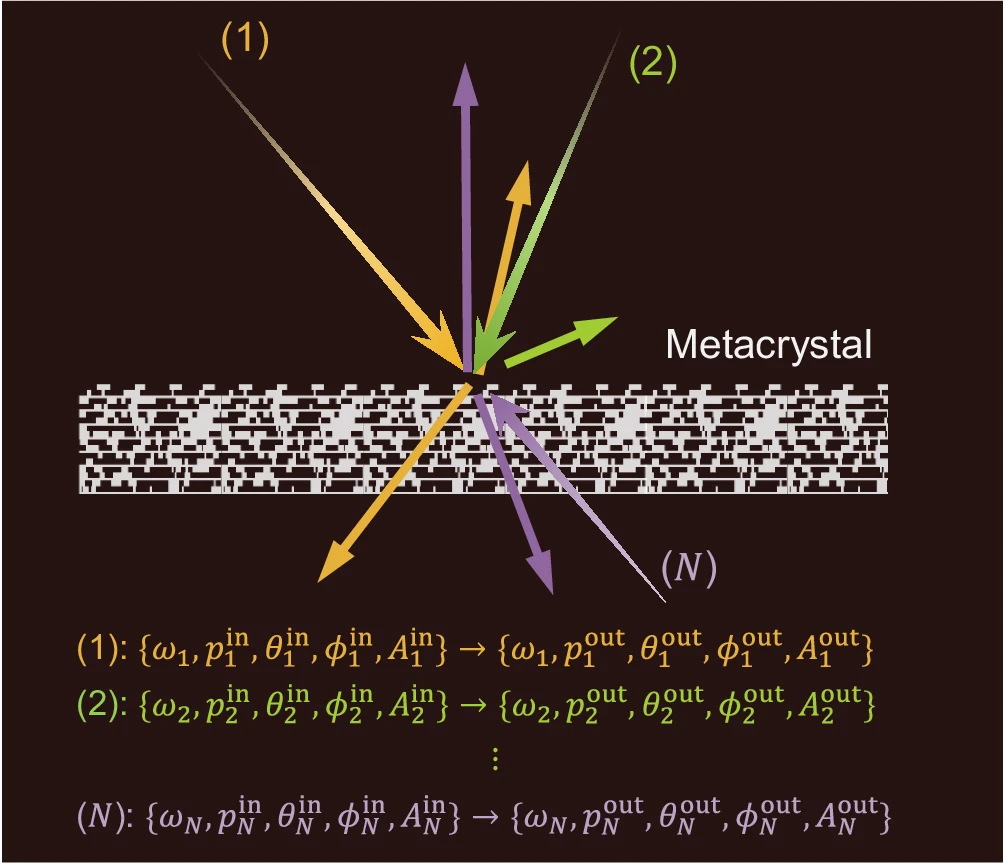
Stanford and Aalto University researchers developed a 3D printed panel that manages six wireless signals simultaneously across different frequencies, angles, and polarizations without requiring any active electrical components. This passive technology strengthens signal strength and channel capacity, offering potential benefits for construction site connectivity and future 6G infrastructure.

3D PrintingMaterials
MISUMI Group invests $1B in Americas, global AI and digital manufacturing
Robotics Business Review·May 30, 2026

MISUMI Group invests $1B in Americas, global AI and digital manufacturing

MISUMI Group is investing $1 billion to expand operations in the Americas and advance global AI and digital manufacturing capabilities. The company is combining its precision components with Fictiv's digital manufacturing platform to streamline bill of materials sourcing for construction and industrial projects.

AI & ML3D Printing
ORNL’s Origami-Inspired Process Cuts Composite Fabrication Costs by 90%
3D Printing Industry·Jun 25, 2026

ORNL’s Origami-Inspired Process Cuts Composite Fabrication Costs by 90%

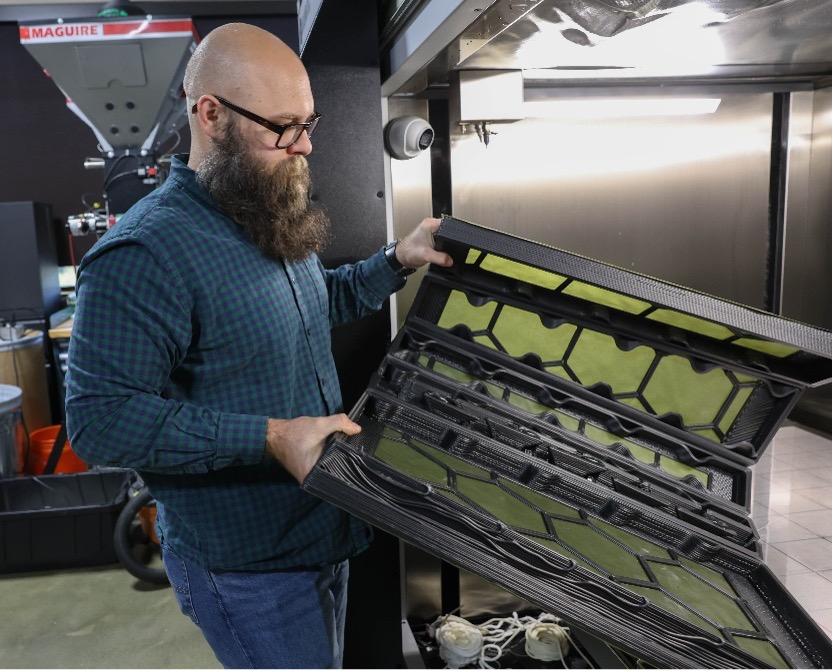
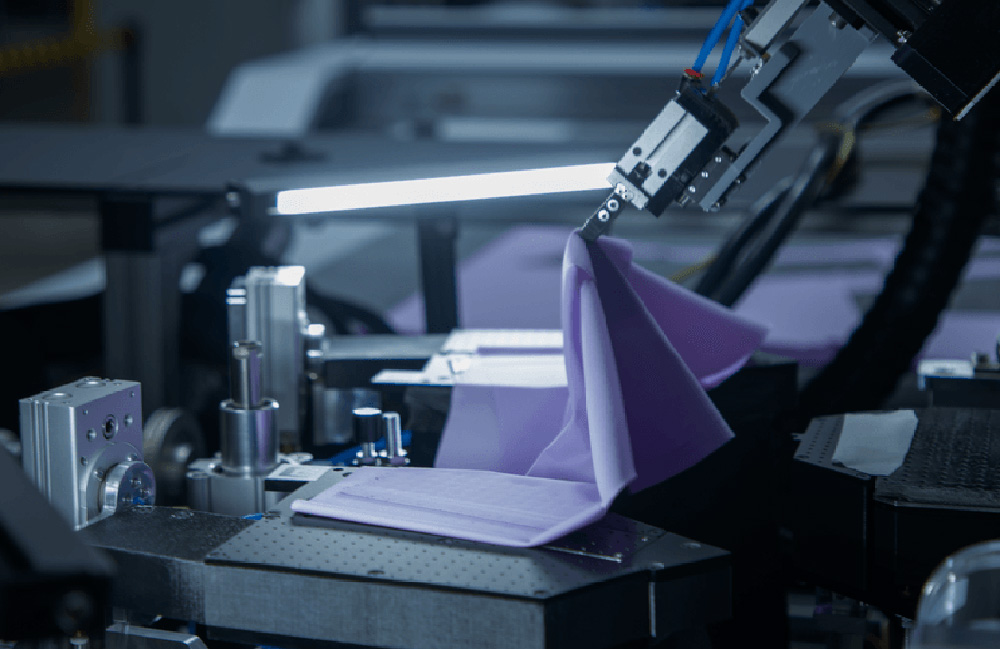
Oak Ridge National Laboratory has created a hybrid additive manufacturing process inspired by origami that prints directly onto flexible fabrics, enabling flat panels to fold into finished composite parts. The technique reduces composite fabrication costs by 90 percent compared to traditional methods.

3D PrintingMaterials
Rheinmetall UK Integrates FFF Into Challenger 3 Production
3D Printing Industry·Jun 25, 2026

Rheinmetall UK Integrates FFF Into Challenger 3 Production

Rheinmetall UK has adopted additive manufacturing as the standard production method for air ducting components in the Challenger 3 Main Battle Tank program. The shift to 3D printing represents a significant change in how defense contractors manufacture complex components for military vehicles.

3D Printing
SMRRF 2027 To Be Held at Manchester Metropolitan University
3D Printing Industry·Jun 24, 2026

SMRRF 2027 To Be Held at Manchester Metropolitan University

The Sanjay Mortimer RepRap Festival will take place March 6–7, 2027 at Manchester Metropolitan University's Dalton Building. The event, organized by the Sanjay Mortimer Foundation, brings together engineers and focuses on additive manufacturing technology while supporting neurodivergent young people in STEM fields.

3D PrintingWorkforce
Australia Is Turning to 3D Printing to Secure Its Industrial Foundation
3D Printing Industry·Jun 20, 2026

Australia Is Turning to 3D Printing to Secure Its Industrial Foundation

Australia's Strategic Policy Institute released a policy report arguing that national industrial resilience depends on adopting 3D printing technology to secure domestic manufacturing capacity. The report, authored by a metal 3D printing company executive, frames localized production as a critical engineering solution rather than a political goal.

3D Printing
Havelar Prints a Public Building in Nine Days and Delivers It on Budget
3D Printing Industry·Jun 20, 2026

Havelar Prints a Public Building in Nine Days and Delivers It on Budget

Portuguese firm Havelar used a COBOD BOD2 3D printer to construct a 500 m² recycling center office in nine working days with a four-person crew for the Matosinhos municipality. The project was completed on budget, demonstrating the efficiency and cost-control potential of 3D printing technology for commercial building construction.

3D PrintingRobotics
Voltage launches Eclipse X9, a Basalt-Recycled PETG Composite for LFAM
3D Printing Industry·Jun 12, 2026

Voltage launches Eclipse X9, a Basalt-Recycled PETG Composite for LFAM

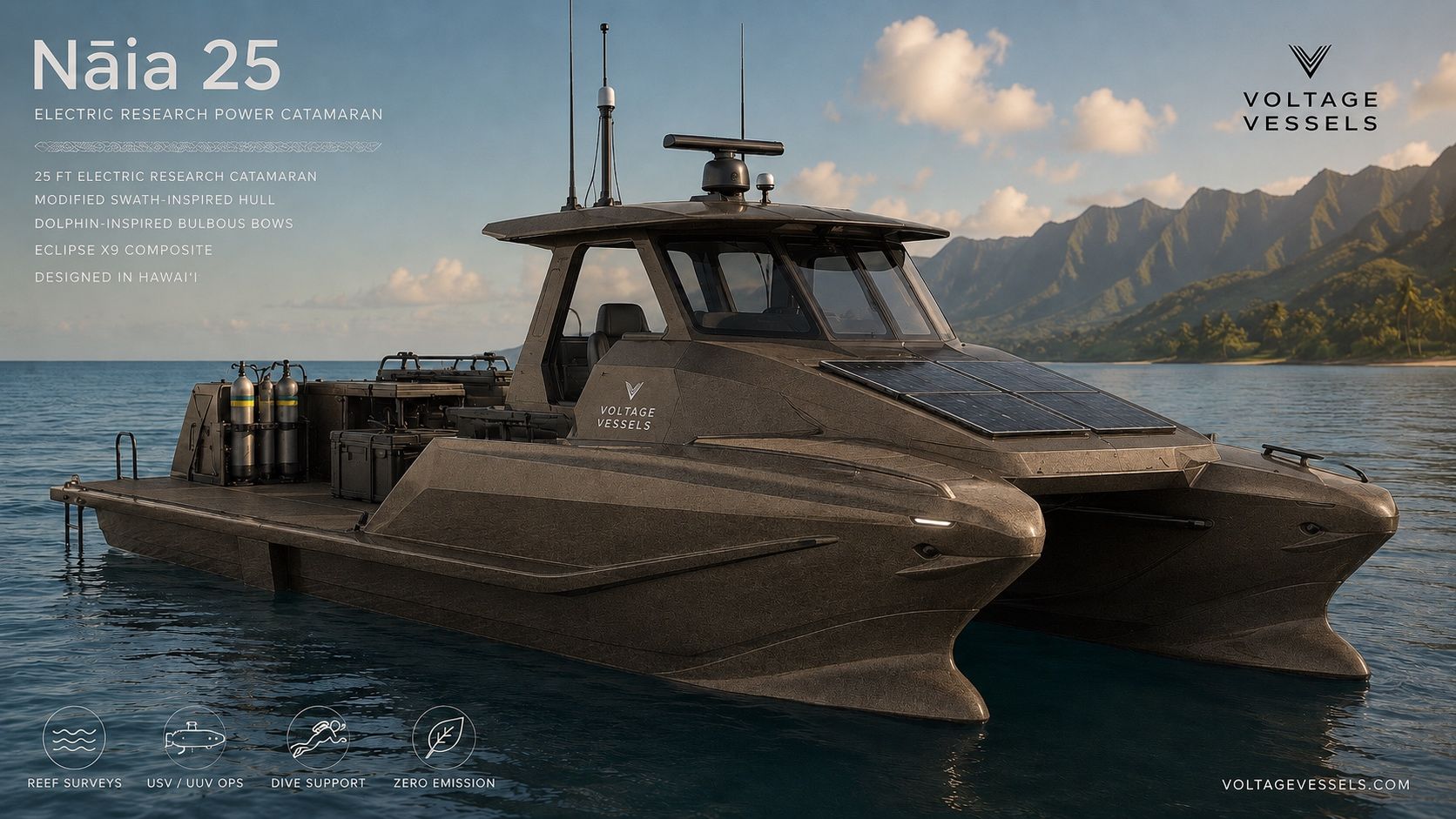
Voltage Vessels has launched Eclipse X9, a new composite material made from recycled PETG and basalt fiber designed for large-format 3D printing applications. The material is now available in both pellet and filament forms after years of development.

3D PrintingMaterials
Continuum Powders Opens New Platform to Specialty Alloy and Small-Batch Customers
3D Printing Industry·Jun 9, 2026

Continuum Powders Opens New Platform to Specialty Alloy and Small-Batch Customers

Continuum Powders launched Custom Foundry Runtime (CFR), a platform that gives manufacturers and researchers access to plasma-gas atomization technology for developing specialty alloys and producing small batches on demand. The service opens advanced powder production capabilities to companies that previously couldn't justify the infrastructure investment.

3D PrintingMaterials
Sciaky Returns to Nuclear with NX Atomics SMR Partnership
3D Printing Industry·Jun 8, 2026

Sciaky Returns to Nuclear with NX Atomics SMR Partnership

Sciaky is partnering with NX Atomics to use its electron beam additive manufacturing (EBAM) technology to produce components for small modular reactors. The collaboration targets cost reductions in both capital expenditure and ongoing operational expenses for SMR construction and deployment.

3D PrintingMaterials
New Bioluminescent Materials Sustain Light Across 4 Weekly Cycles
3D Printing Industry·Jun 5, 2026

New Bioluminescent Materials Sustain Light Across 4 Weekly Cycles

Researchers at CU Boulder have created light-emitting materials by embedding bioluminescent marine microorganisms in 3D-printed alginate scaffolds that sustain glow for up to four weeks. This advancement in bio-integrated materials could have practical applications for construction sites requiring sustainable lighting solutions.

3D PrintingMaterials
UT Austin Shrinks Semiconductor Printing to Research Scale
3D Printing Industry·Jun 4, 2026

UT Austin Shrinks Semiconductor Printing to Research Scale

UT Austin researchers have developed a more accessible method for semiconductor printing that scales down Extreme Ultraviolet lithography technology for research purposes. This breakthrough could enable more universities and institutions to conduct meaningful semiconductor research without the prohibitive costs of commercial-scale manufacturing equipment.

Materials3D Printing
California bill targeting 3D printed firearms passes Assembly
3D Printing Industry·May 29, 2026

California bill targeting 3D printed firearms passes Assembly

California Assembly Bill 2047 has passed the state Assembly and now moves to the Senate, targeting the manufacturing of 3D printed firearms through new regulations. The bill, introduced by Assembly Member Rebecca Bauer-Kahan, would add the Firearm Printing Prevention Act to California law.

3D Printing
AMA: Healthcare 2026: [Interview] A New Way to Fix Lumpectomy Deformities
3D Printing Industry·May 29, 2026

AMA: Healthcare 2026: [Interview] A New Way to Fix Lumpectomy Deformities

3D printing technology is emerging as a solution for reconstructing soft tissue deformities resulting from lumpectomy procedures, addressing a significant gap in surgical reconstruction options. Hundreds of thousands of women annually could benefit from this additive manufacturing approach, which represents one of the least clinically developed yet highest-need applications in healthcare.

3D Printing
NSF Backs UNF Research to Stamp Out Defects in Metal 3D Printing
3D Printing Industry·May 27, 2026

NSF Backs UNF Research to Stamp Out Defects in Metal 3D Printing

University of North Florida researchers are developing an automated monitoring system funded by the National Science Foundation that detects and corrects defects in metal 3D printing as each layer is produced. The real-time correction technology aims to improve the quality and reliability of metal parts manufactured through additive processes.

3D PrintingAI & ML
France Just Built Europe’s Largest 3D Printed Apartment Block,  Three Months Faster Than Expected
3D Printing Industry·May 26, 2026

France Just Built Europe’s Largest 3D Printed Apartment Block,  Three Months Faster Than Expected

France completed ViliaSprint², a 12-unit apartment complex with 800 square meters of livable space using 3D printing technology, finishing three months ahead of schedule. The project represents Europe's largest 3D printed residential building to date and demonstrates accelerated construction timelines through additive manufacturing methods.

3D Printing