AllAI & MLRoboticsAutonomy3D PrintingElectrificationSafetyWorkforceMaterialsEDITOR'S PICKWEEKLY DISPATCH
Category

Workforce & Labor

Labor shortage, skilled trades, apprenticeships, hiring platforms, workforce development, and crew management.

1202 stories found

Construction's structural labor crisis has crystallized into an unmistakable competitive sorting mechanism that now explicitly divides operators who've architected integrated talent systems from those still fragmenting efforts across disconnected initiatives. The convergence of three forces is reshaping the entire industry: persistent labor scarcity that refuses cyclical relief, intensifying regulatory enforcement that transforms safety compliance into a non-negotiable operational requirement, and technology adoption that separates strategic workforce planners from those still relying on manual processes. Contractors embedding psychological capital development—the renewable resource combining hope, efficacy, resilience, and optimism identified by the American Psychological Association—alongside safety culture, wellness programming, and technology implementation are demonstrating measurably superior retention outcomes precisely as competitors continue hemorrhaging workers to attrition. The data is unambiguous: firms managing labor strategically through integrated systems now capture talent at scale, while those treating workforce development as a disconnected cost center are fragmenting against wider performance gaps that cannot be bridged by margin compression from material cost inflation.

Technology adoption has shifted decisively from implementation barrier to retention lever as purpose-built solutions designed for trade-level adoption rather than corporate mandate reshape labor dynamics across estimation, scheduling, and field operations. ConstructConnect's automated takeoff capabilities cut estimation time by 50% on large projects while freeing estimator bandwidth for strategic opportunity scoring, eSUB's partnership with SMART Local 104 is embedding project management skills directly into sheet metal apprenticeships, and MasTec's deployment of physical AI on solar construction jobsites demonstrates on-site operation optimization beyond corporate-level forecasting. The gap between early adopters systematizing these capabilities and lagging competitors remains a decisive competitive moat—yet implementation barriers and workforce skills gaps simultaneously create immediate opportunity for operators willing to integrate training alongside technology deployment. Bluebeam's 2027 AEC technology report confirms most construction firms haven't scaled these capabilities, a condition that reflects organizational friction but masks exceptional runway for contractors positioned to move first.

The talent acquisition and retention crisis now operates entirely on a different plane than wage competition alone can address. Procore's research reveals 50% of young people believe AI could enhance construction careers, yet 41% remain unaware the industry already uses AI—a marketing gap that contractors actively communicating technological enhancement of labor can exploit for talent acquisition at scale while competitors remain silent. Meanwhile, the Department of Labor's reinstatement of the economic reality test for independent contractor classification, the BlackRock Foundation's new veteran transition program, and expanded federal apprentice payment programs signal sustained commitment to training infrastructure scaling precisely as construction employment rose across 37 states. The industry's competitive architecture has fundamentally reorganized: firms treating safety, wellness integration, and technology implementation as interconnected systems that explicitly enhance worker experience and career trajectory are establishing sustainable performance advantages that low-cost operators cannot replicate. This is no longer construction's labor shortage; it is construction's talent development divide.

Humanoids won’t scale on factory floors until costs drop
Robotics Business Review·Aug 4, 2026

Humanoids won’t scale on factory floors until costs drop

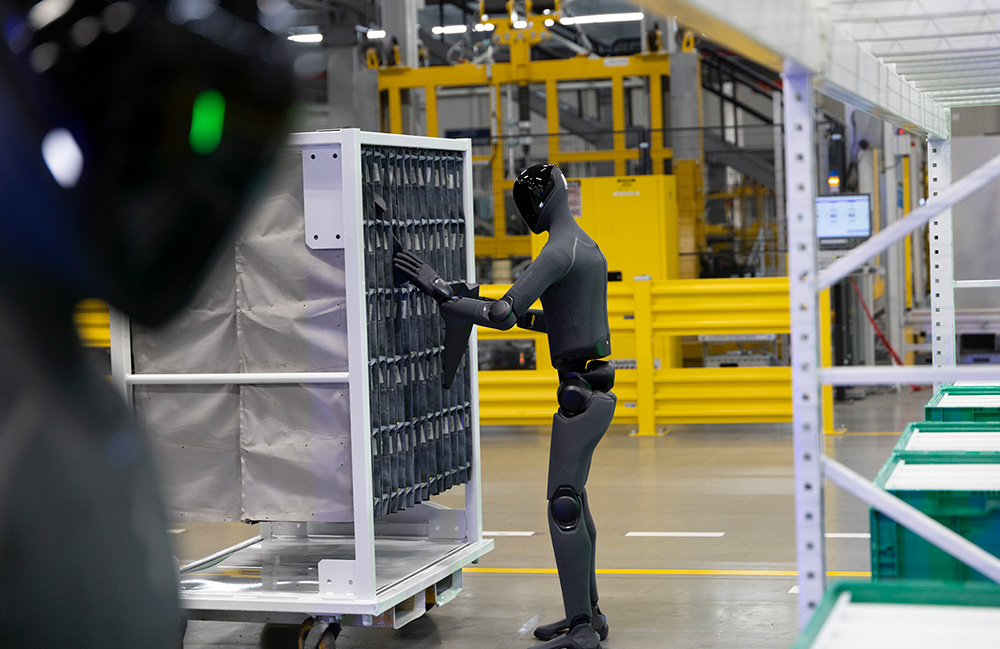
Humanoid robots remain too expensive to replace existing factory automation systems on construction and manufacturing floors. Developers must significantly reduce costs before these robots become economically viable for widespread job site deployment.


RoboticsWorkforce
Out of Office: When Internal Workforce Relocation Is Appropriate for Construction Projects
Construction Executive·Aug 4, 2026

Out of Office: When Internal Workforce Relocation Is Appropriate for Construction Projects

Rather than competing for new hires in a tight labor market, construction companies can redeploy existing employees to different project locations. Internal workforce relocation offers a practical solution to staffing challenges while retaining experienced talent.

Workforce
WEEKLY DISPATCH
AI-Powered Takeoff and Estimating Software: A Contractor's Guide to the Top Players in 2026
ConstructConnect·Aug 3, 2026

AI-Powered Takeoff and Estimating Software: A Contractor's Guide to the Top Players in 2026

AI-powered takeoff software is transforming construction estimating by automating quantity measurements from digital plans, reducing what once took hours down to just minutes. With numerous vendors competing in this space, contractors need guidance on identifying the best tools for their specific needs.

AI & MLWorkforce
Do health care costs prevent workers from staying healthy?
Safety+Health Magazine·Aug 3, 2026

Do health care costs prevent workers from staying healthy?

A Harris Poll survey of over 2,000 workers found that most want to improve their health but view rising healthcare costs as a major barrier to doing so. The findings suggest that affordability concerns are preventing workers from taking preventive health measures and maintaining overall wellness.

Workforce
AEC Business·Aug 3, 2026

Construction Robotics Works Where Variation Ends

Construction robotics deliver the best return on investment in repetitive tasks with minimal variation on job sites. BuiltWorld's Top 50 robotics list for 2026 highlights several on-site applications gaining traction in the industry.

RoboticsWorkforce
Massachusetts lawmakers advance bills targeting workplace violence in health care
Safety+Health Magazine·Aug 3, 2026

Massachusetts lawmakers advance bills targeting workplace violence in health care

Massachusetts lawmakers have advanced legislation to protect health care workers from workplace violence, with both the House and Senate passing similar bills in July that now move to a joint conference committee. While focused on health care, these workplace safety measures reflect broader industry trends toward protecting workers on the job.

SafetyWorkforce
Deadline Approaching to Submit a Speaking Proposal for the Winter 2027 AGC Construction Safety & Health Conference
AGC of America News·Aug 3, 2026

Deadline Approaching to Submit a Speaking Proposal for the Winter 2027 AGC Construction Safety & Health Conference

The AGC Construction Safety & Health Conference is accepting speaking proposals for its Winter 2027 event, with the submission deadline approaching soon. Construction professionals with expertise in safety innovations and best practices should submit their proposals to participate in this industry conference.

Workforce
WEEKLY DISPATCH
What Is Construction Bid Management Software? A Complete Guide for General Contractors
ConstructConnect·Jul 31, 2026

What Is Construction Bid Management Software? A Complete Guide for General Contractors

Construction bid management software streamlines the preconstruction process by centralizing plan distribution, bid tracking, and subcontractor communication in one platform. The software automates routine tasks like project setup and invitation to bid distribution, helping general contractors manage the bidding workflow more efficiently.

Workforce
Construction Spending Falls 3.2 Percent Annually In June; Contractors Urge Officials To Avoid Policies That Could Further Weaken Demand
AGC of America News·Aug 3, 2026

Construction Spending Falls 3.2 Percent Annually In June; Contractors Urge Officials To Avoid Policies That Could Further Weaken Demand

Construction spending dropped 3.2 percent year-over-year in June, signaling weakening demand across the industry. Contractors are calling on policymakers to avoid measures that could further dampen market activity and project starts.

Workforce
Are you ready for Safe & Sound Week?
Safety+Health Magazine·Jul 31, 2026

Are you ready for Safe & Sound Week?

The 10th annual Safe & Sound Week is scheduled for August 10-16, with registration now open for the national safety initiative. OSHA, NIOSH, and the National Safety Council are collaborating to promote workplace safety awareness and understanding across industries.

Workforce
New Names and Faces: July 2026
Construction Executive·Jul 31, 2026

New Names and Faces: July 2026

ABC member companies marked July 2026 with new office openings, safety awards, and expanded leadership positions across the construction industry. The month showcased professional growth and organizational changes among construction sector leaders.

Workforce
JLC Online·Jul 30, 2026

The Battle With Stuff

Construction professionals accumulate significant quantities of tools and materials over their careers, with generalist workers being particularly prone to this accumulation. The author explores the challenge of managing excess equipment and supplies that builds up over years of diverse project work.

Workforce
WEEKLY DISPATCH
Closing Construction’s Widening Workforce Experience Gap With AI
Construction Executive·Jul 31, 2026

Closing Construction’s Widening Workforce Experience Gap With AI

AI software is helping bridge the experience gap in construction by preparing new estimators with practical skills they need to operate independently. Adequate training through these tools ensures estimators can perform their jobs effectively even if the software becomes unavailable.

AI & MLWorkforce
Senate committee approves Keith Sonderling’s nomination for labor secretary
Safety+Health Magazine·Jul 30, 2026

Senate committee approves Keith Sonderling’s nomination for labor secretary

Keith Sonderling's nomination for labor secretary has been approved by the Senate Health, Education, Labor and Pensions Committee in a narrow 12-11 vote on July 30. His nomination now advances to the full Senate for a final vote, with no date yet scheduled.

Workforce
ABC Urges U.S. Senate to Confirm Sonderling as Labor Secretary
Construction Executive·Jul 30, 2026

ABC Urges U.S. Senate to Confirm Sonderling as Labor Secretary

The ABC has called on the U.S. Senate to confirm Keith Sonderling as Labor Secretary after the U.S. HELP Committee advanced his nomination. Sonderling's confirmation could significantly impact construction industry labor policies and workforce regulations.

Workforce
Coalition asks EPA and OSHA to streamline requirements for protecting workers from chemicals
Safety+Health Magazine·Jul 29, 2026

Coalition asks EPA and OSHA to streamline requirements for protecting workers from chemicals

Industry groups including the American Chemistry Council are pushing the EPA and OSHA to create a single federal framework for protecting workers from chemical exposure instead of operating under separate regulations. The coalition argues that consolidating requirements would reduce confusion and improve efficiency for companies managing worker safety.

Workforce
More screen time leading to eyestrain for desk workers: survey
Safety+Health Magazine·Jul 29, 2026

More screen time leading to eyestrain for desk workers: survey

A survey of 800 desk workers found that over 70% experience digital eyestrain and visual discomfort from increased screen time. Construction professionals managing projects through digital tools and software should be aware of this common workplace health issue affecting productivity.

Workforce
Rhode Island law creates worker-to-self-checkout ratio at grocery stores
Safety+Health Magazine·Jul 29, 2026

Rhode Island law creates worker-to-self-checkout ratio at grocery stores

Rhode Island enacted legislation requiring grocery stores to maintain specific worker-to-self-checkout ratios, prioritizing worker protection and job availability. The law reflects growing concern about automation reducing employment opportunities in the retail sector.

Workforce