AllAI & MLRoboticsAutonomy3D PrintingElectrificationSafetyWorkforceMaterialsEDITOR'S PICKWEEKLY DISPATCH
Category

Workforce & Labor

Labor shortage, skilled trades, apprenticeships, hiring platforms, workforce development, and crew management.

1202 stories found

Construction's structural labor crisis has crystallized into an unmistakable competitive sorting mechanism that now explicitly divides operators who've architected integrated talent systems from those still fragmenting efforts across disconnected initiatives. The convergence of three forces is reshaping the entire industry: persistent labor scarcity that refuses cyclical relief, intensifying regulatory enforcement that transforms safety compliance into a non-negotiable operational requirement, and technology adoption that separates strategic workforce planners from those still relying on manual processes. Contractors embedding psychological capital development—the renewable resource combining hope, efficacy, resilience, and optimism identified by the American Psychological Association—alongside safety culture, wellness programming, and technology implementation are demonstrating measurably superior retention outcomes precisely as competitors continue hemorrhaging workers to attrition. The data is unambiguous: firms managing labor strategically through integrated systems now capture talent at scale, while those treating workforce development as a disconnected cost center are fragmenting against wider performance gaps that cannot be bridged by margin compression from material cost inflation.

Technology adoption has shifted decisively from implementation barrier to retention lever as purpose-built solutions designed for trade-level adoption rather than corporate mandate reshape labor dynamics across estimation, scheduling, and field operations. ConstructConnect's automated takeoff capabilities cut estimation time by 50% on large projects while freeing estimator bandwidth for strategic opportunity scoring, eSUB's partnership with SMART Local 104 is embedding project management skills directly into sheet metal apprenticeships, and MasTec's deployment of physical AI on solar construction jobsites demonstrates on-site operation optimization beyond corporate-level forecasting. The gap between early adopters systematizing these capabilities and lagging competitors remains a decisive competitive moat—yet implementation barriers and workforce skills gaps simultaneously create immediate opportunity for operators willing to integrate training alongside technology deployment. Bluebeam's 2027 AEC technology report confirms most construction firms haven't scaled these capabilities, a condition that reflects organizational friction but masks exceptional runway for contractors positioned to move first.

The talent acquisition and retention crisis now operates entirely on a different plane than wage competition alone can address. Procore's research reveals 50% of young people believe AI could enhance construction careers, yet 41% remain unaware the industry already uses AI—a marketing gap that contractors actively communicating technological enhancement of labor can exploit for talent acquisition at scale while competitors remain silent. Meanwhile, the Department of Labor's reinstatement of the economic reality test for independent contractor classification, the BlackRock Foundation's new veteran transition program, and expanded federal apprentice payment programs signal sustained commitment to training infrastructure scaling precisely as construction employment rose across 37 states. The industry's competitive architecture has fundamentally reorganized: firms treating safety, wellness integration, and technology implementation as interconnected systems that explicitly enhance worker experience and career trajectory are establishing sustainable performance advantages that low-cost operators cannot replicate. This is no longer construction's labor shortage; it is construction's talent development divide.

FMCSA names Steve Dowling chief safety officer
Safety+Health Magazine·Aug 17, 2026

FMCSA names Steve Dowling chief safety officer

Steve Dowling has been appointed chief safety officer at the Federal Motor Carrier Safety Administration, bringing over 35 years of experience in transportation safety. In this role, Dowling will oversee the agency's safety programs and initiatives for motor carriers.


Workforce
Spotlight Your Achievements! AGC Launches Awards Season with the Opening of Build America, AGC in the Community, Innovation, Culture of CARE and the Bowen Prize
AGC of America News·Aug 17, 2026

Spotlight Your Achievements! AGC Launches Awards Season with the Opening of Build America, AGC in the Community, Innovation, Culture of CARE and the Bowen Prize

The AGC has opened its awards season, launching five major award programs including Build America, AGC in the Community, Innovation, Culture of CARE, and the Bowen Prize to recognize excellence across the construction industry. These awards provide opportunities for construction professionals and firms to showcase their achievements and contributions to the field.

Workforce
WEEKLY DISPATCH
Why robots that can’t communicate naturally won’t be adopted
Robotics Business Review·Aug 15, 2026

Why robots that can’t communicate naturally won’t be adopted

Robots need natural communication abilities, including hearing, to be practical for job sites and gain worker acceptance. Developers who ignore this critical aspect will struggle to get their robots adopted in real-world construction environments.

RoboticsWorkforce
WEEKLY DISPATCH
Senate bill targets construction industry’s ‘tragically high’ suicide rate
Safety+Health Magazine·Aug 14, 2026

Senate bill targets construction industry’s ‘tragically high’ suicide rate

Sen. Catherine Cortez Masto introduced legislation aimed at addressing the construction industry's significantly elevated suicide rate through enhanced prevention efforts. The bill recognizes construction as one of the sectors most affected by suicide and seeks to implement support measures for workers.

Workforce
WEEKLY DISPATCH
Which U.S. Construction Sectors Are Growing Fastest in 2026 — and Where a Full Backlog Hides Risk
ConstructConnect·Aug 14, 2026

Which U.S. Construction Sectors Are Growing Fastest in 2026 — and Where a Full Backlog Hides Risk

Data centers, power infrastructure, and healthcare are driving the fastest construction growth in 2026, with data centers showing the strongest contractor confidence at +57%. These booming sectors are creating significant demand for construction workers, though backlogs in certain areas present risks for project timelines and labor availability.

Workforce
New National Safety Council survey: contractors and SIF risk
Safety+Health Magazine·Aug 14, 2026

New National Safety Council survey: contractors and SIF risk

The National Safety Council is surveying employers to understand how they're managing serious injuries and fatalities (SIFs) related to contractor work. The survey targets both organizations that hire contractors and those operating as contractors to gather data on SIF prevention practices.

Workforce
AGC Safety & Health Town Hall – September 2
AGC of America News·Aug 14, 2026

AGC Safety & Health Town Hall – September 2

The Associated General Contractors is hosting a safety and health town hall on September 2 to discuss industry concerns and best practices. Construction professionals can expect to hear updates on regulations, hazard management, and worker protection strategies relevant to their jobsites.

SafetyWorkforce
How Contractors Find Early-Stage Projects with ConstructConnect®
ConstructConnect·Aug 13, 2026

How Contractors Find Early-Stage Projects with ConstructConnect®

Early-stage project discovery allows contractors to identify commercial construction opportunities during the conceptual or design phases, typically 12-24 months before bidding begins. Finding projects at the planning stage enables contractors to win work based on fit and relationships rather than competing solely on price.

Workforce
WEEKLY DISPATCH
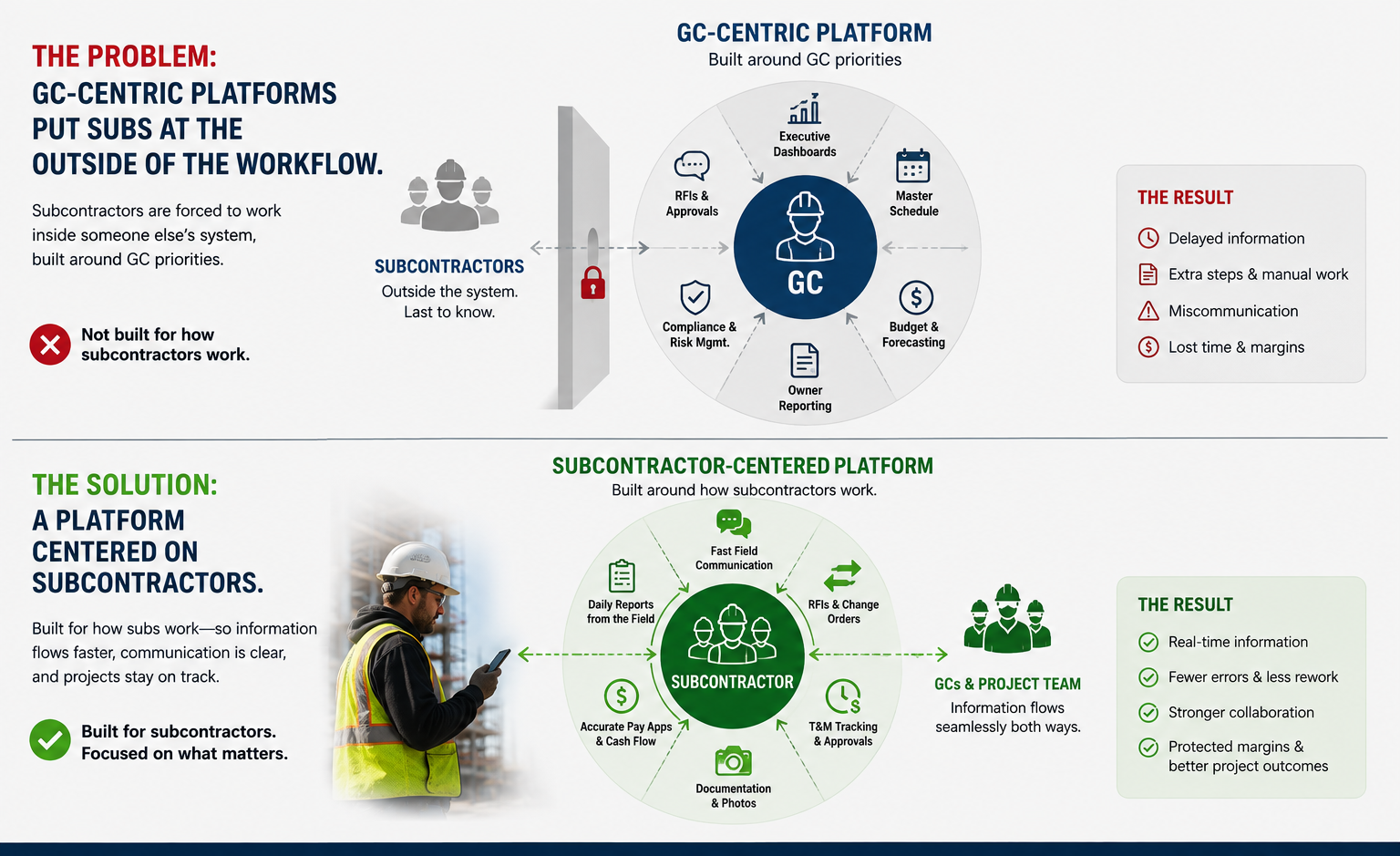
The Subcontractor Tech Gap: Why Tools Built for GCs Keep Trades Behind
eSUB Construction Software Blog·Aug 13, 2026

The Subcontractor Tech Gap: Why Tools Built for GCs Keep Trades Behind

General contractors have adopted advanced software tools that don't meet the needs of subcontractors, creating a technology gap that leaves trades struggling to keep up. Subcontractors need solutions built specifically for their workflows, not watered-down versions of GC platforms.

Workforce
WEEKLY DISPATCH
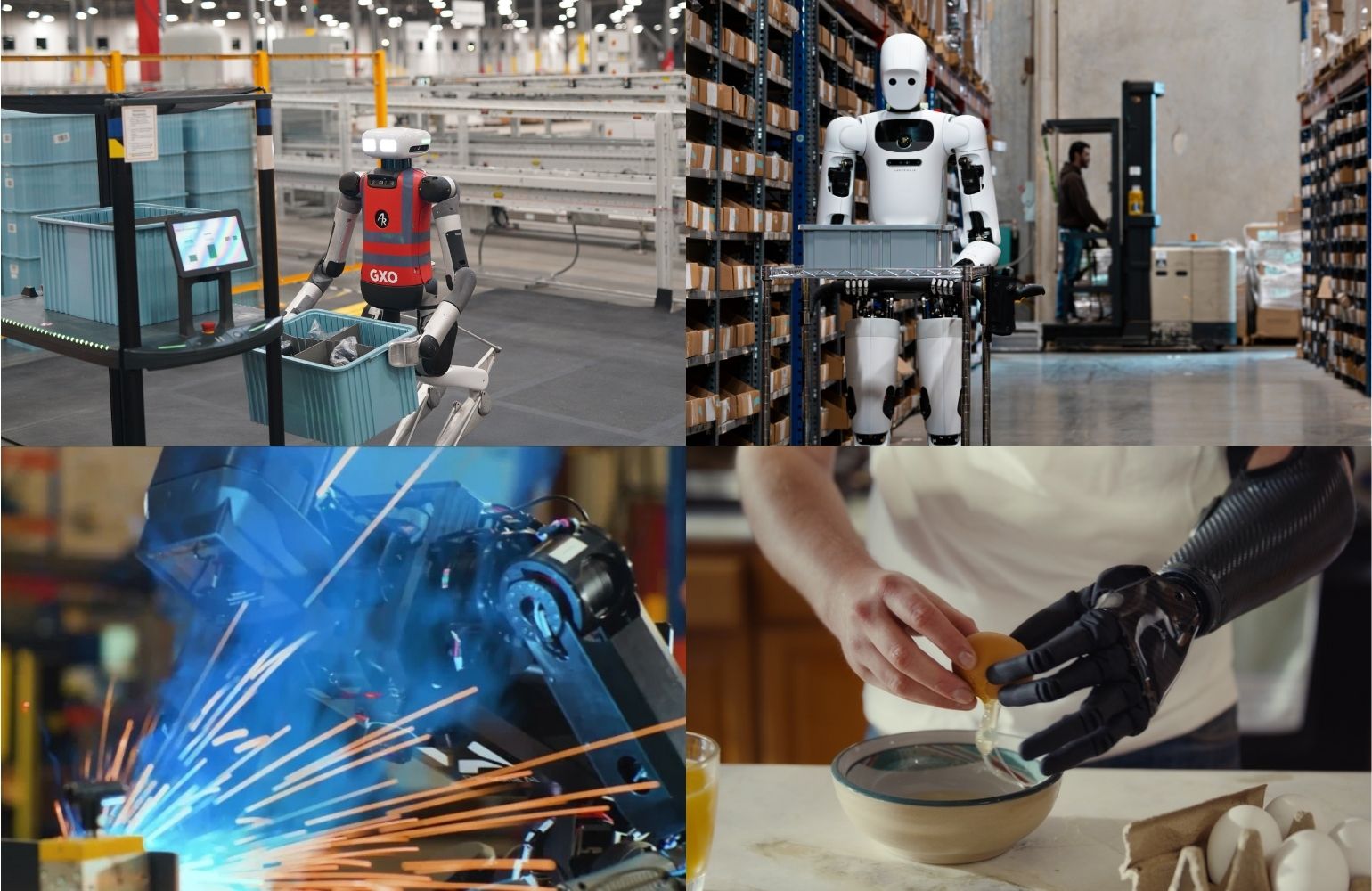
Mobile manipulators and humanoids: The future of robotics
Robotics Business Review·Aug 13, 2026

Mobile manipulators and humanoids: The future of robotics

Humanoids and mobile manipulators are emerging as the next generation of construction robotics, with major developers actively advancing the technology. A new resource provides an overview of current humanoid developers and insights from industry experts on how these robots will reshape job sites.

RoboticsAutonomy
Session Preview: What You’ll Find for Preconstruction Professionals at AU 2026
Autodesk Construction Cloud Blog·Aug 13, 2026

Session Preview: What You’ll Find for Preconstruction Professionals at AU 2026

Autodesk University 2026 is returning with expanded programming designed specifically for preconstruction professionals to learn and network. The event will feature expert-led sessions and panel discussions covering topics relevant to construction technology and project planning.

Workforce
ARM Institute calls for defense manufacturing technology projects
Robotics Business Review·Aug 13, 2026

ARM Institute calls for defense manufacturing technology projects

The ARM Institute and U.S. Department of War are requesting technology project submissions aimed at accelerating domestic defense manufacturing capabilities. Companies and organizations can submit innovations to support rapid production scaling in the defense sector.

RoboticsWorkforce
WEEKLY DISPATCH
Construction Backlog Indicator Plummets in July
Construction Executive·Aug 13, 2026

Construction Backlog Indicator Plummets in July

Construction backlogs dropped significantly in July across most regions, signaling potential softening in project demand and future workload. The South is the only region maintaining a larger backlog compared to the same period last year.

Workforce
Experts to discuss the state of humanoid robots at RoboBusiness
Robotics Business Review·Aug 13, 2026

Experts to discuss the state of humanoid robots at RoboBusiness

Experts from leading robotics companies including Agility, Apptronik, Persona AI, and PSYONIC will share insights on the current state and applications of humanoid robots at the RoboBusiness panel. The discussion will cover developments in robotic technology that could impact construction operations and job site automation.

RoboticsAutonomy
OSHA’s illness-recording requirement doesn’t apply to mental illnesses, appeals court rules
Safety+Health Magazine·Aug 12, 2026

OSHA’s illness-recording requirement doesn’t apply to mental illnesses, appeals court rules

A federal appeals court has ruled that OSHA's requirement for employers to record work-related illnesses does not apply to mental health conditions. The 5th Circuit decision came from a case involving an ExxonMobil refinery explosion and fire in Texas.

Workforce
Q2 2026 robotics demand increased across industries, reports A3
Robotics Business Review·Aug 12, 2026

Q2 2026 robotics demand increased across industries, reports A3

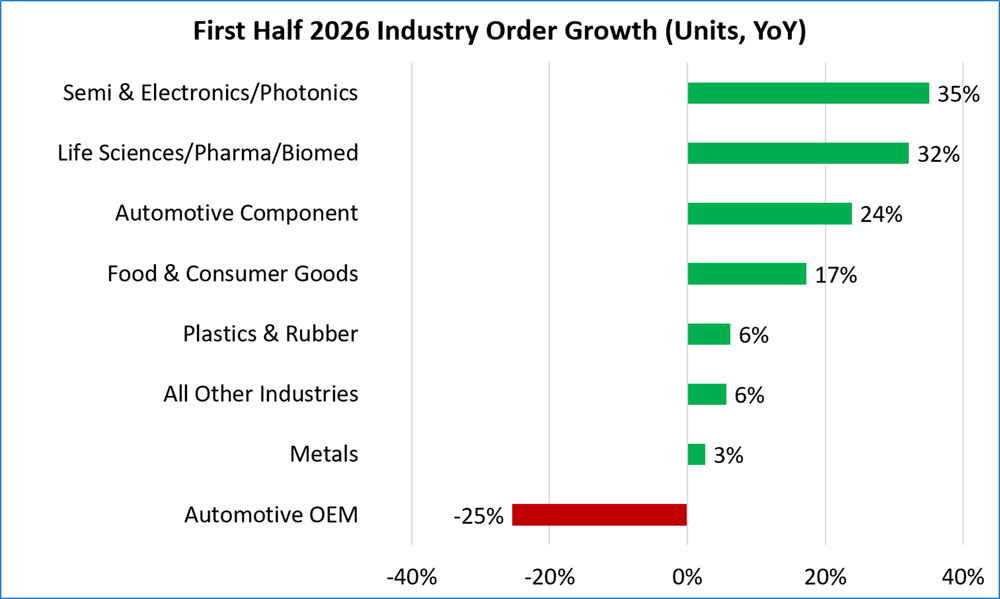
Robotics orders surged in Q2 2026 across food, electronics, and healthcare sectors, demonstrating broad industry adoption beyond traditional manufacturing. Automotive demand remained weak but was offset by growth in other verticals, indicating a diversifying market for industrial robots.

RoboticsWorkforce
Black lung rates in coal-country states at a 50-year high, NIOSH says
Safety+Health Magazine·Aug 12, 2026

Black lung rates in coal-country states at a 50-year high, NIOSH says

Black lung disease rates among long-tenured underground coal miners in Kentucky, Virginia, and West Virginia have reached nearly 1 in 3 workers, marking the highest prevalence in almost 50 years according to recent NIOSH research. The findings highlight serious occupational health risks in coal mining regions and underscore the need for improved workplace safety measures and dust control practices.

SafetyWorkforce
New Hampshire law secures restroom access for truckers delivering cargo
Safety+Health Magazine·Aug 12, 2026

New Hampshire law secures restroom access for truckers delivering cargo

New Hampshire's S.B. 500, signed in June and effective August 11, requires most businesses to allow commercial truck drivers to access restrooms during deliveries and pickups. The bipartisan law addresses a longstanding issue affecting the working conditions of drivers in the state.

Workforce