AllAI & MLRoboticsAutonomy3D PrintingElectrificationSafetyWorkforceMaterialsEDITOR'S PICKWEEKLY DISPATCH
Category

Workforce & Labor

Labor shortage, skilled trades, apprenticeships, hiring platforms, workforce development, and crew management.

1202 stories found

Construction's structural labor crisis has crystallized into an unmistakable competitive sorting mechanism that now explicitly divides operators who've architected integrated talent systems from those still fragmenting efforts across disconnected initiatives. The convergence of three forces is reshaping the entire industry: persistent labor scarcity that refuses cyclical relief, intensifying regulatory enforcement that transforms safety compliance into a non-negotiable operational requirement, and technology adoption that separates strategic workforce planners from those still relying on manual processes. Contractors embedding psychological capital development—the renewable resource combining hope, efficacy, resilience, and optimism identified by the American Psychological Association—alongside safety culture, wellness programming, and technology implementation are demonstrating measurably superior retention outcomes precisely as competitors continue hemorrhaging workers to attrition. The data is unambiguous: firms managing labor strategically through integrated systems now capture talent at scale, while those treating workforce development as a disconnected cost center are fragmenting against wider performance gaps that cannot be bridged by margin compression from material cost inflation.

Technology adoption has shifted decisively from implementation barrier to retention lever as purpose-built solutions designed for trade-level adoption rather than corporate mandate reshape labor dynamics across estimation, scheduling, and field operations. ConstructConnect's automated takeoff capabilities cut estimation time by 50% on large projects while freeing estimator bandwidth for strategic opportunity scoring, eSUB's partnership with SMART Local 104 is embedding project management skills directly into sheet metal apprenticeships, and MasTec's deployment of physical AI on solar construction jobsites demonstrates on-site operation optimization beyond corporate-level forecasting. The gap between early adopters systematizing these capabilities and lagging competitors remains a decisive competitive moat—yet implementation barriers and workforce skills gaps simultaneously create immediate opportunity for operators willing to integrate training alongside technology deployment. Bluebeam's 2027 AEC technology report confirms most construction firms haven't scaled these capabilities, a condition that reflects organizational friction but masks exceptional runway for contractors positioned to move first.

The talent acquisition and retention crisis now operates entirely on a different plane than wage competition alone can address. Procore's research reveals 50% of young people believe AI could enhance construction careers, yet 41% remain unaware the industry already uses AI—a marketing gap that contractors actively communicating technological enhancement of labor can exploit for talent acquisition at scale while competitors remain silent. Meanwhile, the Department of Labor's reinstatement of the economic reality test for independent contractor classification, the BlackRock Foundation's new veteran transition program, and expanded federal apprentice payment programs signal sustained commitment to training infrastructure scaling precisely as construction employment rose across 37 states. The industry's competitive architecture has fundamentally reorganized: firms treating safety, wellness integration, and technology implementation as interconnected systems that explicitly enhance worker experience and career trajectory are establishing sustainable performance advantages that low-cost operators cannot replicate. This is no longer construction's labor shortage; it is construction's talent development divide.

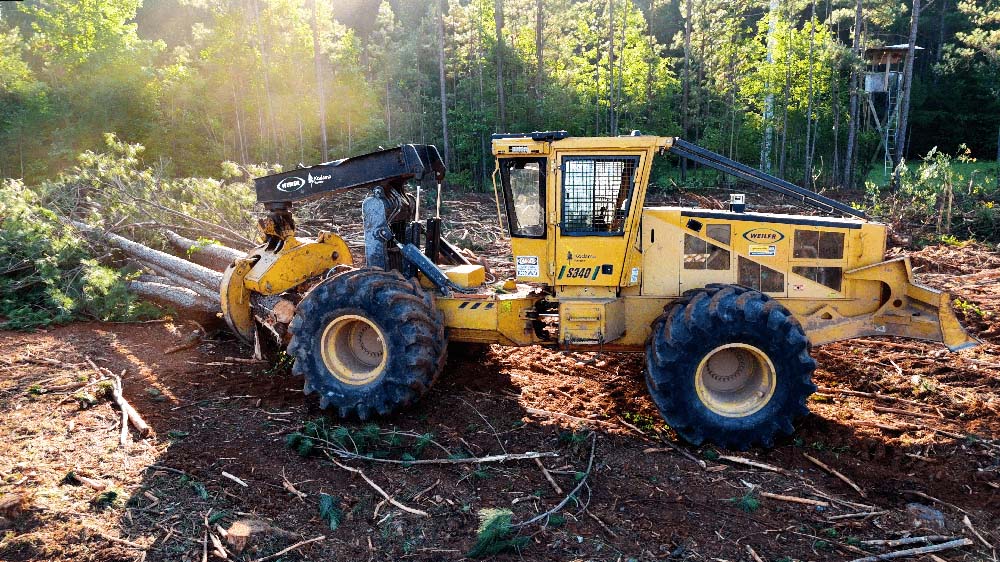
Kodama raises $7M to bring robotics to forestry
Robotics Business Review·Oct 19, 2026

Kodama raises $7M to bring robotics to forestry

Kodama has secured $7 million in funding to develop robotic solutions for the forestry and logging industry, beginning with teleoperated equipment. The company is collecting operational data during this initial phase to advance toward more autonomous systems.


RoboticsAutonomy
ILO issues guidance on safety and health priorities for retail sector
Safety+Health Magazine·Oct 19, 2026

ILO issues guidance on safety and health priorities for retail sector

The International Labor Organization has released new safety and health recommendations for retail workers, including those in warehousing and distribution roles. The guidance addresses evolving workplace risks as technology and organizational changes reshape retail operations.

WorkforceSafety
ForConstructionPros·Oct 19, 2026

Construction Job Openings Fall to 251,000

Construction job openings fell to 251,000 in August, down 48,000 from the previous month. Despite the monthly decline, openings remain 38,000 higher than they were a year ago.

Workforce
Amid immigration crackdown, US craft workers increasingly older, foreign-born
Construction Dive·Oct 19, 2026

Amid immigration crackdown, US craft workers increasingly older, foreign-born

Immigrants now account for all net growth in construction trades over the past decade, according to Harvard research, as the domestic workforce ages. Stricter immigration policies threaten to exacerbate labor shortages in low-wage craft positions that are already difficult to fill.

Workforce
The Pentagon’s New Manufacturing Strategy Puts the Factory Floor Ahead of the Lab
3D Printing Industry·Oct 19, 2026

The Pentagon’s New Manufacturing Strategy Puts the Factory Floor Ahead of the Lab

The Pentagon is shifting its manufacturing focus from laboratory innovation to scaling production, addressing the 'valley of death' where military technologies fail to transition from prototypes to commercial manufacturing. This strategy prioritizes factory floor capabilities and production readiness over early-stage research development.

Workforce
WEEKLY DISPATCH
ForConstructionPros·Oct 19, 2026

Survey Finds Late Payments and Portal Work Burden Construction Vendors

Small and midsized construction vendors face significant challenges with late payments from larger contractors and administrative burdens managing digital portals and compliance requirements. The survey of 417 vendors highlights how payment delays and technology adoption demands strain smaller businesses in the construction supply chain.

Workforce
Time is money: How to compress interior construction schedules and move In sooner
Construction Dive·Oct 19, 2026

Time is money: How to compress interior construction schedules and move In sooner

Prefabrication strategies can reduce interior construction timelines by 30% and eliminate costly project delays. This approach allows teams to move into completed spaces faster by shifting work off-site and improving on-site productivity.

Workforce
WEEKLY DISPATCH
The rise of the machines is canceled: Why humanoids with AI are helpers, not enemies
Robotics Business Review·Oct 17, 2026

The rise of the machines is canceled: Why humanoids with AI are helpers, not enemies

Humanoid robots with AI are being developed as tools to assist workers rather than replace them, with humans maintaining control through active involvement in training and deployment. The technology represents a collaborative future where machines support construction operations under human oversight.

RoboticsAI & ML
Do workers stay quiet about their health conditions?
Safety+Health Magazine·Oct 16, 2026

Do workers stay quiet about their health conditions?

Researchers surveyed nearly 700 workers to determine whether employees disclose physical or mental health issues to their employers and if they attempt to conceal how these conditions affect their job performance. The study provides insight into workplace health communication patterns that could inform how construction companies support worker wellbeing and productivity.

WorkforceSafety
Building Talent in a Tight Market
Construction Executive·Oct 16, 2026

Building Talent in a Tight Market

Addressing labor shortages requires balancing recruitment with strategic development of existing employees. Training current staff to expand their skill sets can be a cost-effective way to fill capability gaps in a competitive hiring market.

Workforce
WEEKLY DISPATCH
Materials handing in construction: New toolbox talk on lifting and carrying
Safety+Health Magazine·Oct 16, 2026

Materials handing in construction: New toolbox talk on lifting and carrying

Construction workers face elevated back injury risks from improper lifting techniques, frequent bending, and awkward work positions, according to a new toolbox talk from NIOSH and CPWR. The guidance aims to help jobsites reduce one of the industry's most common workplace injuries.

Workforce
Why Culture at Your Construction Company Might Need an Audit
Construction Executive·Oct 16, 2026

Why Culture at Your Construction Company Might Need an Audit

Construction companies should evaluate their workplace culture because hidden cultural problems can create bigger risks than financial issues on balance sheets. A culture audit helps identify liabilities related to employee engagement, safety, retention, and operational effectiveness that impact long-term business performance.

Workforce
WEEKLY DISPATCH
Union Wage-and-Fringe Packages Increase 4.9% So Far in 2026
AGC of America News·Oct 16, 2026

Union Wage-and-Fringe Packages Increase 4.9% So Far in 2026

Union wage-and-fringe benefit packages have grown 4.9% through 2026, reflecting ongoing labor cost pressures in the construction industry. This increase affects project budgeting and labor negotiations across union trades and construction firms.

Workforce
How much does Procore cost? A pricing breakdown for contractors
Fieldwire Blog·Oct 16, 2026

How much does Procore cost? A pricing breakdown for contractors

Procore offers multiple pricing tiers starting with a free plan and scaling up to enterprise solutions, with costs varying based on the number of users and features needed. Contractors should expect to pay anywhere from nothing upfront to thousands monthly depending on their project size, team complexity, and required functionality.

Workforce
WEEKLY DISPATCH
ForConstructionPros·Oct 15, 2026

AI in Construction: Building Capacity, Not Replacing Workers

AI adoption in construction is driven by labor shortages, cost pressures, and tight schedules rather than workforce replacement. The technology focuses on building capacity and improving efficiency within existing operational constraints.

AI & MLWorkforce
How construction change order management software reduces disputes and delays on commercial projects
Fieldwire Blog·Oct 16, 2026

How construction change order management software reduces disputes and delays on commercial projects

Construction change order management software streamlines documentation and approval processes to minimize disputes between contractors, owners, and subs on commercial projects. By centralizing communications and creating clear audit trails, the software reduces costly delays and keeps projects moving on schedule and budget.

Workforce
WEEKLY DISPATCH
Earn and Learn: 800 High School Students Receive Hands-On Skilled Trades Training
Construction Executive·Oct 15, 2026

Earn and Learn: 800 High School Students Receive Hands-On Skilled Trades Training

Harbor Freight Tools for Schools is expanding a paid summer program that provides over 800 Los Angeles County high school students with hands-on skilled trades training and industry credentials. The initiative creates a direct pathway for students to enter construction and trades careers while earning income.

Workforce
Construction project management software that integrates with QuickBooks: what to look for
Fieldwire Blog·Oct 16, 2026

Construction project management software that integrates with QuickBooks: what to look for

Construction project management software that connects with QuickBooks can streamline accounting, invoicing, and financial reporting by eliminating duplicate data entry and keeping job costs current. When evaluating these tools, prioritize integration depth, real-time sync capabilities, user interface simplicity, and robust support for change orders and budget tracking.

Workforce