AllAI & MLRoboticsAutonomy3D PrintingElectrificationSafetyWorkforceMaterialsEDITOR'S PICKWEEKLY DISPATCH
Category

Autonomous Equipment

Drones, UAVs, autonomous vehicles, self-driving equipment, machine control, and site automation.

354 stories found

The autonomy transition in construction is now entering a phase where hardware standardization and AI-driven data collection are removing the final barriers to scaled deployment. Komatsu's expansion of autonomous haul truck development across four equipment models in North America signals that tier-one OEMs are treating autonomy as core product strategy rather than experimental sideline—this matters because equipment manufacturers control both hardware and software integration pathways that contractors depend on. Simultaneously, the data infrastructure layer is accelerating: Humyn Labs' $47 million raise to aggregate real-world operational data, coupled with advances in generative AI robotics frameworks, means that the constraint blocking broader adoption has shifted decisively away from algorithmic capability and toward standardized data collection and interoperability. The manufacturing data gap that persists—as recent analysis in Robotics Business Review confirms—is being systematically addressed through dedicated funding and ecosystem focus. What was true six months ago remains true: the question for construction executives is no longer whether autonomy works, but which tasks to prioritize and how to integrate these systems into existing fleet operations.

Task-specific automation continues to validate the near-term ROI narrative. Boston Dynamics' Atlas humanoid robot is moving beyond automotive manufacturing into semiconductor facilities in early 2027, demonstrating that humanoid platforms are approaching the operational maturity needed for specialized construction-adjacent work. MIT's self-correcting autonomous construction blocks and AI-powered drone monitoring with automated change detection show that autonomy is now embedded across the full spectrum of jobsite activities—from materials handling to real-time progress tracking. Rockwell Automation's acquisition of AGILOX, the company's second major robotics purchase in two years, confirms that industrial automation incumbents are consolidating mobile robotics capability as a strategic necessity rather than optional add-on. These developments collectively indicate that construction organizations operating without active autonomy evaluation strategies are falling behind: competitors deploying task-specific autonomous systems are compressing labor-intensive workflows and improving safety profiles, and that efficiency gap compounds every quarter.

The regulatory environment remains unresolved and contingent. California's DMV prohibition on Waymo autonomous vehicles on state freeways signals that public roadway autonomy faces genuine safety validation hurdles that robotics and construction autonomy largely bypass—jobsite environments operate under different regulatory frameworks and safety expectations than public transportation. This distinction matters: construction autonomy deployment doesn't require the level of public regulatory approval that automotive self-driving does, meaning construction organizations can move forward with task-specific and fleet-based autonomous systems while transportation autonomy works through its regulatory maturation cycle. The practical implication is clear: construction teams should evaluate autonomy adoption based on jobsite readiness and ROI, not on the timeline of automotive regulatory approval. The hardware, software, and data infrastructure necessary for construction autonomy are now operationally viable and economically defensible at scale.

Petal Surgical adds more funding for incisionless surgical robot
Robotics Business Review·Jun 2, 2026

Petal Surgical adds more funding for incisionless surgical robot

Petal Surgical has secured additional funding to develop an incisionless surgical robot that performs advanced procedures without traditional surgical cuts. The technology aims to reduce patient trauma while making complex treatments safer and more widely available.


RoboticsAutonomy
NSF Backs UNF Research to Stamp Out Defects in Metal 3D Printing
3D Printing Industry·May 27, 2026

NSF Backs UNF Research to Stamp Out Defects in Metal 3D Printing

University of North Florida researchers are developing an automated monitoring system funded by the National Science Foundation that detects and corrects defects in metal 3D printing as each layer is produced. The real-time correction technology aims to improve the quality and reliability of metal parts manufactured through additive processes.

3D PrintingAI & ML
FORT Robotics acquires Mapless AI to expand teleop capabilities
Robotics Business Review·Jun 2, 2026

FORT Robotics acquires Mapless AI to expand teleop capabilities

FORT Robotics has acquired Mapless AI to enhance its teleoperation capabilities for robotic systems. This acquisition combines FORT's industrial robotics expertise with Mapless AI's technology for operating robots in unstructured job site environments.

RoboticsAutonomy
3D Printing Redefines Readiness at FlyTrap 5.0
3D Printing Industry·May 22, 2026

3D Printing Redefines Readiness at FlyTrap 5.0

The 2nd Armored Cavalry Regiment used 3D printing technology to improve equipment readiness and logistics during FlyTrap 5.0, a multinational military exercise in Lithuania involving nearly 1,000 troops. The exercise tested counter-drone systems, electronic warfare, and unmanned ground vehicles under live combat conditions, demonstrating how additive manufacturing enhances operational capability and equipment availability.

3D PrintingRobotics
NVIDIA releases new and updated tools for physical AI developers
Robotics Business Review·Jun 1, 2026

NVIDIA releases new and updated tools for physical AI developers

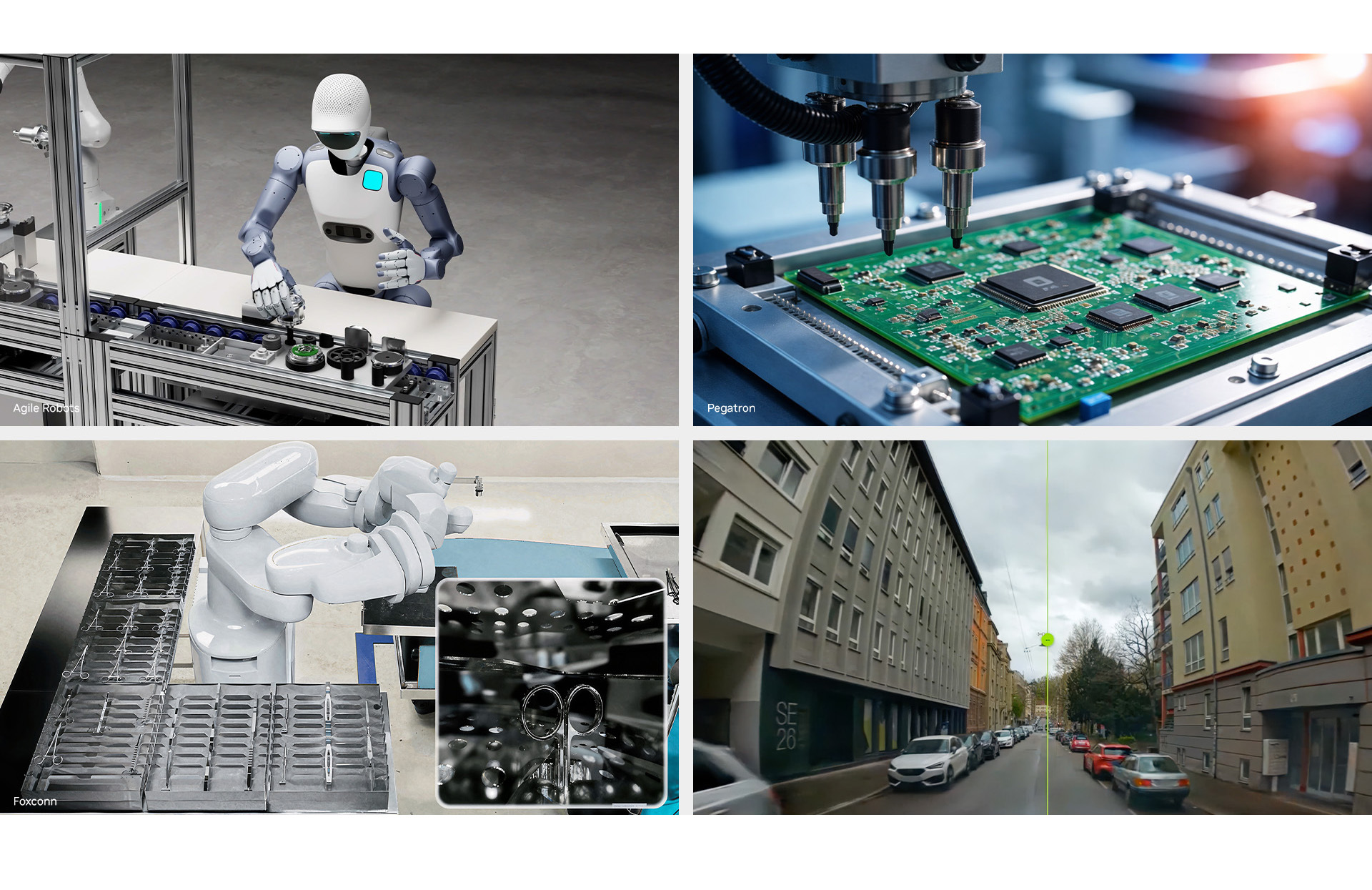
NVIDIA has released open-source tools and skills designed to help developers build physical AI agents for real-world applications. The company also unveiled the Isaac GR00T humanoid reference robot to advance robotics development in the construction and industrial sectors.

AI & MLRobotics
Learn about advances in robotic case and each picking
Robotics Business Review·Jun 1, 2026

Learn about advances in robotic case and each picking

A webinar featuring experts from Locus Robotics, Nomagic, and RightHand Robotics will cover recent developments in robotic piece picking technology. The session aims to highlight progress in automated case and item picking systems for warehouse and logistics operations.

RoboticsAutonomy
Software becoming the biggest bottleneck to physical AI innovation, finds QNX research
Robotics Business Review·May 29, 2026

Software becoming the biggest bottleneck to physical AI innovation, finds QNX research

Software development and security are increasingly becoming the main limiting factors for deploying robots in unstructured construction environments, according to QNX research. As physical AI systems move beyond controlled settings, the industry must prioritize robust software solutions to unlock the full potential of robotic innovation.

RoboticsAI & ML
NIST proposes a baseline performance benchmark for humanoid robots
Robotics Business Review·May 29, 2026

NIST proposes a baseline performance benchmark for humanoid robots

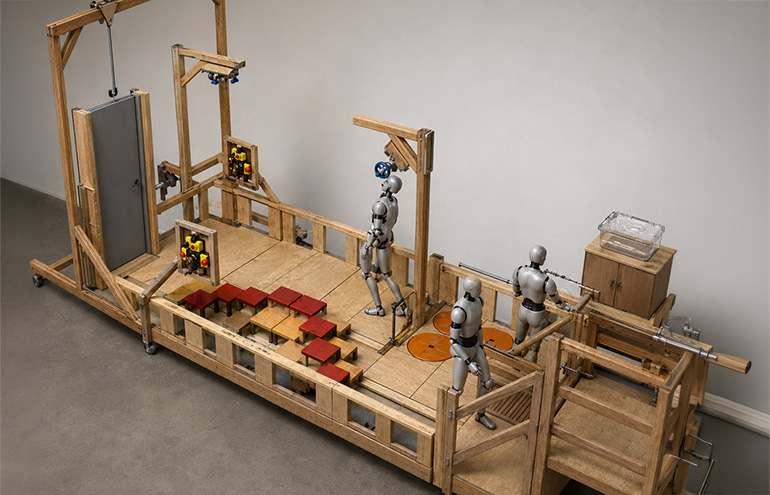
NIST has developed standardized performance benchmarks and testing procedures to evaluate humanoid robots, giving developers and manufacturers a consistent framework for assessment. This baseline will help the construction industry compare and select humanoid robots based on reliable, objective performance metrics.

RoboticsAutonomy
How humanoids learn to read the room
Robotics Business Review·May 26, 2026

How humanoids learn to read the room

Humanoid robots require sophisticated integration of movement, balance, vision and sensor data processing to function effectively on job sites. As these systems become more complex, engineers must design them to perceive and respond to their physical environment in real time.

RoboticsAutonomy
GMSL and the growing ecosystem around robotic vision systems
Robotics Business Review·May 26, 2026

GMSL and the growing ecosystem around robotic vision systems

Modern construction robots now require advanced vision systems to navigate complex job sites faster and handle dynamic obstacles, moving beyond basic point-to-point movement. GMSL technology and its growing ecosystem are enabling the sophisticated robotic vision capabilities that today's autonomous equipment needs to operate effectively in real-world construction environments.

RoboticsAutonomy
XELA Robotics to show tactile sensing at the 2026 Robotics Summit & Expo
Robotics Business Review·May 26, 2026

XELA Robotics to show tactile sensing at the 2026 Robotics Summit & Expo

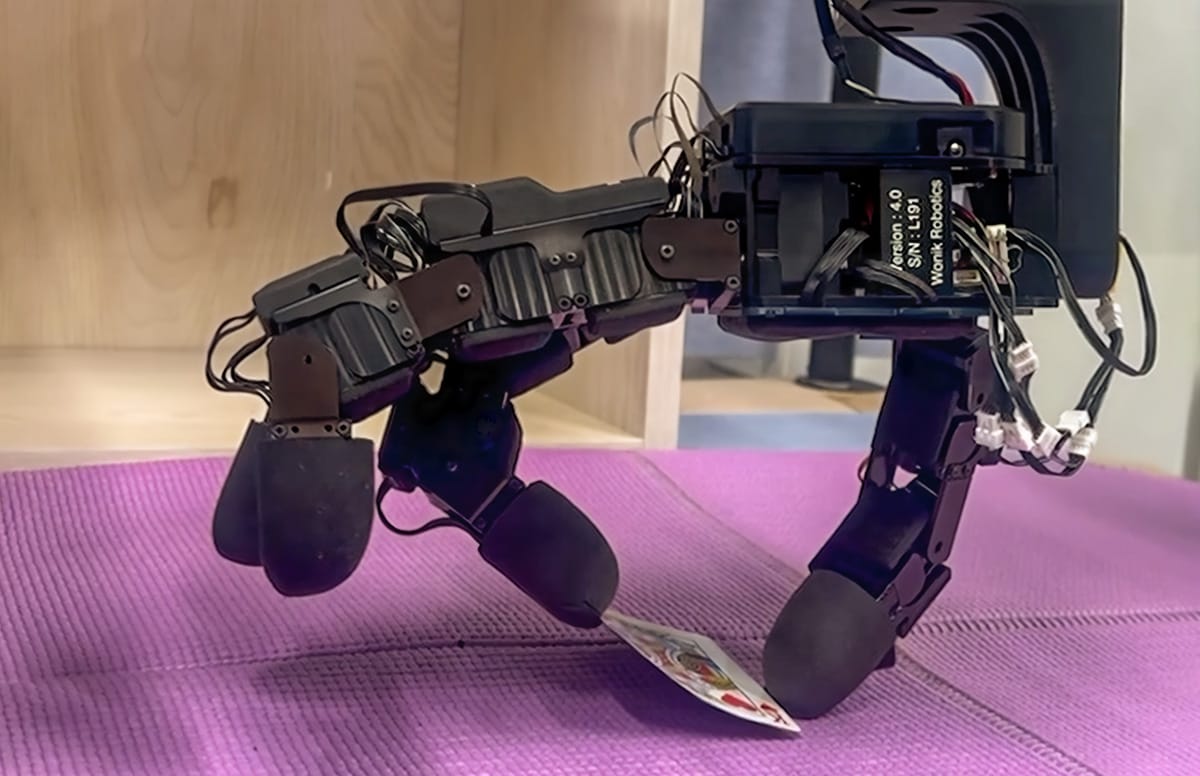
XELA Robotics will demonstrate advanced tactile sensing technology at the 2026 Robotics Summit & Expo, featuring improved magnetic interference compensation for better performance in real-world conditions. The company's uSkin tactile sensors integrated into their Universal Manipulation Interface aim to enhance robotic handling and precision for construction and industrial applications.

RoboticsAutonomy
Allient to demonstrate advanced motion control systems at 2026 Robotics Summit & Expo
Robotics Business Review·May 26, 2026

Allient to demonstrate advanced motion control systems at 2026 Robotics Summit & Expo

Allient will showcase its motion control and automation technologies at the 2026 Robotics Summit & Expo in Boston this week. The demonstration highlights the company's advanced systems designed for robotic applications in industrial settings.

RoboticsAutonomy
Simulation vs. digital twin: A strategic lens on virtual manufacturing
Robotics Business Review·May 25, 2026

Simulation vs. digital twin: A strategic lens on virtual manufacturing

Digital twins and simulations serve different purposes in manufacturing, with simulations testing design concepts and digital twins providing ongoing virtual replicas for system integration and optimization. Manufacturers can leverage both technologies strategically when automating operations and integrating complex systems.

RoboticsAutonomy
The future of physical AI isn’t humanoid; it’s task-specific and cost-efficient
Robotics Business Review·May 23, 2026

The future of physical AI isn’t humanoid; it’s task-specific and cost-efficient

Specialized AI-powered machines designed for specific construction tasks will be more practical and cost-effective than humanoid robots for job sites. These task-specific systems will run AI locally on-device, enabling faster, more efficient real-world performance without relying on cloud connectivity.

AI & MLRobotics
Brain Corp partners with UC San Diego to help robots operate in complex environments
Robotics Business Review·May 21, 2026

Brain Corp partners with UC San Diego to help robots operate in complex environments

Brain Corp is partnering with UC San Diego to advance artificial intelligence capabilities that enable robots to work effectively in complex job site environments. The collaboration leverages Brain's existing network of over 50,000 deployed robots worldwide to improve their operational capabilities.

AI & MLRobotics
Rovex and Sphaira pioneer autonomous patient transport
Robotics Business Review·May 20, 2026

Rovex and Sphaira pioneer autonomous patient transport

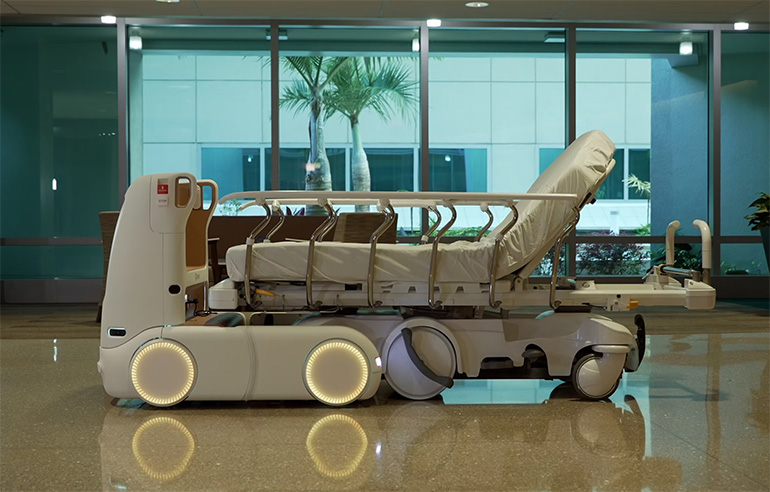
Rovex and Sphaira are developing autonomous systems to transport patients within hospitals, addressing a significant opportunity to automate patient mobility operations. Both companies are pursuing different technological approaches to solve this automation challenge in healthcare settings.

RoboticsAutonomy
Regal Rexnord to bring its motion control portfolio to the Robotics Summit
Robotics Business Review·May 19, 2026

Regal Rexnord to bring its motion control portfolio to the Robotics Summit

Regal Rexnord will showcase its motion control products at the Robotics Summit, demonstrating how its unified motion ecosystem can be integrated into modern robotic system design. The company's portfolio addresses the growing need for advanced motion control solutions in construction robotics and automation.

RoboticsAutonomy
Locus Array expands picking ability with Nexera Robotics’ NeuraGrasp
Robotics Business Review·May 19, 2026

Locus Array expands picking ability with Nexera Robotics’ NeuraGrasp

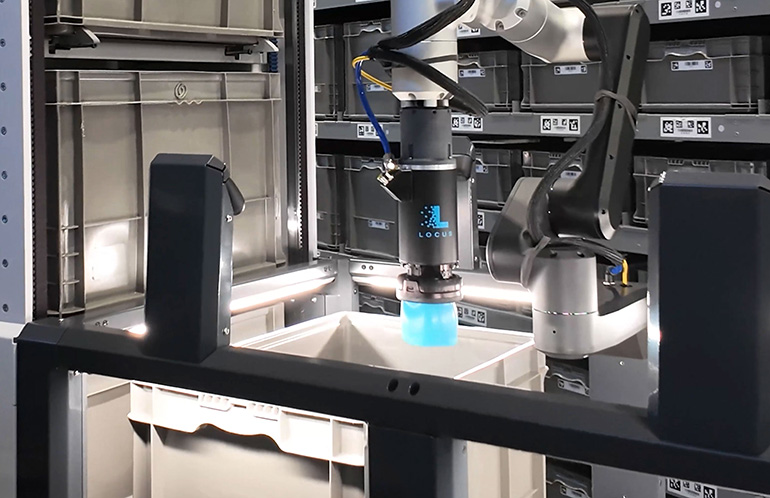
Locus Array's mobile manipulator robot is integrating Nexera Robotics' NeuraGrasp adaptive gripper technology to handle a significantly wider variety of e-commerce products. This expansion improves the robot's picking capability for warehouse and fulfillment operations.

RoboticsAI & ML