AllAI & MLRoboticsAutonomy3D PrintingElectrificationSafetyWorkforceMaterialsEDITOR'S PICKWEEKLY DISPATCH
Category

Autonomous Equipment

Drones, UAVs, autonomous vehicles, self-driving equipment, machine control, and site automation.

354 stories found

The autonomy transition in construction is now entering a phase where hardware standardization and AI-driven data collection are removing the final barriers to scaled deployment. Komatsu's expansion of autonomous haul truck development across four equipment models in North America signals that tier-one OEMs are treating autonomy as core product strategy rather than experimental sideline—this matters because equipment manufacturers control both hardware and software integration pathways that contractors depend on. Simultaneously, the data infrastructure layer is accelerating: Humyn Labs' $47 million raise to aggregate real-world operational data, coupled with advances in generative AI robotics frameworks, means that the constraint blocking broader adoption has shifted decisively away from algorithmic capability and toward standardized data collection and interoperability. The manufacturing data gap that persists—as recent analysis in Robotics Business Review confirms—is being systematically addressed through dedicated funding and ecosystem focus. What was true six months ago remains true: the question for construction executives is no longer whether autonomy works, but which tasks to prioritize and how to integrate these systems into existing fleet operations.

Task-specific automation continues to validate the near-term ROI narrative. Boston Dynamics' Atlas humanoid robot is moving beyond automotive manufacturing into semiconductor facilities in early 2027, demonstrating that humanoid platforms are approaching the operational maturity needed for specialized construction-adjacent work. MIT's self-correcting autonomous construction blocks and AI-powered drone monitoring with automated change detection show that autonomy is now embedded across the full spectrum of jobsite activities—from materials handling to real-time progress tracking. Rockwell Automation's acquisition of AGILOX, the company's second major robotics purchase in two years, confirms that industrial automation incumbents are consolidating mobile robotics capability as a strategic necessity rather than optional add-on. These developments collectively indicate that construction organizations operating without active autonomy evaluation strategies are falling behind: competitors deploying task-specific autonomous systems are compressing labor-intensive workflows and improving safety profiles, and that efficiency gap compounds every quarter.

The regulatory environment remains unresolved and contingent. California's DMV prohibition on Waymo autonomous vehicles on state freeways signals that public roadway autonomy faces genuine safety validation hurdles that robotics and construction autonomy largely bypass—jobsite environments operate under different regulatory frameworks and safety expectations than public transportation. This distinction matters: construction autonomy deployment doesn't require the level of public regulatory approval that automotive self-driving does, meaning construction organizations can move forward with task-specific and fleet-based autonomous systems while transportation autonomy works through its regulatory maturation cycle. The practical implication is clear: construction teams should evaluate autonomy adoption based on jobsite readiness and ROI, not on the timeline of automotive regulatory approval. The hardware, software, and data infrastructure necessary for construction autonomy are now operationally viable and economically defensible at scale.

Palm Garden AI develops Coherence Guard relational decision layer for human-facing robots
Robotics Business Review·Jul 18, 2026

Palm Garden AI develops Coherence Guard relational decision layer for human-facing robots

Palm Garden AI is developing Coherence Guard, a hardware-agnostic software layer designed to improve how robots interact with and respond to humans on job sites. This relational decision layer aims to make human-facing robots safer and more effective for construction environments.

RoboticsAI & ML
NSF Backs Automated 3D Printing of Lab-on-a-Chip Devices
3D Printing Industry·Jul 9, 2026

NSF Backs Automated 3D Printing of Lab-on-a-Chip Devices

George Mason University and Phase Inc. received an NSF grant to develop automated 3D printing technology for microfluidic lab-on-a-chip devices. The advancement aims to move the technology from research settings into practical, widespread construction and manufacturing applications.

3D PrintingAutonomy
Weave Robotics launches Isaac, its first mobile humanoid robot
Robotics Business Review·Jul 17, 2026

Weave Robotics launches Isaac, its first mobile humanoid robot

Weave Robotics has unveiled Isaac, a wheeled mobile manipulator robot designed for household and office environments with dual-arm capabilities. The robot represents an advancement in mobile automation technology that could support construction and facility management operations.

RoboticsAutonomy
WEEKLY DISPATCH
TerraFirma raises $115M to build robotic infrastructure for construction
Robotics Business Review·Jul 16, 2026

TerraFirma raises $115M to build robotic infrastructure for construction

TerraFirma raised $115M to deploy AI-powered software and remote control systems that retrofit existing heavy machinery for construction sites. The platform combines artificial intelligence with a command-and-control center to automate equipment operation and improve jobsite efficiency.

AI & MLRobotics
WEEKLY DISPATCH
Walden Robotics launches at $1.1B valuation for general-purpose robots
Robotics Business Review·Jul 15, 2026

Walden Robotics launches at $1.1B valuation for general-purpose robots

Walden Robotics has launched with a $1.1 billion valuation, backed by major technology companies to develop general-purpose robots for physical tasks. The startup is building full-stack physical AI systems designed to automate work across industries.

RoboticsAI & ML
Agility outlines six recommendations for U.S. humanoid robot policies
Robotics Business Review·Jul 15, 2026

Agility outlines six recommendations for U.S. humanoid robot policies

Agility Robotics CEO Peggy Johnson has released six policy recommendations aimed at creating a regulatory framework that supports the growing humanoid robot industry in the United States. The proposals focus on strengthening existing advantages and establishing clear guidelines for development and deployment of humanoid robots in various sectors.

RoboticsWorkforce
Icarus Robotics uses KULR technology to power JOY free-flying space robot
Robotics Business Review·Jul 15, 2026

Icarus Robotics uses KULR technology to power JOY free-flying space robot

Icarus Robotics has partnered with KULR to equip JOY, a free-flying space robot operating on the International Space Station, with KULR ONE Space battery systems. The battery technology will power JOY's onboard systems, enabling the robot to perform autonomous operations in the orbital environment.

RoboticsAutonomy
NVIDIA shares how to evaluate general-purpose robot policies for real-world deployment
Robotics Business Review·Jul 14, 2026

NVIDIA shares how to evaluate general-purpose robot policies for real-world deployment

NVIDIA has released Isaac Lab-Arena, an open-source simulation framework designed to test and evaluate robot policies before deploying them on real construction sites. The platform enables large-scale testing of general-purpose robots to ensure they perform reliably in actual job conditions.

RoboticsAI & ML
Ondas acquires DZYNE for $875.8M, expanding its defense capabilities
Robotics Business Review·Jul 13, 2026

Ondas acquires DZYNE for $875.8M, expanding its defense capabilities

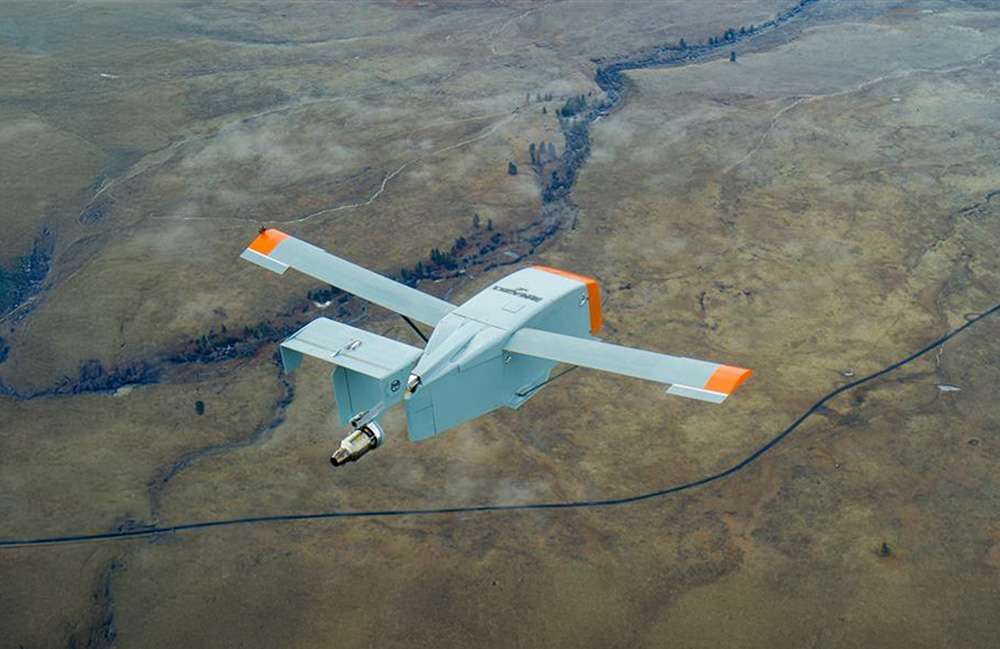
Ondas Holdings acquired DZYNE Technologies for $875.8 million to strengthen its defense sector offerings. DZYNE brings specialized expertise in autonomous aircraft, counter-drone systems, and autonomous effects to Ondas' portfolio.

AutonomyRobotics
Why robotics teams need virtual gyms before deployment
Robotics Business Review·Jul 11, 2026

Why robotics teams need virtual gyms before deployment

Robots need virtual training environments to handle real-world construction conditions and unexpected variables before being deployed on job sites. These 'virtual gyms' help close the gap between simulated testing and actual field performance.

RoboticsAutonomy
WEEKLY DISPATCH
XTEND secures U.S. patent for autonomous navigation technology
Robotics Business Review·Jul 10, 2026

XTEND secures U.S. patent for autonomous navigation technology

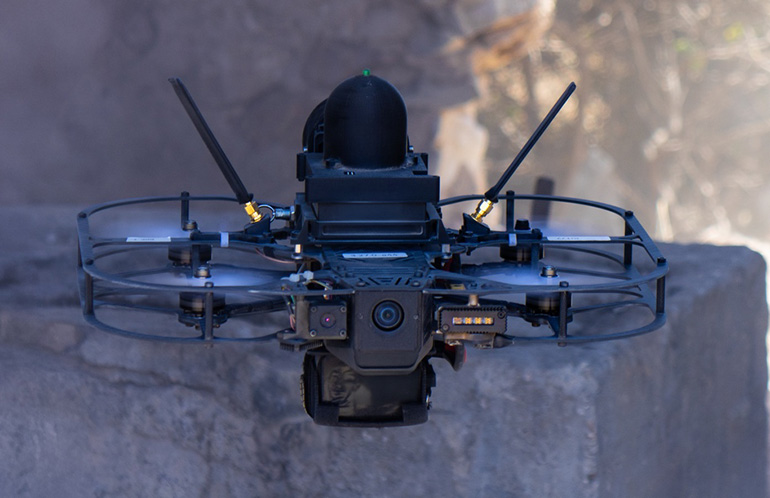
XTEND has obtained a new U.S. patent for autonomous navigation technology that strengthens its intellectual property position in the sector. The patent supports autonomous navigation, operator assistance, and mission execution capabilities for construction and industrial applications.

AutonomyRobotics
AI² Robotics raises $735M at $3B valuation for wheeled humanoid robots
Robotics Business Review·Jul 10, 2026

AI² Robotics raises $735M at $3B valuation for wheeled humanoid robots

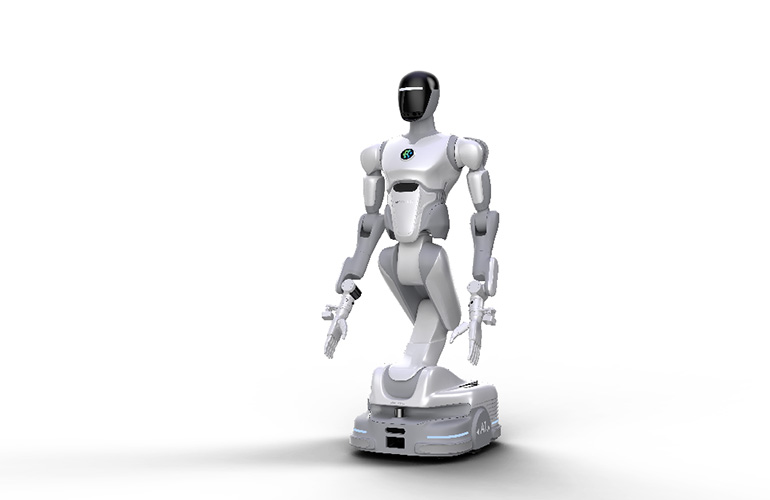
Shenzhen-based AI² Robotics secured $735 million in funding at a $3 billion valuation to develop wheeled humanoid robots for industrial applications. The round was backed by Chinese state entities, major corporations, and financial investors, signaling significant confidence in robotic automation for construction and manufacturing sectors.

RoboticsAutonomy
ForSight Robotics’ road to performing a fully robotic cataract surgery
Robotics Business Review·Jul 9, 2026

ForSight Robotics’ road to performing a fully robotic cataract surgery

ForSight Robotics has developed the JASPER Platform, a robotic system that assists surgeons during cataract procedures while maintaining surgeon control over the operation. The technology represents progress toward fully autonomous robotic surgery in the medical field.

RoboticsAutonomy
Beyond da Vinci: Why versatile humanoid robots are the next frontier in surgery
Robotics Business Review·Jul 9, 2026

Beyond da Vinci: Why versatile humanoid robots are the next frontier in surgery

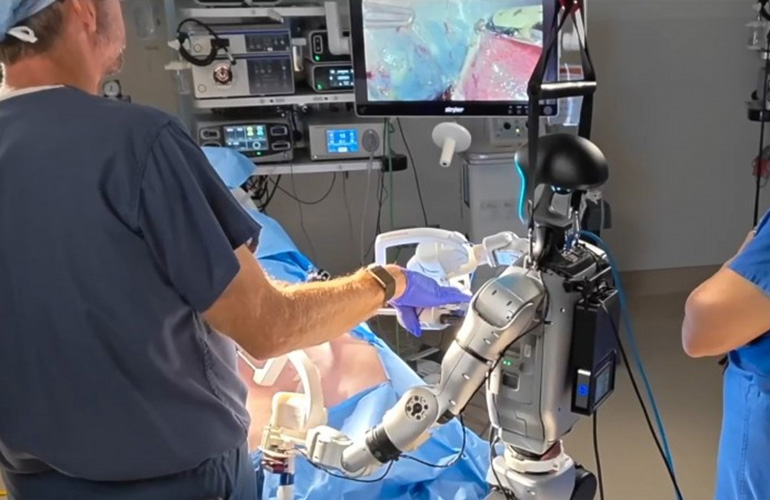
UC San Diego successfully tested teleoperated humanoid robots performing surgical procedures in a preclinical trial, marking a significant advancement beyond traditional robotic surgery systems like da Vinci. Humanoid robots offer greater versatility and dexterity compared to specialized surgical machines, potentially opening new possibilities for remote and complex medical procedures.

RoboticsAutonomy
Tickets, geofences, and 1M miles: The new reality of California AV compliance
Robotics Business Review·Jul 8, 2026

Tickets, geofences, and 1M miles: The new reality of California AV compliance

California has implemented new compliance mandates for autonomous vehicles that will reshape how driverless technology operates in the state, including requirements for geofencing, ticketing systems, and logging 1 million miles of operation. Construction and logistics companies using AVs for jobsite transport and material delivery will need to understand these regulatory requirements to maintain legal operations.

AutonomySafety
WEEKLY DISPATCH
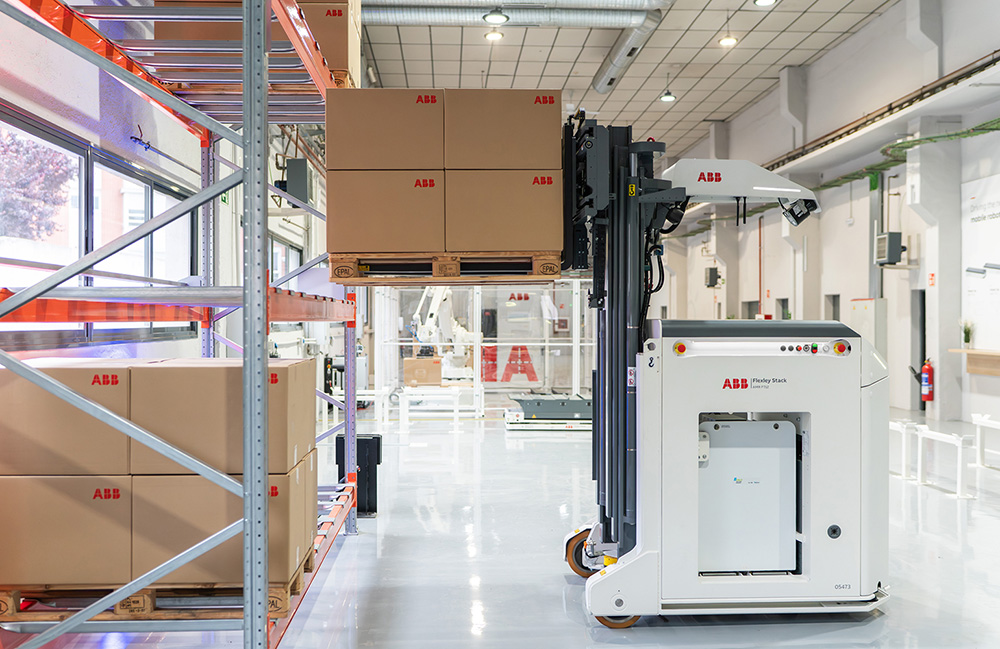
ABB Robotics includes vSLAM navigation in F712 autonomous forklift
Robotics Business Review·Jul 7, 2026

ABB Robotics includes vSLAM navigation in F712 autonomous forklift

ABB Robotics has equipped its Flexley Stacy F712 autonomous forklift with vSLAM (visual simultaneous localization and mapping) technology to enable vision-based navigation on job sites. The F712 is designed to work alongside other robots and meets established safety standards for autonomous material handling.

RoboticsAutonomy
HIVE brings in $15M to build physical AI for industrial machines
Robotics Business Review·Jul 7, 2026

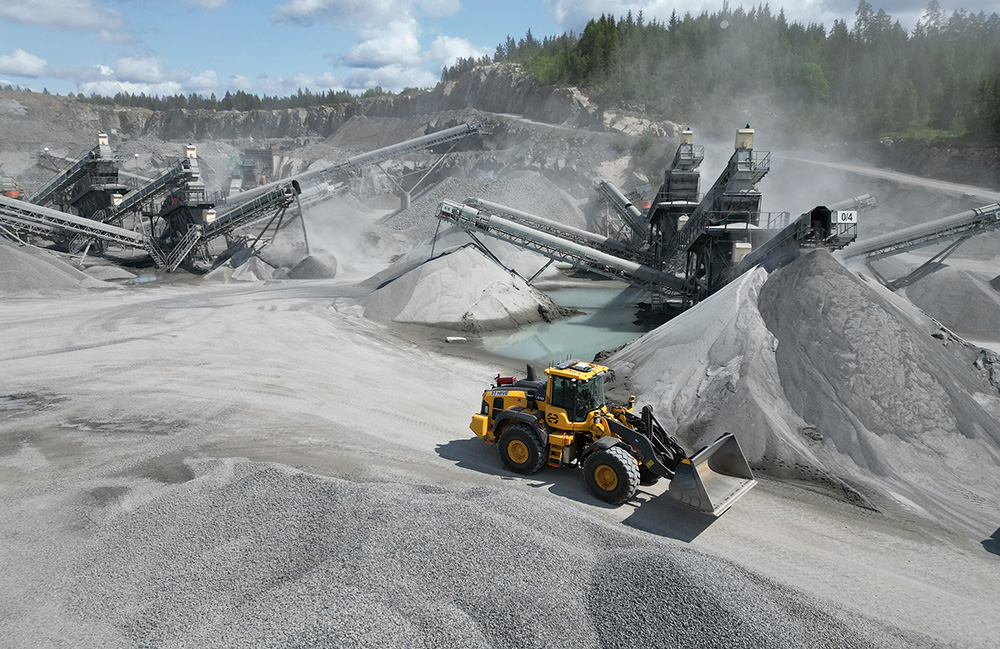
HIVE brings in $15M to build physical AI for industrial machines

HIVE has secured $15M in funding to develop physical AI systems for industrial machines. The company has already deployed its autonomous technology across multiple sites in Scandinavia, where it operates independently across different machine types.

AI & MLRobotics
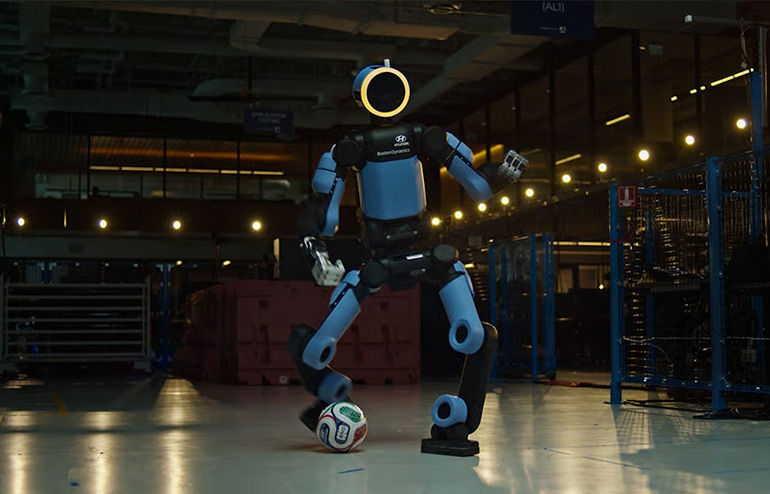
Boston Dynamics brings its legged robots to the FIFA World Cup
Robotics Business Review·Jul 6, 2026

Boston Dynamics brings its legged robots to the FIFA World Cup

Boston Dynamics and Hyundai are deploying their legged robots, including the Atlas humanoid and Spot robot, at the 2026 FIFA World Cup. The robots have been trained for specific tasks like patrolling and moving across the event venue.

RoboticsAutonomy