AllAI & MLRoboticsAutonomy3D PrintingElectrificationSafetyWorkforceMaterialsEDITOR'S PICKWEEKLY DISPATCH
Category

Workforce & Labor

Labor shortage, skilled trades, apprenticeships, hiring platforms, workforce development, and crew management.

1202 stories found

Construction's structural labor crisis has crystallized into an unmistakable competitive sorting mechanism that now explicitly divides operators who've architected integrated talent systems from those still fragmenting efforts across disconnected initiatives. The convergence of three forces is reshaping the entire industry: persistent labor scarcity that refuses cyclical relief, intensifying regulatory enforcement that transforms safety compliance into a non-negotiable operational requirement, and technology adoption that separates strategic workforce planners from those still relying on manual processes. Contractors embedding psychological capital development—the renewable resource combining hope, efficacy, resilience, and optimism identified by the American Psychological Association—alongside safety culture, wellness programming, and technology implementation are demonstrating measurably superior retention outcomes precisely as competitors continue hemorrhaging workers to attrition. The data is unambiguous: firms managing labor strategically through integrated systems now capture talent at scale, while those treating workforce development as a disconnected cost center are fragmenting against wider performance gaps that cannot be bridged by margin compression from material cost inflation.

Technology adoption has shifted decisively from implementation barrier to retention lever as purpose-built solutions designed for trade-level adoption rather than corporate mandate reshape labor dynamics across estimation, scheduling, and field operations. ConstructConnect's automated takeoff capabilities cut estimation time by 50% on large projects while freeing estimator bandwidth for strategic opportunity scoring, eSUB's partnership with SMART Local 104 is embedding project management skills directly into sheet metal apprenticeships, and MasTec's deployment of physical AI on solar construction jobsites demonstrates on-site operation optimization beyond corporate-level forecasting. The gap between early adopters systematizing these capabilities and lagging competitors remains a decisive competitive moat—yet implementation barriers and workforce skills gaps simultaneously create immediate opportunity for operators willing to integrate training alongside technology deployment. Bluebeam's 2027 AEC technology report confirms most construction firms haven't scaled these capabilities, a condition that reflects organizational friction but masks exceptional runway for contractors positioned to move first.

The talent acquisition and retention crisis now operates entirely on a different plane than wage competition alone can address. Procore's research reveals 50% of young people believe AI could enhance construction careers, yet 41% remain unaware the industry already uses AI—a marketing gap that contractors actively communicating technological enhancement of labor can exploit for talent acquisition at scale while competitors remain silent. Meanwhile, the Department of Labor's reinstatement of the economic reality test for independent contractor classification, the BlackRock Foundation's new veteran transition program, and expanded federal apprentice payment programs signal sustained commitment to training infrastructure scaling precisely as construction employment rose across 37 states. The industry's competitive architecture has fundamentally reorganized: firms treating safety, wellness integration, and technology implementation as interconnected systems that explicitly enhance worker experience and career trajectory are establishing sustainable performance advantages that low-cost operators cannot replicate. This is no longer construction's labor shortage; it is construction's talent development divide.

WEEKLY DISPATCH
Construction Dive·Nov 9, 2026

If every contractor has the same AI, what are they actually competing on?

As AI tools become commoditized across the construction bidding process, contractors are shifting focus from quantity takeoffs to how they apply judgment and expertise to win work. The real competitive advantage now lies in a contractor's ability to interpret project conditions, manage risk, and deliver value—not just matching identical AI-generated numbers.


AI & MLWorkforce
ForConstructionPros·Nov 9, 2026

From Army Truck Driver to COO: A Voice for Women in Construction

Mary Schwandt has risen from Army truck driver to COO, using her leadership experience to break barriers and advocate for women in asphalt construction. Her career trajectory demonstrates a pathway for women to advance into executive roles within the construction industry.

Workforce
WEEKLY DISPATCH
Half of young people say AI would make construction more appealing, but 41% don’t know the industry uses it
Procore Blog·Nov 9, 2026

Half of young people say AI would make construction more appealing, but 41% don’t know the industry uses it

A survey found that 50% of young people believe AI could make construction work more attractive as a career, yet 41% are unaware that the construction industry already uses AI technology. The gap between perception and awareness reveals both opportunity and a need for better industry communication about how AI is already transforming construction jobs.

AI & MLWorkforce
ARM Institute consortium grows to more than 500 organizations
Robotics Business Review·Nov 8, 2026

ARM Institute consortium grows to more than 500 organizations

The ARM Institute, a consortium focused on advanced robotics and manufacturing, has grown its membership to over 500 organizations. The milestone comes as the institute prepares for its 10th annual member meeting in Pittsburgh.

RoboticsWorkforce
ForConstructionPros·Nov 7, 2026

Data Center Opposition Could Cost America a Generation of Skilled Workers

Opposition to data center construction projects could limit job growth and skill development in the building trades during a period of significant AI infrastructure investment. Expanding data center work offers construction workers new career opportunities and helps strengthen domestic industrial capabilities.

Workforce
Robot integration brings high-precision production to midmarket manufacturers
Robotics Business Review·Nov 7, 2026

Robot integration brings high-precision production to midmarket manufacturers

Industrial and collaborative robots can be effectively integrated into midmarket manufacturing operations to achieve high-precision production. Proper implementation of this technology allows smaller manufacturers to compete with larger producers through improved accuracy and efficiency.

RoboticsWorkforce
Nonresidential Construction Adds 13,300 Jobs in October
Construction Executive·Nov 6, 2026

Nonresidential Construction Adds 13,300 Jobs in October

Nonresidential construction added 13,300 jobs in October, marking the first monthly loss for the overall construction industry since February. The slowdown signals potential headwinds in the commercial and industrial building sectors.

Workforce
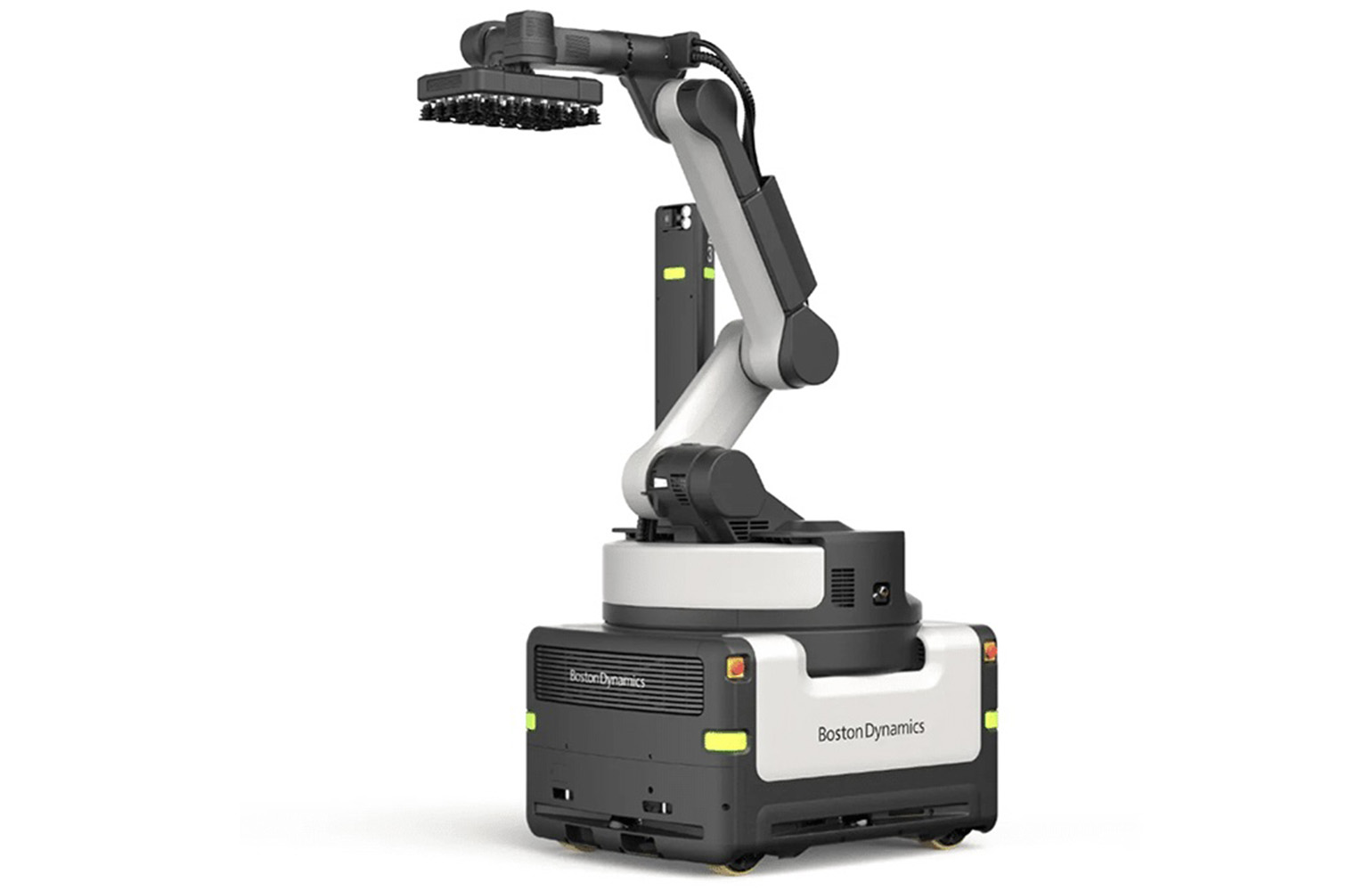
Boston Dynamics built Stretch Gen 2 for reliable, consistent performance
Robotics Business Review·Nov 6, 2026

Boston Dynamics built Stretch Gen 2 for reliable, consistent performance

Boston Dynamics unveiled Stretch Gen 2, a new version of its logistics robot developed over two and a half years to deliver more reliable and consistent performance. The updated robot is designed to handle repetitive material handling tasks in warehouse and construction environments.

RoboticsWorkforce
Truckers group questions federal spending on safe parking research
Safety+Health Magazine·Nov 6, 2026

Truckers group questions federal spending on safe parking research

A truckers group is criticizing federal spending on safe parking research, arguing the funds should address closures of rest areas on interstate highways instead. The group questions whether the research project represents the best use of government resources for addressing driver needs.

Workforce
Construction Dive·Nov 6, 2026

Construction’s latest economic reports reveal less confidence despite more work

Construction firms are reporting increased work activity but decreased confidence due to persistently high costs and limited demand outside the data center sector. The disconnect between volume and sentiment reflects underlying concerns about project profitability and market sustainability beyond the current data center surge.

WorkforceMaterials
Miners and union file suit over silica dust regulation in West Virginia
Safety+Health Magazine·Nov 6, 2026

Miners and union file suit over silica dust regulation in West Virginia

Miners and their union in West Virginia have filed a lawsuit challenging silica dust regulations, arguing that miners lack the same occupational protections against silicosis that other American workers receive. The legal action highlights a significant gap in workplace safety standards for the mining industry.

WorkforceSafety
WEEKLY DISPATCH
Takeoff BOOST™ Cut My Estimates by 50%: 'To not use it would be crazy.'
ConstructConnect·Nov 6, 2026

Takeoff BOOST™ Cut My Estimates by 50%: 'To not use it would be crazy.'

Bill Brady, COO of KBI Painting, cut his estimate time in half using ConstructConnect's Takeoff BOOST by automating repetitive takeoff measurements. On a 37-building renovation project, the software's Auto Takeoff feature reduced estimating time by up to 91%, allowing his team to bid on more jobs without sacrificing accuracy.

AI & MLWorkforce
Warehouse safety: OSHA webinar set for Nov. 17
Safety+Health Magazine·Nov 6, 2026

Warehouse safety: OSHA webinar set for Nov. 17

OSHA's Atlanta regional office will host a warehouse safety webinar on November 17 as part of its Passport to Safety and Health Training series. The training aims to help construction and warehouse professionals understand and implement better safety practices on job sites.

Workforce
JLC Online·Nov 6, 2026

Carpentry Beyond the Belt

Clay DeKorne, longtime editor-in-chief of JLC magazine, discusses his career spanning carpentry, writing, and education on the Beyond the Belt podcast. Whalen and DeKorne explore how DeKorne transitioned from hands-on building work to preserving and sharing industry knowledge through JLC's extensive archive.

Workforce
Give Manual Takeoff the Brush-Off - Auto Takeoff for Painting Contractors
ConstructConnect·Nov 6, 2026

Give Manual Takeoff the Brush-Off - Auto Takeoff for Painting Contractors

Automated takeoff software streamlines the material estimation process for painting contractors by eliminating manual measurements across multiple plan documents, elevations, and specifications. The technology reduces time-consuming back-and-forth between drawings and details, helping contractors bid jobs faster and more accurately.

AI & MLWorkforce
Construction Dive·Nov 6, 2026

Construction reacts to Democrats’ midterm landslide

Construction industry groups are calling on the new Congress to prioritize transit funding collaboration following the Democratic midterm victories. However, employers and unions remain divided on controversial legislation like the PRO Act, which affects labor organizing in construction.

Workforce
WEEKLY DISPATCH
How Construction Companies Gain Competitive Advantage Through Inclusive Leadership
Construction Executive·Nov 6, 2026

How Construction Companies Gain Competitive Advantage Through Inclusive Leadership

Inclusive leadership practices create diverse, high-performing teams in construction organizations, with research showing innovation and agility are six times more likely in inclusive workplaces. Building a culture of inclusion directly strengthens competitive advantage by improving team performance and adaptability across construction projects.

Workforce
Construction Hiring Stalls in October as Unemployment Rate Ties Record Low
AGC of America News·Nov 6, 2026

Construction Hiring Stalls in October as Unemployment Rate Ties Record Low

Construction hiring slowed in October despite the unemployment rate hitting a record low, signaling potential labor market softening in the sector. The slowdown suggests construction companies may be cautious about expanding payrolls amid broader economic uncertainty.

Workforce