AllAI & MLRoboticsAutonomy3D PrintingElectrificationSafetyWorkforceMaterialsEDITOR'S PICKWEEKLY DISPATCH
Category

Workforce & Labor

Labor shortage, skilled trades, apprenticeships, hiring platforms, workforce development, and crew management.

1202 stories found

Construction's structural labor crisis has crystallized into an unmistakable competitive sorting mechanism that now explicitly divides operators who've architected integrated talent systems from those still fragmenting efforts across disconnected initiatives. The convergence of three forces is reshaping the entire industry: persistent labor scarcity that refuses cyclical relief, intensifying regulatory enforcement that transforms safety compliance into a non-negotiable operational requirement, and technology adoption that separates strategic workforce planners from those still relying on manual processes. Contractors embedding psychological capital development—the renewable resource combining hope, efficacy, resilience, and optimism identified by the American Psychological Association—alongside safety culture, wellness programming, and technology implementation are demonstrating measurably superior retention outcomes precisely as competitors continue hemorrhaging workers to attrition. The data is unambiguous: firms managing labor strategically through integrated systems now capture talent at scale, while those treating workforce development as a disconnected cost center are fragmenting against wider performance gaps that cannot be bridged by margin compression from material cost inflation.

Technology adoption has shifted decisively from implementation barrier to retention lever as purpose-built solutions designed for trade-level adoption rather than corporate mandate reshape labor dynamics across estimation, scheduling, and field operations. ConstructConnect's automated takeoff capabilities cut estimation time by 50% on large projects while freeing estimator bandwidth for strategic opportunity scoring, eSUB's partnership with SMART Local 104 is embedding project management skills directly into sheet metal apprenticeships, and MasTec's deployment of physical AI on solar construction jobsites demonstrates on-site operation optimization beyond corporate-level forecasting. The gap between early adopters systematizing these capabilities and lagging competitors remains a decisive competitive moat—yet implementation barriers and workforce skills gaps simultaneously create immediate opportunity for operators willing to integrate training alongside technology deployment. Bluebeam's 2027 AEC technology report confirms most construction firms haven't scaled these capabilities, a condition that reflects organizational friction but masks exceptional runway for contractors positioned to move first.

The talent acquisition and retention crisis now operates entirely on a different plane than wage competition alone can address. Procore's research reveals 50% of young people believe AI could enhance construction careers, yet 41% remain unaware the industry already uses AI—a marketing gap that contractors actively communicating technological enhancement of labor can exploit for talent acquisition at scale while competitors remain silent. Meanwhile, the Department of Labor's reinstatement of the economic reality test for independent contractor classification, the BlackRock Foundation's new veteran transition program, and expanded federal apprentice payment programs signal sustained commitment to training infrastructure scaling precisely as construction employment rose across 37 states. The industry's competitive architecture has fundamentally reorganized: firms treating safety, wellness integration, and technology implementation as interconnected systems that explicitly enhance worker experience and career trajectory are establishing sustainable performance advantages that low-cost operators cannot replicate. This is no longer construction's labor shortage; it is construction's talent development divide.

Give Momentum to Your Career at ENR GWIC, June 14-16 in San Diego
Engineering News-Record·May 20, 2026

Give Momentum to Your Career at ENR GWIC, June 14-16 in San Diego

ENR's Groundbreaking Women in Construction conference runs June 14-16 in San Diego, offering leadership training and career development opportunities. The event focuses on networking and practical solutions for business and workforce challenges in construction.

Workforce
Burns & McDonnell taps tradesworkers for preconstruction, AI vetting
Construction Dive·May 20, 2026

Burns & McDonnell taps tradesworkers for preconstruction, AI vetting

Burns & McDonnell is involving experienced tradespeople in its preconstruction process to validate and refine AI-generated suggestions. The firm recognizes that jobsite professionals provide essential judgment to push back on AI recommendations that don't align with real-world construction realities.

AI & MLWorkforce
STV-Turner JV to Oversee Midtown Manhattan Bus Terminal Phase 1 Work
Engineering News-Record·May 20, 2026

STV-Turner JV to Oversee Midtown Manhattan Bus Terminal Phase 1 Work

STV-Turner joint venture has been selected to manage Phase 1 of the Midtown Manhattan Bus Terminal replacement project, which includes construction of an interim terminal, storage facility, and rail-spanning ramp. The work is part of a $10 billion program to replace the existing transit hub.

Workforce
Autodesk Forma Build + GCPay: A New Integration Connecting Field and Finance Is Here
Autodesk Construction Cloud Blog·May 20, 2026

Autodesk Forma Build + GCPay: A New Integration Connecting Field and Finance Is Here

Autodesk Forma Build has integrated with GCPay to connect field operations and finance systems, reducing duplicate data entry and payment delays. The integration aims to improve project cost visibility and streamline approvals between construction teams and finance departments.

Workforce
Federal Agency Spending Review Ramps Up in Congress
Engineering News-Record·May 20, 2026

Federal Agency Spending Review Ramps Up in Congress

Congress is beginning its appropriations process for fiscal year 2027, with hearings and markups scheduled across both chambers over the coming weeks. Federal funding decisions made during this review will determine budget allocations across government agencies that affect construction and infrastructure sectors.

Workforce
New York advocacy group releases ‘Deadly Skyline’ report on construction worker deaths
Safety+Health Magazine·May 20, 2026

New York advocacy group releases ‘Deadly Skyline’ report on construction worker deaths

Construction worker deaths in New York state decreased nearly 26% in 2024 compared to 2023's 10-year high, according to the New York Committee for Occupational Safety and Health's annual Deadly Skyline report. The report compiled data from multiple sources to track fatality trends across the state's construction industry.

Workforce
Can a Single Data System Look at All Contractor Risk?
Engineering News-Record·May 20, 2026

Can a Single Data System Look at All Contractor Risk?

Managing contractor risk across large construction projects requires balancing the need for comprehensive data visibility with the practical challenges of implementing a single unified system. The 'scale paradox' highlights how solutions that work for small operations often struggle when expanded to handle the complexity of multiple contractors and projects simultaneously.

Workforce
Why AI Is a Labor Cost, Not a Software Cost
Construction Executive·May 20, 2026

Why AI Is a Labor Cost, Not a Software Cost

AI tools should be evaluated as labor-replacing investments similar to heavy equipment purchases, not treated as typical software expenses. Construction companies need to account for AI's impact on workforce costs and productivity when making procurement decisions.

AI & MLWorkforce
House Makes First Move on Highway Bill
AGC of America News·May 20, 2026

House Makes First Move on Highway Bill

The House has initiated action on legislation to fund and improve highway infrastructure across the country. This move represents the first step in what is typically a lengthy legislative process to authorize and appropriate funds for transportation projects.

WorkforceMaterials
How Employee Ownership Empowers Construction Workers and Local Communities
Construction Executive·May 20, 2026

How Employee Ownership Empowers Construction Workers and Local Communities

Employee ownership in construction creates a cultural shift that gives companies a competitive advantage while empowering workers and strengthening local communities. When workers have a stake in the business, they're more invested in quality, safety, and long-term success.

Workforce
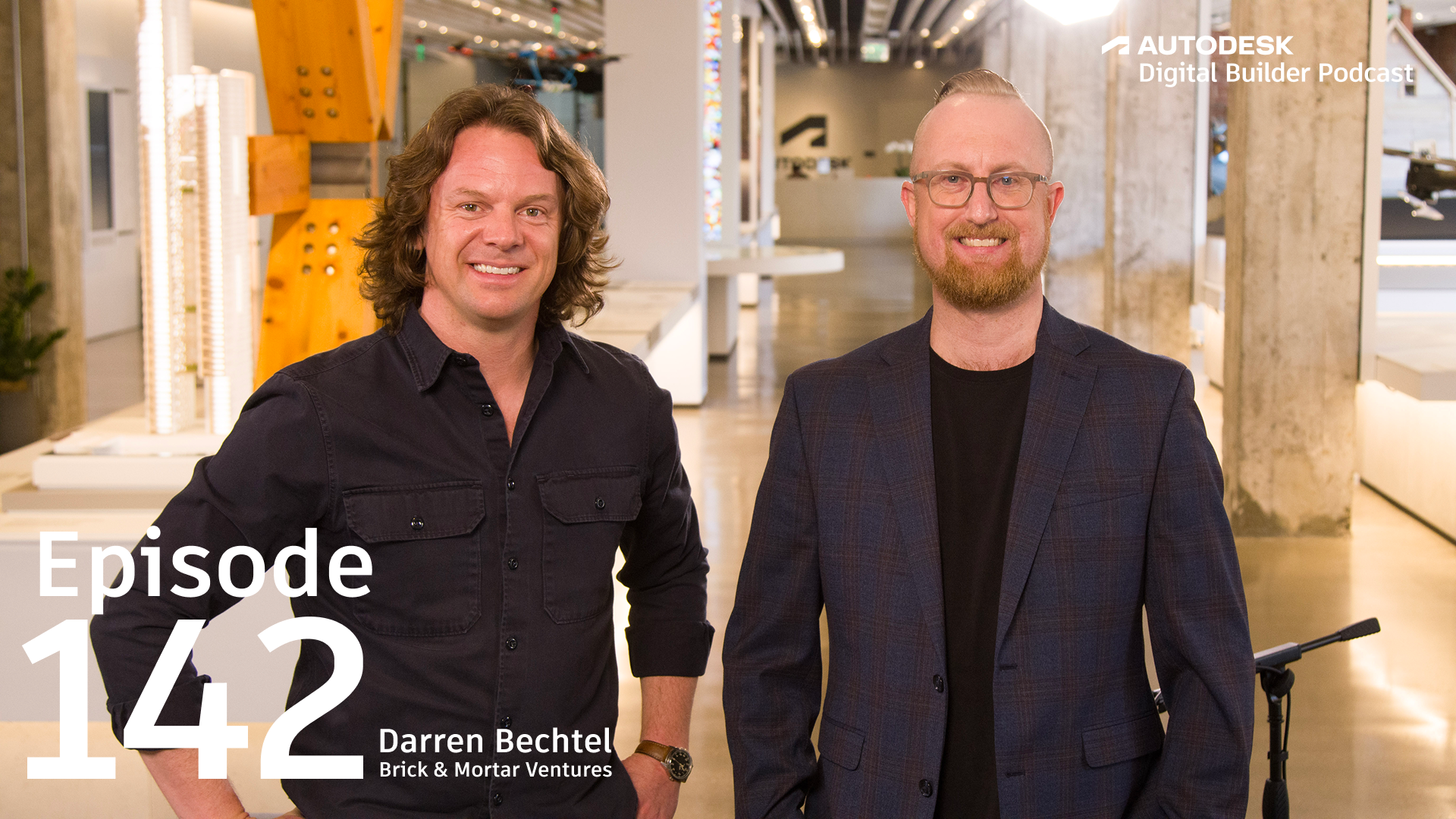
Digital Builder Ep 142: What’s Next for Construction Tech?
Autodesk Construction Cloud Blog·May 19, 2026

Digital Builder Ep 142: What’s Next for Construction Tech?

Construction innovation relies on multiple stakeholders—from founders identifying problems to field teams testing solutions—working together to drive industry change. Investors play a critical role in shaping which technologies actually get adopted and scaled across the construction sector.

Workforce
Worker Fatigue: The Overlooked Hazard Driving Injuries and Rework
Construction Executive·May 19, 2026

Worker Fatigue: The Overlooked Hazard Driving Injuries and Rework

Worker fatigue directly increases injury rates and rework costs on job sites, making it a critical safety and productivity issue that demands active management. Treating fatigue as a risk control measure—not just a wellness perk—protects both workers and project timelines while safeguarding the bottom line.

SafetyWorkforce
Miners’ lawyer pushes for MSHA silica rule during House hearing
Safety+Health Magazine·May 19, 2026

Miners’ lawyer pushes for MSHA silica rule during House hearing

An attorney representing miners testified before Congress urging the Mine Safety and Health Administration to reinstate its final rule limiting worker exposure to respirable crystalline silica. The rule aims to protect miners from dangerous dust inhalation that can cause serious health conditions.

WorkforceSafety
Improve Somatic Awareness to Increase Construction Workforce Safety
Construction Executive·May 19, 2026

Improve Somatic Awareness to Increase Construction Workforce Safety

Somatic awareness training helps construction workers build mental resilience against daily workplace stress, which directly improves safety outcomes on job sites. Developing these brain-based techniques strengthens a company's overall safety culture and reduces incident risk.

WorkforceSafety
Changes to Washington state trenching rule make written plans a must
Safety+Health Magazine·May 19, 2026

Changes to Washington state trenching rule make written plans a must

Washington state's Department of Labor & Industries has adopted a new rule requiring construction firms to complete written work plans before starting excavation, trenching, and shoring projects. The regulation takes effect June 1, 2024.

Workforce
6 Ways to Improve Your Construction Company's Safety Culture
ConstructConnect·May 19, 2026

6 Ways to Improve Your Construction Company's Safety Culture

A strong construction safety culture requires leadership commitment, continuous training, worker involvement, accountability, and behavioral reinforcement across all levels. Daily inspections and safety huddles on every site help embed these practices into daily operations.

Workforce
OSHA ends open fires standard for marine terminals
Safety+Health Magazine·May 19, 2026

OSHA ends open fires standard for marine terminals

OSHA has revoked its 1983 standard that prohibited open fires in marine terminals, which was originally established to address workers using drums and containers for warmth. The agency determined the standard is no longer necessary for modern marine terminal operations.

Workforce
Transportation’s Digital Evolution: From Adoption to Real Impact
Autodesk Construction Cloud Blog·May 19, 2026

Transportation’s Digital Evolution: From Adoption to Real Impact

The transportation sector faces mounting pressure from aging infrastructure, decarbonization mandates, labor shortages, and budget constraints that are forcing rapid modernization and digital innovation. Digital adoption across transportation is moving beyond early implementation toward delivering measurable operational and financial results.

WorkforceElectrification