AllAI & MLRoboticsAutonomy3D PrintingElectrificationSafetyWorkforceMaterialsEDITOR'S PICKWEEKLY DISPATCH
Category

Workforce & Labor

Labor shortage, skilled trades, apprenticeships, hiring platforms, workforce development, and crew management.

1202 stories found

Construction's structural labor crisis has crystallized into an unmistakable competitive sorting mechanism that now explicitly divides operators who've architected integrated talent systems from those still fragmenting efforts across disconnected initiatives. The convergence of three forces is reshaping the entire industry: persistent labor scarcity that refuses cyclical relief, intensifying regulatory enforcement that transforms safety compliance into a non-negotiable operational requirement, and technology adoption that separates strategic workforce planners from those still relying on manual processes. Contractors embedding psychological capital development—the renewable resource combining hope, efficacy, resilience, and optimism identified by the American Psychological Association—alongside safety culture, wellness programming, and technology implementation are demonstrating measurably superior retention outcomes precisely as competitors continue hemorrhaging workers to attrition. The data is unambiguous: firms managing labor strategically through integrated systems now capture talent at scale, while those treating workforce development as a disconnected cost center are fragmenting against wider performance gaps that cannot be bridged by margin compression from material cost inflation.

Technology adoption has shifted decisively from implementation barrier to retention lever as purpose-built solutions designed for trade-level adoption rather than corporate mandate reshape labor dynamics across estimation, scheduling, and field operations. ConstructConnect's automated takeoff capabilities cut estimation time by 50% on large projects while freeing estimator bandwidth for strategic opportunity scoring, eSUB's partnership with SMART Local 104 is embedding project management skills directly into sheet metal apprenticeships, and MasTec's deployment of physical AI on solar construction jobsites demonstrates on-site operation optimization beyond corporate-level forecasting. The gap between early adopters systematizing these capabilities and lagging competitors remains a decisive competitive moat—yet implementation barriers and workforce skills gaps simultaneously create immediate opportunity for operators willing to integrate training alongside technology deployment. Bluebeam's 2027 AEC technology report confirms most construction firms haven't scaled these capabilities, a condition that reflects organizational friction but masks exceptional runway for contractors positioned to move first.

The talent acquisition and retention crisis now operates entirely on a different plane than wage competition alone can address. Procore's research reveals 50% of young people believe AI could enhance construction careers, yet 41% remain unaware the industry already uses AI—a marketing gap that contractors actively communicating technological enhancement of labor can exploit for talent acquisition at scale while competitors remain silent. Meanwhile, the Department of Labor's reinstatement of the economic reality test for independent contractor classification, the BlackRock Foundation's new veteran transition program, and expanded federal apprentice payment programs signal sustained commitment to training infrastructure scaling precisely as construction employment rose across 37 states. The industry's competitive architecture has fundamentally reorganized: firms treating safety, wellness integration, and technology implementation as interconnected systems that explicitly enhance worker experience and career trajectory are establishing sustainable performance advantages that low-cost operators cannot replicate. This is no longer construction's labor shortage; it is construction's talent development divide.

Powering Profitability With Connected Construction Workflows
Construction Executive·Jul 7, 2026

Powering Profitability With Connected Construction Workflows

Construction financial management requires more than simple money movement, demanding integrated workflows that connect operations to profitability. Connected construction systems help firms manage the complexity of project finances by aligning field operations with accounting and business outcomes.

Workforce
MSHA to end ‘outdated’ regulations on equipment and procedures
Safety+Health Magazine·Jul 6, 2026

MSHA to end ‘outdated’ regulations on equipment and procedures

The Mine Safety and Health Administration is withdrawing outdated regulations on equipment and procedures, with the changes taking effect July 27. The move stems from final rules published June 25 that address obsolete effective dates and requirements across the mining industry.

Workforce
Why Construction Firms Need Specialized CPAs
Construction Executive·Jul 6, 2026

Why Construction Firms Need Specialized CPAs

Construction firms benefit from specialized CPAs who can navigate complex project financials and provide clearer insights into cash flow and profitability. These financial experts help contractors make better decisions about bonding, growth strategies, and overall business management.

Workforce
North Carolina updates process for whistleblower retaliation complaints
Safety+Health Magazine·Jul 6, 2026

North Carolina updates process for whistleblower retaliation complaints

North Carolina has updated its whistleblower retaliation complaint procedures under the Worker Safety Act of 2026, which Gov. Josh Stein signed into law. Construction workers now have clearer, streamlined processes for reporting safety-related retaliation through the Department of Labor.

Workforce
Help AGC Measure Today’s Construction Workforce Challenges
AGC of America News·Jul 6, 2026

Help AGC Measure Today’s Construction Workforce Challenges

The Associated General Contractors (AGC) is seeking input from construction professionals to document current workforce challenges facing the industry. The survey aims to gather data on labor shortages, skill gaps, and other staffing issues affecting job sites today.

Workforce
Suffolk Technologies, DPR Invest in AI-based Hiring Platform Skillit
ENR Construction Technology·Jul 2, 2026

Suffolk Technologies, DPR Invest in AI-based Hiring Platform Skillit

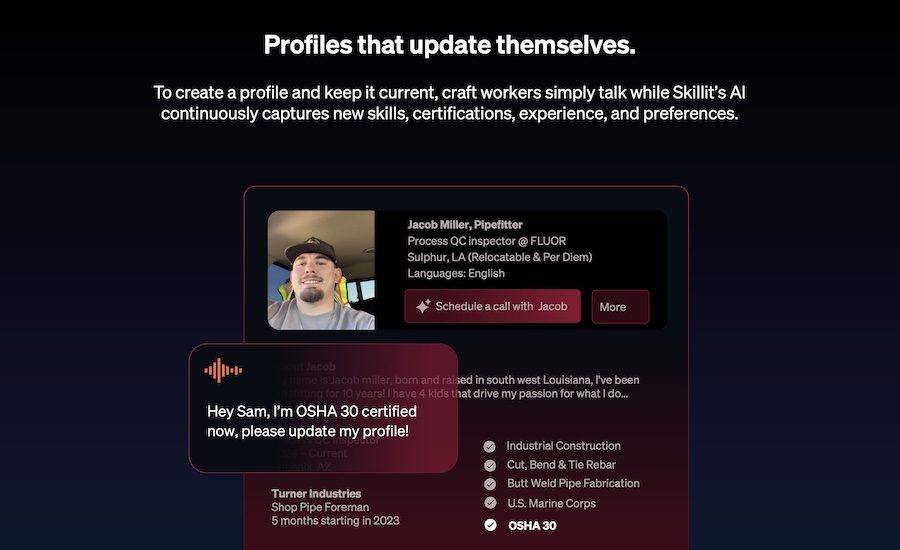
Suffolk Technologies and DPR Invest have backed Skillit, an AI-powered platform designed to connect skilled trades workers with job opportunities. The platform aims to improve hiring efficiency in the construction trades by leveraging artificial intelligence.

AI & MLWorkforce
Four reasons to be in Minneapolis, July 22–24
AGC of America News·Jul 6, 2026

Four reasons to be in Minneapolis, July 22–24

Minneapolis is hosting an event July 22–24 with four reasons construction professionals should attend. The headline suggests industry-relevant topics, though specific details require viewing the full article.

Workforce
Many construction companies taking SIFs seriously, survey finds
Safety+Health Magazine·Jul 2, 2026

Many construction companies taking SIFs seriously, survey finds

Nearly two-thirds of construction firms have implemented programs to prevent serious injuries and fatalities, according to a Construction Safety Research Alliance survey. The finding highlights growing industry commitment to reducing high-severity workplace incidents through dedicated SIF prevention strategies.

Workforce
A Phoenix Rises in Detroit
AGC of America News·Jul 6, 2026

A Phoenix Rises in Detroit

Detroit is experiencing a construction and development revival with major projects transforming the city's infrastructure and real estate landscape. The resurgence reflects renewed investment in urban renewal and industrial modernization across the region.

WorkforceMaterials
House committee approves bill aimed at expanding health care options for Department of Energy workers
Safety+Health Magazine·Jul 2, 2026

House committee approves bill aimed at expanding health care options for Department of Energy workers

The House Education and Workforce Committee unanimously passed the Health Care for Energy Workers Act of 2026, which expands health care options for Department of Energy employees and retirees by allowing them to receive care from nurse practitioners and physician assistants. This legislation aims to improve health care access and flexibility for workers in the energy sector.

Workforce
Automate 2026 show recap
Robotics Business Review·Jul 2, 2026

Automate 2026 show recap

Editors from The Robot Report reviewed Automate 2026 and identified key trends shaping the construction tech landscape, including advances in physical AI, humanoid robots, and software orchestration. These developments are positioning automation to tackle increasing labor challenges and improve jobsite efficiency across the industry.

AI & MLRobotics
Winning With the One Big Beautiful Bill: How Contractors Can Build a Plan for Success
Construction Executive·Jul 2, 2026

Winning With the One Big Beautiful Bill: How Contractors Can Build a Plan for Success

The One Big Beautiful Bill Act has been in effect for one year, and construction contractors should evaluate how their companies have adapted to the new legislation. Companies need to develop strategic plans to capitalize on opportunities created by the bill and ensure compliance moving forward.

Workforce
AGC Releases New Federal Funding Tracker
AGC of America News·Jul 2, 2026

AGC Releases New Federal Funding Tracker

The Associated General Contractors released a new tracker to help construction firms monitor and access available federal funding opportunities. The tool consolidates information about government grants and programs relevant to construction projects in one accessible location.

Workforce
Campaign Finance Changes, but Not for Trade Association PACs
AGC of America News·Jul 2, 2026

Campaign Finance Changes, but Not for Trade Association PACs

Campaign finance regulations are shifting across the country, but trade association political action committees remain largely unaffected by new restrictions. Construction industry groups should expect their PAC strategies to continue operating under existing rules despite broader finance reform efforts.

Workforce
AGC PAC, Campaign Finance, Political Advocacy, Supreme Court, FEC, First Amendment, Legislation
AGC of America News·Jul 2, 2026

AGC PAC, Campaign Finance, Political Advocacy, Supreme Court, FEC, First Amendment, Legislation

The Associated General Contractors PAC is engaged in campaign finance and political advocacy efforts involving First Amendment protections and FEC regulations. Supreme Court decisions and pending legislation are shaping how construction industry groups can participate in the political process.

Workforce
AGC of America Wins Court Fight over Davis-Bacon Rule Expansion
AGC of America News·Jul 2, 2026

AGC of America Wins Court Fight over Davis-Bacon Rule Expansion

The Associated General Contractors of America successfully challenged a government attempt to expand the Davis-Bacon Rule, which requires prevailing wage payments on federal construction projects. The court ruling limits the scope of projects subject to these wage requirements, providing relief to contractors concerned about increased labor costs.

Workforce
Government Funding Talks Continue as Infrastructure Deadline Nears
AGC of America News·Jul 2, 2026

Government Funding Talks Continue as Infrastructure Deadline Nears

Government officials are negotiating funding allocations as deadlines approach for infrastructure projects that will impact construction spending and project timelines. The outcome of these talks will determine available resources and budgets for construction firms planning upcoming work.

Workforce
New Poll: Voters Demand Congress Act on Highway Funding Before the Deadline
AGC of America News·Jul 2, 2026

New Poll: Voters Demand Congress Act on Highway Funding Before the Deadline

Voters are pushing Congress to pass highway funding legislation before an upcoming deadline, signaling public demand for infrastructure investment. Construction professionals are watching for congressional action that could affect project funding and workforce opportunities.

Workforce