AllAI & MLRoboticsAutonomy3D PrintingElectrificationSafetyWorkforceMaterialsEDITOR'S PICKWEEKLY DISPATCH
Category

Workforce & Labor

Labor shortage, skilled trades, apprenticeships, hiring platforms, workforce development, and crew management.

1202 stories found

Construction's structural labor crisis has crystallized into an unmistakable competitive sorting mechanism that now explicitly divides operators who've architected integrated talent systems from those still fragmenting efforts across disconnected initiatives. The convergence of three forces is reshaping the entire industry: persistent labor scarcity that refuses cyclical relief, intensifying regulatory enforcement that transforms safety compliance into a non-negotiable operational requirement, and technology adoption that separates strategic workforce planners from those still relying on manual processes. Contractors embedding psychological capital development—the renewable resource combining hope, efficacy, resilience, and optimism identified by the American Psychological Association—alongside safety culture, wellness programming, and technology implementation are demonstrating measurably superior retention outcomes precisely as competitors continue hemorrhaging workers to attrition. The data is unambiguous: firms managing labor strategically through integrated systems now capture talent at scale, while those treating workforce development as a disconnected cost center are fragmenting against wider performance gaps that cannot be bridged by margin compression from material cost inflation.

Technology adoption has shifted decisively from implementation barrier to retention lever as purpose-built solutions designed for trade-level adoption rather than corporate mandate reshape labor dynamics across estimation, scheduling, and field operations. ConstructConnect's automated takeoff capabilities cut estimation time by 50% on large projects while freeing estimator bandwidth for strategic opportunity scoring, eSUB's partnership with SMART Local 104 is embedding project management skills directly into sheet metal apprenticeships, and MasTec's deployment of physical AI on solar construction jobsites demonstrates on-site operation optimization beyond corporate-level forecasting. The gap between early adopters systematizing these capabilities and lagging competitors remains a decisive competitive moat—yet implementation barriers and workforce skills gaps simultaneously create immediate opportunity for operators willing to integrate training alongside technology deployment. Bluebeam's 2027 AEC technology report confirms most construction firms haven't scaled these capabilities, a condition that reflects organizational friction but masks exceptional runway for contractors positioned to move first.

The talent acquisition and retention crisis now operates entirely on a different plane than wage competition alone can address. Procore's research reveals 50% of young people believe AI could enhance construction careers, yet 41% remain unaware the industry already uses AI—a marketing gap that contractors actively communicating technological enhancement of labor can exploit for talent acquisition at scale while competitors remain silent. Meanwhile, the Department of Labor's reinstatement of the economic reality test for independent contractor classification, the BlackRock Foundation's new veteran transition program, and expanded federal apprentice payment programs signal sustained commitment to training infrastructure scaling precisely as construction employment rose across 37 states. The industry's competitive architecture has fundamentally reorganized: firms treating safety, wellness integration, and technology implementation as interconnected systems that explicitly enhance worker experience and career trajectory are establishing sustainable performance advantages that low-cost operators cannot replicate. This is no longer construction's labor shortage; it is construction's talent development divide.

Chemical Safety Board recognizes Wisconsin mill’s corrective actions
Safety+Health Magazine·Sep 4, 2026

Chemical Safety Board recognizes Wisconsin mill’s corrective actions

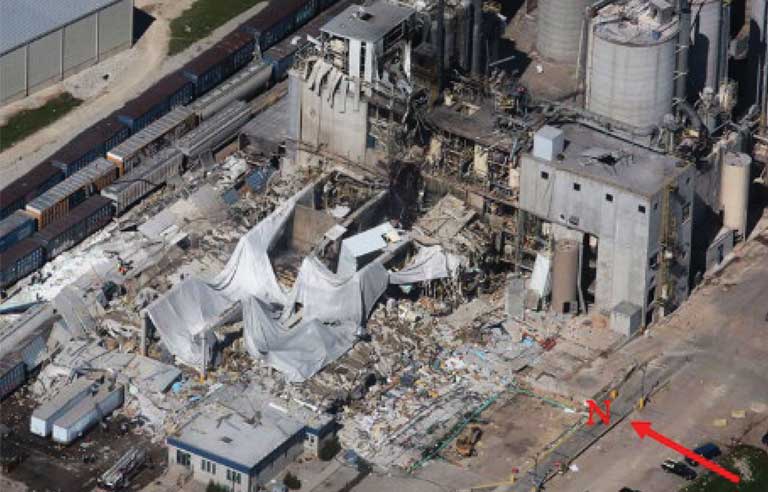
The Chemical Safety Board commended a Wisconsin corn mill for completing all safety improvements recommended after a May 2017 explosion that killed five workers and injured 14 others. Didion Milling's corrective actions demonstrate the facility's commitment to preventing similar incidents in the future.

Workforce
WEEKLY DISPATCH
Contractors Add 22,000 Jobs In August, Construction Unemployment Rate Hits Record Low Of 3.1%; Association Survey Finds Firms Struggle To Fill Openings
AGC of America News·Sep 4, 2026

Contractors Add 22,000 Jobs In August, Construction Unemployment Rate Hits Record Low Of 3.1%; Association Survey Finds Firms Struggle To Fill Openings

Construction contractors added 22,000 jobs in August with the unemployment rate dropping to a record low of 3.1%. Despite strong job growth, firms report widespread difficulty filling open positions.

Workforce
WEEKLY DISPATCH
Washington state begins rulemaking on indoor heat exposure
Safety+Health Magazine·Sep 4, 2026

Washington state begins rulemaking on indoor heat exposure

Washington State Department of Labor & Industries has initiated rulemaking to establish indoor heat exposure standards across all industries following a petition received in October 2025. The new rules aim to prevent heat-related illness and injuries in workplaces including construction.

WorkforceSafety
What Is Subcontractor Project Management Software, and Do I Need It?
eSUB Construction Software Blog·Sep 3, 2026

What Is Subcontractor Project Management Software, and Do I Need It?

Subcontractor project management software helps construction firms coordinate, track, and communicate with subcontractors across schedules, budgets, and work assignments in one centralized platform. Whether you need it depends on your project complexity and team size, but most mid-to-large operations find it essential for reducing delays, improving accountability, and cutting administrative overhead.

Workforce
A Press Tool for Remodelers
JLC Online·Sep 3, 2026

A Press Tool for Remodelers

A remodeler weighs whether investing in a copper press tool is worth the upfront cost as an alternative to sweating supply lines on job sites. Industry practitioners share insights on the practical benefits and considerations for adopting press tool technology in remodeling work.

Workforce
Cautious Optimism, Persistent Challenges: AEC Firms Feeling Positive Despite Challenges
Construction Executive·Sep 3, 2026

Cautious Optimism, Persistent Challenges: AEC Firms Feeling Positive Despite Challenges

AEC firms are showing cautious optimism heading into 2026, though they continue to face ongoing industry challenges. The sentiment reflects a measured outlook as companies navigate uncertainty while positioning for growth.

Workforce
Construction Workforce Shortages Remain Acute Despite ‘Soft’ Market Conditions As Data Centers Strain Labor Supply, Survey Finds
AGC of America News·Sep 3, 2026

Construction Workforce Shortages Remain Acute Despite ‘Soft’ Market Conditions As Data Centers Strain Labor Supply, Survey Finds

Construction companies continue struggling to fill positions despite slower market conditions, as data center projects compete aggressively for available workers. The labor shortage remains a critical constraint on project capacity and timelines across the industry.

Workforce
Fight for Your Right: Effects of FAR Final Rule on Construction
Construction Executive·Sep 3, 2026

Fight for Your Right: Effects of FAR Final Rule on Construction

A new Federal Acquisition Regulation final rule is making competition fiercer for contractors bidding on federal construction projects. The regulatory change will require construction firms to reassess their competitive strategies and compliance approaches when pursuing government work.

Workforce
WEEKLY DISPATCH
Data Center Crunch: Contractors Rethink Project Delivery, Adopt New Tools to Meet Booming Demand
ENR Construction Technology·Sep 2, 2026

Data Center Crunch: Contractors Rethink Project Delivery, Adopt New Tools to Meet Booming Demand

Data center megaprojects with aggressive timelines are forcing contractors to lean heavily on prefabrication, digital tools, and better planning to keep pace with surging demand. The shift reflects a broader industry push to work smarter and faster when traditional on-site construction methods can't meet project deadlines.

Workforce
WEEKLY DISPATCH
More Skills, More Capacity: Groundbreaking Research Touts Benefits of a Multiskilled Workforce
Construction Executive·Sep 2, 2026

More Skills, More Capacity: Groundbreaking Research Touts Benefits of a Multiskilled Workforce

A nationwide research study demonstrates that construction crews trained in multiple skilled trades can reduce project delays, streamline workflows, and make better use of limited labor resources. The findings also highlight how multiskilled workers gain more career opportunities and advancement potential.

Workforce
Worker heat protections front and center during House subcommittee hearing
Safety+Health Magazine·Sep 2, 2026

Worker heat protections front and center during House subcommittee hearing

OSHA's proposed heat illness and injury prevention rule was debated before the House Workforce Protections Subcommittee on September 2, with testimony from industry representatives like Elizabeth Milito examining the role of federal regulation. The hearing highlighted ongoing discussion about protecting construction workers from heat-related hazards in the workplace.

SafetyWorkforce
Construction Job Openings Up by 28,000 to Near-2-Year High in July
Construction Executive·Sep 2, 2026

Construction Job Openings Up by 28,000 to Near-2-Year High in July

Construction job openings increased by 28,000 positions in July, reaching their highest level in nearly two years according to ABC Chief Economist Anirban Basu. The rising demand for construction workers reflects strong activity in the sector and continued competition for qualified labor.

Workforce
FMCSA will test two hours-of-service changes for truckers next year
Safety+Health Magazine·Sep 2, 2026

FMCSA will test two hours-of-service changes for truckers next year

The Federal Motor Carrier Safety Administration will launch pilot programs in 2027 to test changes to hours-of-service regulations for truck drivers. These tests aim to provide truckers with more flexibility while maintaining compliance with federal rest requirements.

Workforce
Beyond Recruiting: Rethinking the Workforce Shortage
Construction Executive·Sep 2, 2026

Beyond Recruiting: Rethinking the Workforce Shortage

The Associated Builders and Contractors (ABC) is partnering with Meta to develop a new approach to addressing construction's workforce shortage by training the next generation of skilled trades professionals. Rather than relying solely on traditional recruiting, the partnership aims to create innovative pathways for developing craft workers in the industry.

Workforce
Workers over age 50 may be facing a ‘sleep crisis’
Safety+Health Magazine·Sep 2, 2026

Workers over age 50 may be facing a ‘sleep crisis’

University of Edinburgh researchers studying 45 British workers aged 50-66 discovered that nighttime sleep disturbances occur more frequently than previously documented, revealing a hidden sleep crisis among older workers. Construction companies should consider this finding when managing aging workforces, as sleep quality directly impacts worker safety and productivity on job sites.

WorkforceSafety
Gen Z Rethinks Career Paths
Construction Executive·Sep 2, 2026

Gen Z Rethinks Career Paths

Gen Z workers are increasingly pursuing skilled trades careers as AI disrupts traditional office employment. The construction industry is benefiting from this shift toward hands-on, financially rewarding work that offers greater job security.

Workforce
How construction risk management software helps field teams document and reduce jobsite hazards
Fieldwire Blog·Sep 2, 2026

How construction risk management software helps field teams document and reduce jobsite hazards

Construction risk management software enables field teams to identify, document, and track jobsite hazards in real time, reducing accidents and improving safety compliance. Digital hazard documentation creates accountability and helps contractors implement preventive measures before incidents occur.

Workforce
‘What Great Owners Do’: New Report Links Owner Behavior to Project Success
Construction Executive·Sep 2, 2026

‘What Great Owners Do’: New Report Links Owner Behavior to Project Success

A new industry report identifies five owner practices that significantly impact project success, showing that owner behavior is just as critical as contractor performance. The findings suggest that focusing on these key behaviors can improve outcomes across construction projects.

Workforce