AllAI & MLRoboticsAutonomy3D PrintingElectrificationSafetyWorkforceMaterialsEDITOR'S PICKWEEKLY DISPATCH
Category

Workforce & Labor

Labor shortage, skilled trades, apprenticeships, hiring platforms, workforce development, and crew management.

1202 stories found

Construction's structural labor crisis has crystallized into an unmistakable competitive sorting mechanism that now explicitly divides operators who've architected integrated talent systems from those still fragmenting efforts across disconnected initiatives. The convergence of three forces is reshaping the entire industry: persistent labor scarcity that refuses cyclical relief, intensifying regulatory enforcement that transforms safety compliance into a non-negotiable operational requirement, and technology adoption that separates strategic workforce planners from those still relying on manual processes. Contractors embedding psychological capital development—the renewable resource combining hope, efficacy, resilience, and optimism identified by the American Psychological Association—alongside safety culture, wellness programming, and technology implementation are demonstrating measurably superior retention outcomes precisely as competitors continue hemorrhaging workers to attrition. The data is unambiguous: firms managing labor strategically through integrated systems now capture talent at scale, while those treating workforce development as a disconnected cost center are fragmenting against wider performance gaps that cannot be bridged by margin compression from material cost inflation.

Technology adoption has shifted decisively from implementation barrier to retention lever as purpose-built solutions designed for trade-level adoption rather than corporate mandate reshape labor dynamics across estimation, scheduling, and field operations. ConstructConnect's automated takeoff capabilities cut estimation time by 50% on large projects while freeing estimator bandwidth for strategic opportunity scoring, eSUB's partnership with SMART Local 104 is embedding project management skills directly into sheet metal apprenticeships, and MasTec's deployment of physical AI on solar construction jobsites demonstrates on-site operation optimization beyond corporate-level forecasting. The gap between early adopters systematizing these capabilities and lagging competitors remains a decisive competitive moat—yet implementation barriers and workforce skills gaps simultaneously create immediate opportunity for operators willing to integrate training alongside technology deployment. Bluebeam's 2027 AEC technology report confirms most construction firms haven't scaled these capabilities, a condition that reflects organizational friction but masks exceptional runway for contractors positioned to move first.

The talent acquisition and retention crisis now operates entirely on a different plane than wage competition alone can address. Procore's research reveals 50% of young people believe AI could enhance construction careers, yet 41% remain unaware the industry already uses AI—a marketing gap that contractors actively communicating technological enhancement of labor can exploit for talent acquisition at scale while competitors remain silent. Meanwhile, the Department of Labor's reinstatement of the economic reality test for independent contractor classification, the BlackRock Foundation's new veteran transition program, and expanded federal apprentice payment programs signal sustained commitment to training infrastructure scaling precisely as construction employment rose across 37 states. The industry's competitive architecture has fundamentally reorganized: firms treating safety, wellness integration, and technology implementation as interconnected systems that explicitly enhance worker experience and career trajectory are establishing sustainable performance advantages that low-cost operators cannot replicate. This is no longer construction's labor shortage; it is construction's talent development divide.

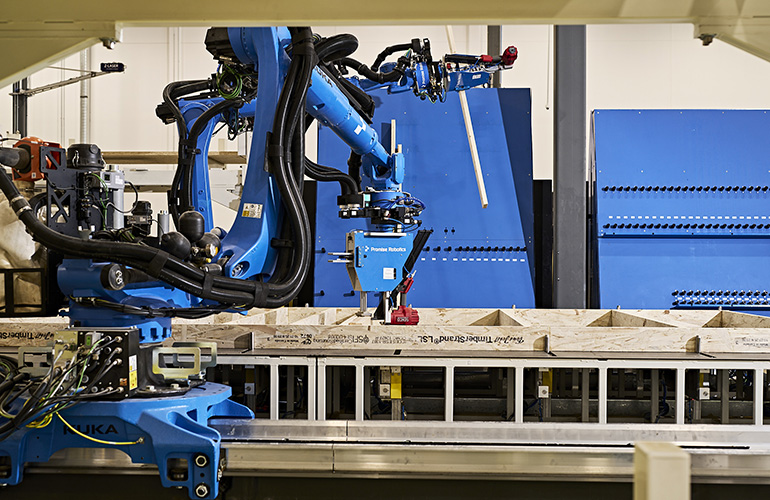
Promise Robotics partners with D.R. Horton on physical AI for homebuilding
Robotics Business Review·Oct 13, 2026

Promise Robotics partners with D.R. Horton on physical AI for homebuilding

Promise Robotics has partnered with D.R. Horton, the nation's largest homebuilder by volume, to deploy physical AI technology on construction sites. The multi-year agreement aims to bring automation and AI-powered systems to homebuilding operations.


AI & MLRobotics
Procore Blog·Oct 13, 2026

Procore Introduces Digital Coworker Packages, Expands AI Agent Library, and Previews Skills to Help Construction Teams Put AI to Work

Procore has launched digital coworker packages and expanded its AI agent library to help construction teams implement artificial intelligence on job sites. The company is also previewing a Skills feature designed to make AI tools more practical and accessible for construction professionals.

AI & MLWorkforce
Annual number of global workplace injuries higher than U.S. population: report
Safety+Health Magazine·Oct 12, 2026

Annual number of global workplace injuries higher than U.S. population: report

Approximately 395 million workers suffer injuries annually worldwide, a figure that surpasses the entire U.S. population according to the Royal Society for the Prevention of Accidents. Occupational injuries and illnesses represent a significant challenge to global workplace safety and productivity across all industries.

WorkforceSafety
Concrete Combat
JLC Online·Oct 12, 2026

Concrete Combat

Sakrete launched Concrete Combat, a nationwide competition that showcases real contractors and jobsites with prizes for participants. The competition gives contractors a platform to demonstrate their concrete work and skills on actual projects.

Workforce
New law expands Cal/OSHA investigation and prosecution referral requirements
Safety+Health Magazine·Oct 12, 2026

New law expands Cal/OSHA investigation and prosecution referral requirements

California's A.B. 2321 law changes Cal/OSHA investigation thresholds and expands requirements for referrals to prosecution in workplace incidents. Construction companies should expect broader regulatory scrutiny of safety violations and incident reporting.

Workforce
The future of the construction trades depends on what employers do next
Construction Dive·Oct 12, 2026

The future of the construction trades depends on what employers do next

The construction industry faces a significant labor shortage that requires employers to actively recruit craft workers and invest in career education programs. Upskilling initiatives are essential to address the gap and secure the industry's future workforce.

Workforce
WEEKLY DISPATCH
The Hidden Impact of Working Alone: Connecting Safety and Wellbeing in Construction
Construction Executive·Oct 12, 2026

The Hidden Impact of Working Alone: Connecting Safety and Wellbeing in Construction

Working alone in construction takes a psychological toll, gradually eroding worker confidence, concentration, morale, and job satisfaction through prolonged isolation and uncertainty. Addressing the mental health impacts of solitary work is as critical to overall wellbeing as traditional safety measures.

SafetyWorkforce
Every project runs on 2 models: The 1 in the software and the 1 in someone’s head
Construction Dive·Oct 12, 2026

Every project runs on 2 models: The 1 in the software and the 1 in someone’s head

Construction projects depend on two critical models: the digital one in software and the mental model held by experienced estimators. Advanced software tools haven't reduced the importance of human judgment in estimation—they've made that judgment even harder to automate or replace.

Workforce
Data centers: Digital infrastructure as a strategic core investment
BD+C Building Design+Construction·Oct 12, 2026

Data centers: Digital infrastructure as a strategic core investment

Data centers are becoming a major investment category as digital infrastructure demand grows, with construction and real estate sectors recognizing their strategic importance. The buildout of data center facilities requires specialized construction expertise, materials, and workforce planning to meet expanding computing and storage needs.

WorkforceMaterials
Will ‘boring’ robots win in the real world? Why robotic form should follow workflow
Robotics Business Review·Oct 11, 2026

Will ‘boring’ robots win in the real world? Why robotic form should follow workflow

Practical robots designed around actual job workflows will outperform flashy machines built for social media appeal. Moving physical AI from proof-of-concept to real commercial use requires prioritizing function over form.

RoboticsWorkforce
AEC Business·Oct 10, 2026

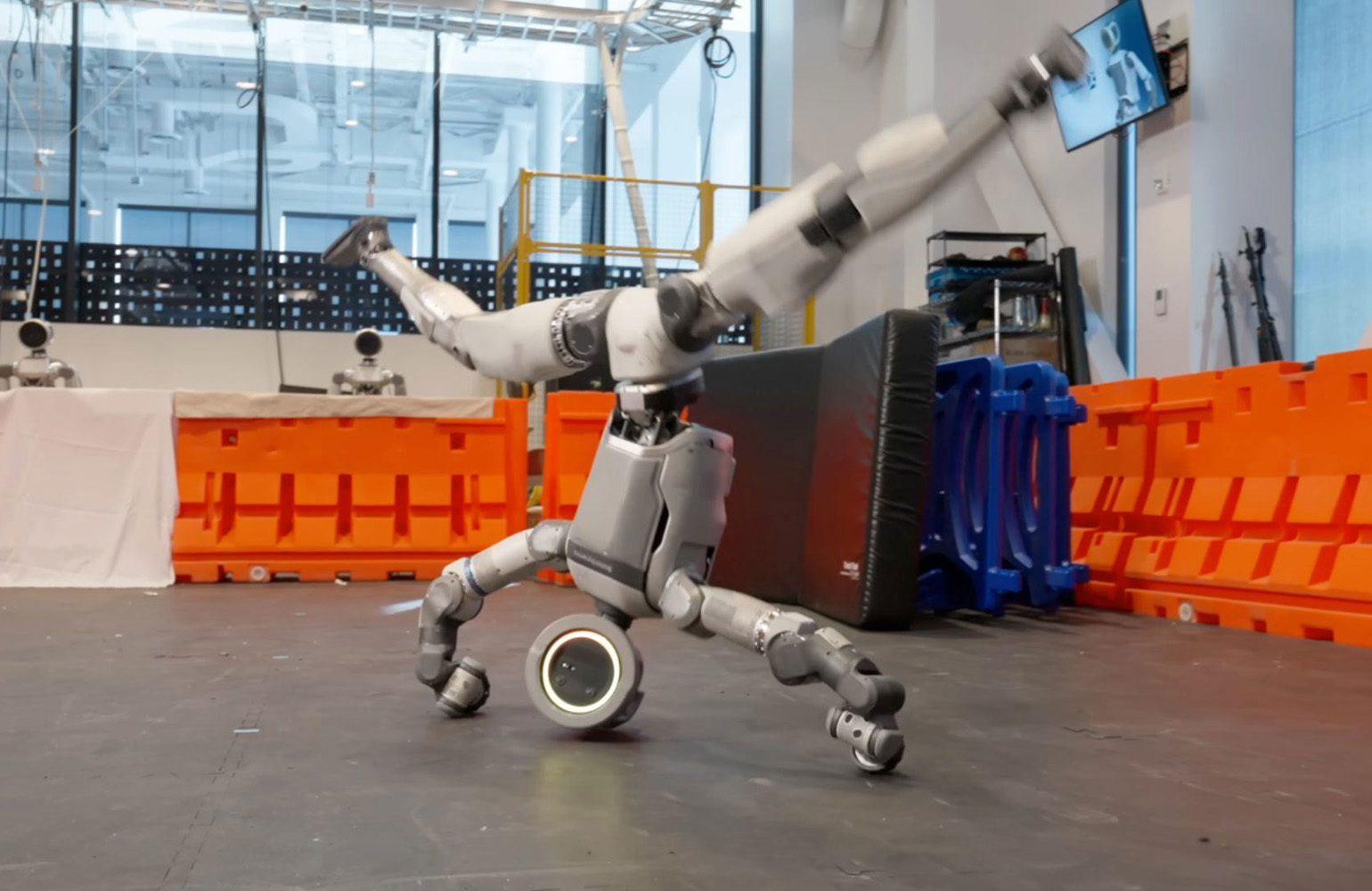
Humanoid Robots in Construction: The Reality Right Now

Humanoid robots are generating significant buzz in the construction industry, but current technology still has substantial limitations for real-world jobsite deployment. The article examines what these robots can actually accomplish today versus the hype surrounding their potential future applications.

RoboticsWorkforce
WEEKLY DISPATCH
Built to Flex: More Research on the Benefits of Multiskilled Construction Workers
Construction Executive·Oct 9, 2026

Built to Flex: More Research on the Benefits of Multiskilled Construction Workers

New research from the Simplar Foundation demonstrates that multiskilled construction workers deliver significant productivity improvements on job sites. These versatile workers represent a practical strategy for addressing the construction industry's persistent labor shortage.

Workforce
What's the Best Software for Managing Construction Bids?
ConstructConnect·Oct 9, 2026

What's the Best Software for Managing Construction Bids?

The best bid management software for construction contractors integrates invitation-to-bid creation, subcontractor networks, and bid tracking into a single workflow rather than functioning as a document storage system. Contractors should evaluate bid management tools based on how well they fit their specific workflow processes rather than focusing solely on available features.

Workforce
NSC experts join alliance on preventing work-related stress
Safety+Health Magazine·Oct 9, 2026

NSC experts join alliance on preventing work-related stress

Two senior program managers from the National Safety Council have joined a 30-member alliance dedicated to preventing work-related stress at its source. The initiative aims to address workplace stress as a safety and health concern affecting construction and other industries.

Workforce
The Affordability Test: Top Concerns Approaching Midterm Election
Construction Executive·Oct 9, 2026

The Affordability Test: Top Concerns Approaching Midterm Election

Voter concerns about affordability are becoming central issues in the 2026 midterm elections, influencing congressional races and policy debates. Tax policy and data center regulations are emerging as key focal points as candidates address cost-of-living pressures affecting construction and related industries.

Workforce
OSHA awards $10.2M in safety and health training grants
Safety+Health Magazine·Oct 9, 2026

OSHA awards $10.2M in safety and health training grants

OSHA is distributing $10.2 million in safety training grants to 67 organizations through its Susan Harwood Training Grant Program. The funding supports worker education on hazard awareness, avoidance, and control measures across various industries.

Workforce
WEEKLY DISPATCH
Equipment World·Oct 9, 2026

Boy Awarded $65M After Excavator Crashes Into Bridge, Kills His Mom

A newly licensed truck driver with only four days of CDL experience improperly secured an excavator on his trailer, leading to a crash that killed a woman and resulted in a $65 million settlement for her young son. The incident underscores critical gaps in driver training and equipment loading procedures within the construction hauling industry.

WorkforceSafety
WEEKLY DISPATCH
Construction Firms Are Investing in AI—But Are They Actually AI-Ready?
Construction Executive·Oct 9, 2026

Construction Firms Are Investing in AI—But Are They Actually AI-Ready?

Construction firms are pouring money into AI investments, but many lack the organizational readiness to actually implement and benefit from the technology effectively. The Wipfli 2026 survey reveals a gap between AI spending and genuine preparedness across the industry.

AI & MLWorkforce