AllAI & MLRoboticsAutonomy3D PrintingElectrificationSafetyWorkforceMaterialsEDITOR'S PICKWEEKLY DISPATCH
Category

AI & Machine Learning

Artificial intelligence, machine learning, BIM, digital twins, predictive analytics, and data platforms in construction.

514 stories found

The construction industry's transition from AI pilot projects to operational deployment has reached an inflection point, driven simultaneously by labor scarcity and demonstrated technical viability. What distinguishes this moment is not the emergence of new AI capabilities—computer vision, predictive analytics, and autonomous decision-making have matured considerably—but rather the industry's willingness to integrate these tools into mission-critical workflows across estimation, scheduling, and jobsite execution. Suffolk's deployment of OpenSpace, Dusty Robotics, Kaya AI, and Alice Technologies on Gilead's California research center exemplifies this operational maturity, as does MasTec's adoption of Gritt's physical AI for solar construction execution. Meanwhile, the competitive consolidation in takeoff and estimation continues, with ConstructConnect's Project Intelligence and advanced mechanical takeoff platforms now competing on accuracy and integration rather than novelty. The real differentiator has shifted decisively toward organizational capability—firms like Mycon, which elevated technology leadership into the C-suite, recognize that AI deployment demands simultaneous competency in data governance, cybersecurity, workforce training, and regulatory compliance. Construction executives can no longer treat AI as a procurement decision; it demands the same strategic rigor and cross-functional alignment as capital investment or labor planning.

The robotics frontier has simultaneously accelerated and clarified, with technical breakthroughs resolving the programming barrier that historically constrained factory floor automation. Siemens and AGIBOT's demonstration of AI agents that design 3D-printed robot grippers from text prompts, combined with UC Berkeley and NVIDIA's open-source tools enabling machines to automatically write industrial robot programs, have obliterated the assumption that robotics requires specialized programming expertise. Humyn Labs' $47 million funding round to systematize real-world operational data collection signals that the industry recognizes embodied AI as the next frontier, one where robots generalize across tasks rather than operating within narrow, pre-programmed constraints. Yet construction remains in early adoption precisely because regulatory uncertainty, data sovereignty concerns, and the need for standardized infrastructure outweigh technical enablement. The manufacturing data gap—inadequate industrial data collection, weak interoperability standards, and poor feedback loops—represents the genuine constraint on physical AI deployment, not algorithm sophistication.

The workforce awareness and capability gap remains construction's most decisive strategic vulnerability. Only 59 percent of young people recognize that construction already operates with AI, undermining recruitment into the technical roles the industry increasingly demands, while most construction firms have not scaled AI adoption beyond isolated pilots due to implementation barriers and skills deficiencies. The path forward requires construction organizations to treat AI integration as organizational transformation: embedding technology leadership in management structures, investing systematically in workforce education about AI tool validation, and maintaining digital visibility across discovery systems. Firms that invest in the organizational discipline, talent development, and regulatory acumen required to deploy AI effectively at scale—rather than those that simply purchase the latest platforms—are establishing competitive advantages that transcend individual technology choices. Construction is no longer deliberating whether to adopt AI; it is determining whether it will invest the structural, cultural, and human capital necessary to deploy these tools with strategic coherence across operations.

McKinsey, ALICE Technologies partner on generative AI scheduling
Construction Dive·Apr 15, 2026

McKinsey, ALICE Technologies partner on generative AI scheduling

McKinsey and ALICE Technologies are partnering to use generative AI for construction scheduling, creating what-if scenarios that help contractors optimize project timelines. The technology can accelerate projects by up to 20% by automatically adjusting schedules.

AI & ML
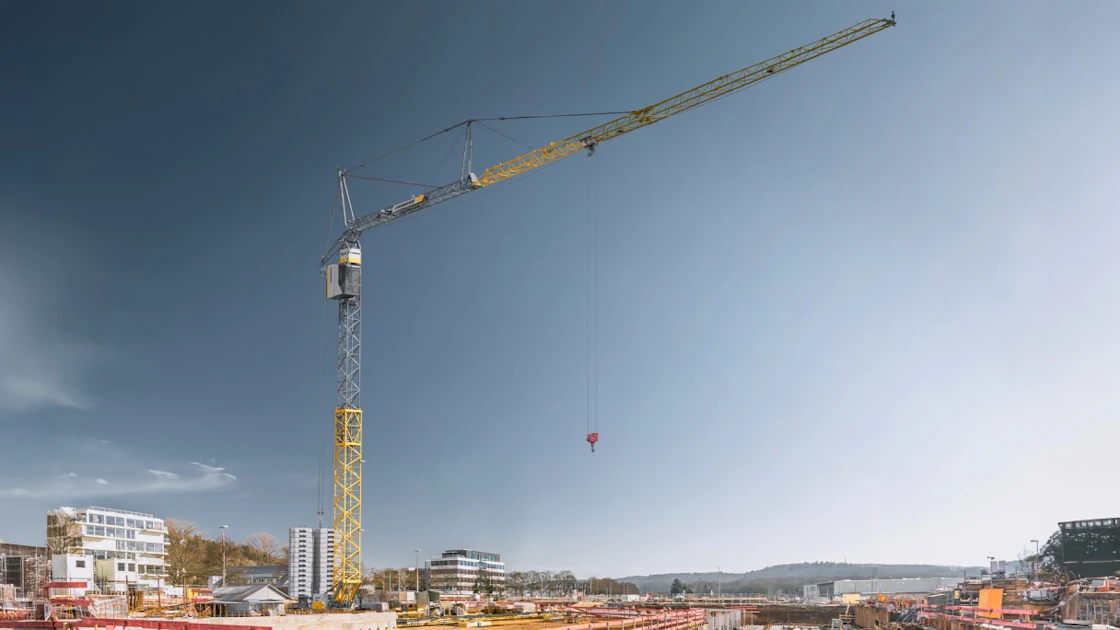
Liebherr Brings 3 New K Series Cranes to U.S. with 5 New Automation Systems
Equipment World·Apr 15, 2026

Liebherr Brings 3 New K Series Cranes to U.S. with 5 New Automation Systems

Liebherr is introducing three new K Series cranes to the U.S. market equipped with five new intelligent assistance systems designed to improve crane operation. These automation systems represent the company's focus on modernizing crane technology for construction jobsites.

AI & MLAutonomy
How Contractors Can Maximize Equipment Value Without Over-Owning Assets
Construction Executive·Apr 15, 2026

How Contractors Can Maximize Equipment Value Without Over-Owning Assets

Telematics data helps contractors make smarter equipment purchasing decisions by showing exactly which machines they need, how frequently they'll use them, and optimal maintenance schedules. This approach lets you right-size your fleet and maximize asset value without tying up capital in underutilized equipment.

AI & ML
The Robot Report·Apr 14, 2026

Boston Dynamics and Google Deepmind are using Gemini to make Spot smarter

Boston Dynamics said Google DeepMind's Gemini will bring better reasoning and adaptability to AIVI-Learning. The post Boston Dynamics and Google Deepmind are using Gemini to make Spot smarter appeared first on The Robot Report .

AI & MLRobotics
Construction’s economic outlook is increasingly cloudy
Construction Dive·Apr 13, 2026

Construction’s economic outlook is increasingly cloudy

Construction's economic indicators are softening outside of AI-driven projects, signaling a potential slowdown ahead. While the current boom may continue near-term, industry fundamentals suggest headwinds are building.

AI & MLWorkforce
The Robot Report·Apr 12, 2026

Binghamton researchers create robotic guide dogs that walk — and talk

Scientists at Binghamton University have developed a robotic guide dog that uses large language models to communicate in real time with the visually impaired. The post Binghamton researchers create robotic guide dogs that walk — and talk appeared first on The Robot Report .

AI & MLRobotics
What owners and contractors should know about data center construction contracts
Construction Dive·Apr 10, 2026

What owners and contractors should know about data center construction contracts

AI infrastructure development is driving rapid data center construction, but owners and contractors need to thoroughly understand their contracts to manage the risks involved. Construction attorneys emphasize that careful contract review is essential as demand for these projects continues to grow.

AI & ML
New Survey Reveals Overwhelmingly Optimistic Results on the Use of AI in Construction
Construction Executive·Apr 9, 2026

New Survey Reveals Overwhelmingly Optimistic Results on the Use of AI in Construction

A new CMiC X Dodge survey shows construction professionals are increasingly optimistic about AI adoption in the industry. While AI technology is already advanced enough for construction use, the real challenge is getting construction companies and workers prepared to implement it effectively.

AI & MLWorkforce
Startups are everywhere in construction. Builders want them to meet the moment.
Construction Dive·Apr 8, 2026

Startups are everywhere in construction. Builders want them to meet the moment.

Construction startups are proliferating with tech solutions, but builders are demanding that these companies deliver real innovation and solve actual problems on job sites. For contech firms to succeed, they need to prove their products work, fit the market, and genuinely improve how construction gets done.

AI & ML
Digital Builder Ep 138: How Robotics Is Reshaping Construction Workflows in the Field
Autodesk Construction Cloud Blog·Apr 7, 2026

Digital Builder Ep 138: How Robotics Is Reshaping Construction Workflows in the Field

Robotics brings AI from the digital realm directly onto jobsites, physically transforming how construction work gets done in the field. Unlike software-based AI solutions, physical robots can actively reshape workflows and tackle hands-on construction tasks.

RoboticsAI & ML
Trimble to acquire Document Crunch in latest contech M&A
Construction Dive·Apr 6, 2026

Trimble to acquire Document Crunch in latest contech M&A

Trimble is acquiring Document Crunch, an AI-powered contract analysis startup, adding to the wave of consolidation in construction technology. The deal puts Trimble in direct competition with other major players like Procore and Autodesk, who have recently made similar acquisitions to strengthen their software offerings.

AI & ML
Building the Future: Construction at the Center of Technological Innovation at CES 2026
Construction Executive·Apr 6, 2026

Building the Future: Construction at the Center of Technological Innovation at CES 2026

CES 2026 highlighted how autonomy, AI, and electrification are transforming construction and infrastructure projects. These three technology areas are becoming central drivers reshaping how buildings and infrastructure are designed and built.

AutonomyAI & ML
Trimble Acquires Document Crunch, Plans to Integrate Agentic AI Contract Review
ENR Construction Technology·Apr 3, 2026

Trimble Acquires Document Crunch, Plans to Integrate Agentic AI Contract Review

Trimble has acquired Document Crunch, an AI-powered document review tool, to integrate into its Construction One platform's risk management features. The addition will help construction teams automatically review and analyze contracts more efficiently.

AI & ML
One Variety of Preconstruction Tech Is Seeing More Widespread Usage Than Any Other
BuiltWorlds·Apr 2, 2026

One Variety of Preconstruction Tech Is Seeing More Widespread Usage Than Any Other

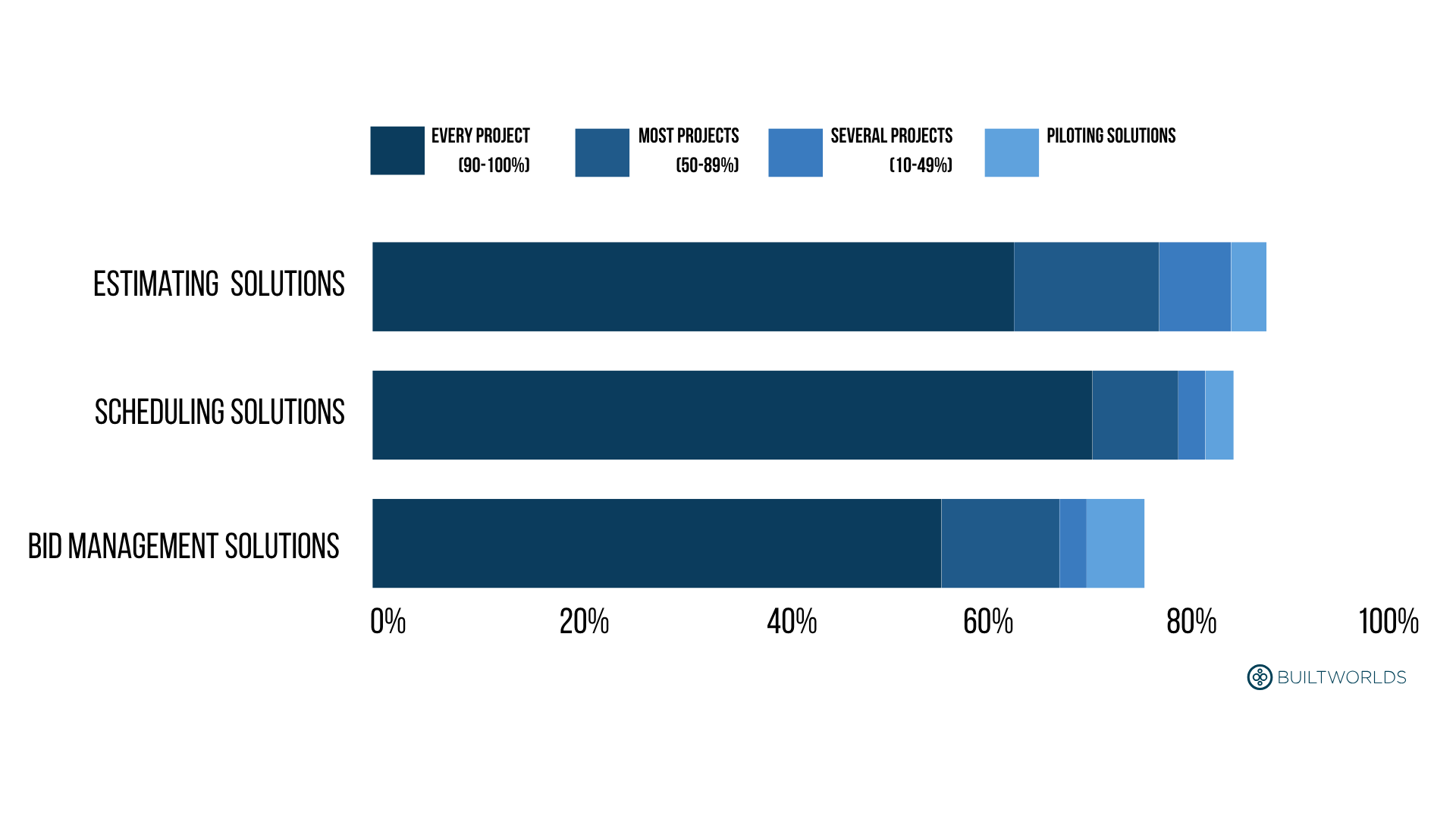
Estimating software has become the most widely adopted preconstruction technology across the buildings and infrastructure industries over the past decade. According to BuiltWorlds' latest benchmarking report, this tool is outpacing all other preconstruction tech solutions in terms of usage.

AI & ML
Decentralized AI: A Faster Path to Construction Productivity Gains
Construction Executive·Apr 2, 2026

Decentralized AI: A Faster Path to Construction Productivity Gains

Construction companies are adopting decentralized AI strategies rather than waiting for enterprise-wide rollouts, enabling faster productivity improvements across projects. This approach allows teams to implement AI tools tailored to specific needs without lengthy organizational delays.

AI & MLWorkforce
Trimble to Acquire Document Crunch to Add AI-Powered Risk Management and Document Compliance to Trimble Construction One Project Delivery Ecosystem
Trimble Constructible·Apr 2, 2026

Trimble to Acquire Document Crunch to Add AI-Powered Risk Management and Document Compliance to Trimble Construction One Project Delivery Ecosystem

Trimble is acquiring Document Crunch to integrate AI-powered risk management and document compliance tools into its Construction One platform. The addition aims to help construction firms better manage project documentation and identify potential risks throughout the delivery process.

AI & ML
The Robot Report·Apr 1, 2026

PhAIL ranks top robotics foundation models on real hardware

Positronic Robotics has launched PhAIL, a benchmark evaluating physical AI models on commercial tasks using throughput and reliability metrics. The post PhAIL ranks top robotics foundation models on real hardware appeared first on The Robot Report .

AI & MLRobotics
Digital Builder Ep 137: How AI Is Actually Changing Construction Workflows
Autodesk Construction Cloud Blog·Mar 31, 2026

Digital Builder Ep 137: How AI Is Actually Changing Construction Workflows

AI in construction is most valuable when it solves real problems and makes actual work easier, faster, or more reliable rather than just being trendy technology. The episode focuses on how AI is practically changing workflows instead of hyping up buzzwords.

AI & MLWorkforce